
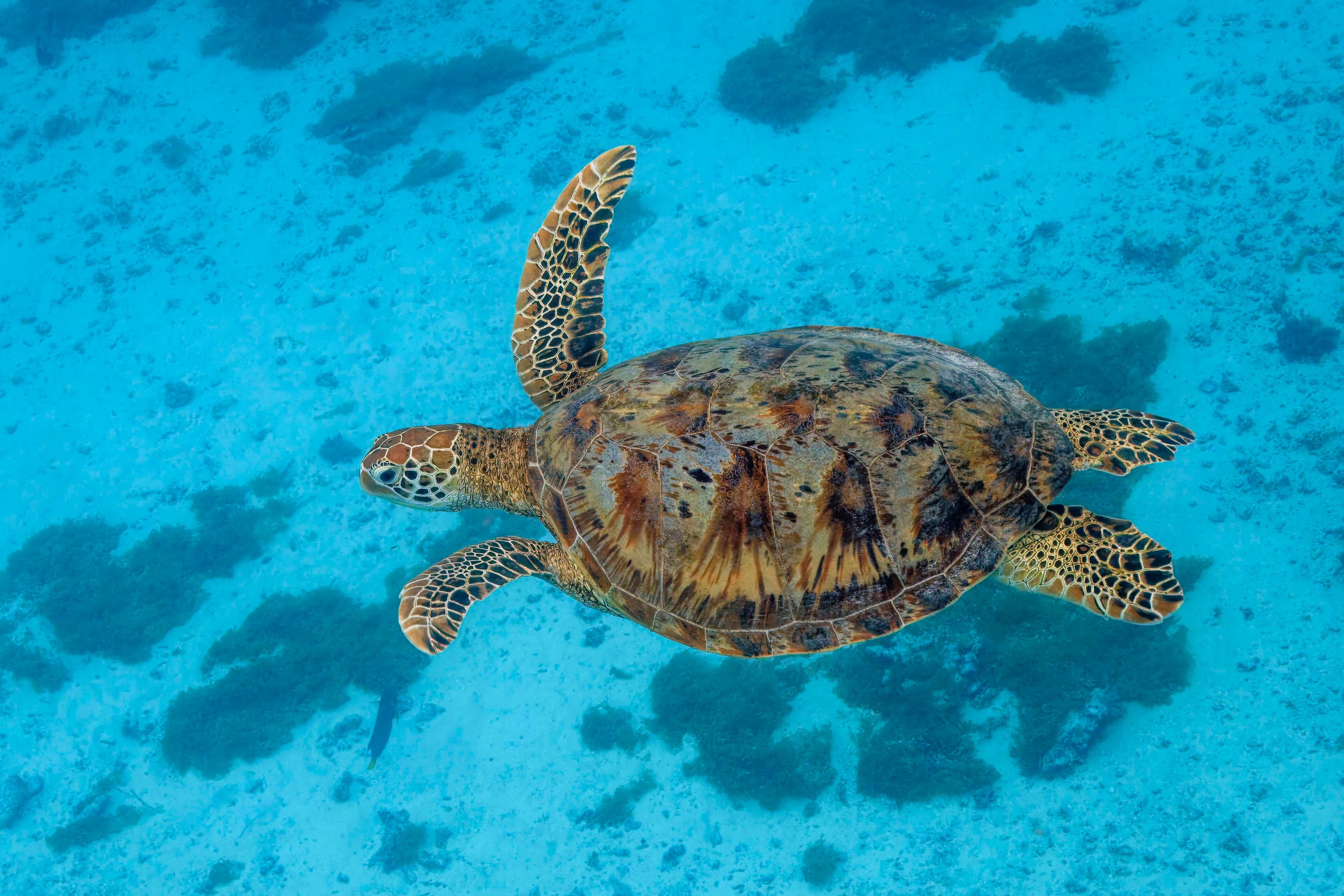
Green sea turtles are not actually green on the outside - their shells are usually brown or olive-coloured. They get their name from the greenish colour of their fat, which comes from eating lots of seagrass and algae. They are big animals: an adult can be about 1.5 metres long and weigh over 150 kilograms, roughly the weight of two large adults.
In the water, turtles look weightless. Their front flippers work like wings, pulling them through the sea with slow, graceful strokes. They can hold their breath for several hours when resting, but usually come up to the surface every few minutes to breathe. Snorkellers in Tonga's lagoons sometimes find themselves swimming alongside a turtle that seems completely unbothered, munching on seagrass with a calm, unhurried expression.
Female green sea turtles return to the same beach where they hatched to lay their own eggs - sometimes travelling thousands of kilometres across the ocean to find it. Scientists think they use the Earth's magnetic field like a built-in compass to navigate. In Tonga, certain beaches are protected nesting areas, and local communities watch over the nests to help hatchlings make their dash to the sea safely.