
Classroom lesson ยท Lu Pulu ยท ๐Ÿ‡น๐Ÿ‡ด Tonga

Lu Pulu

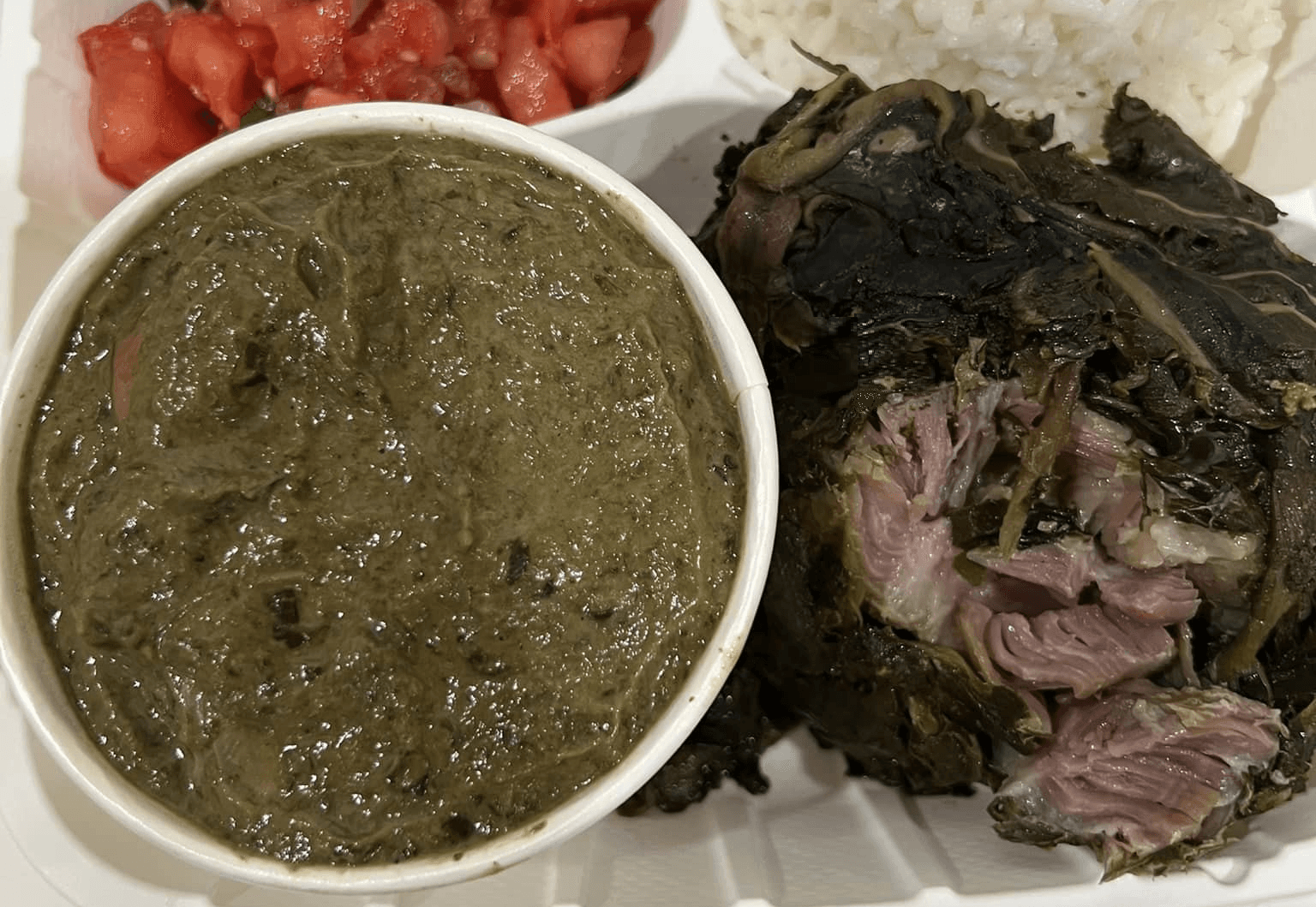
Corned beef and onion wrapped in taro leaves and cooked slowly underground

Photo ยท Wikimedia Commons

What is it?

Lu pulu is one of Tonga's most loved celebration foods. It is made by wrapping corned beef, onion, and coconut cream inside large dark green taro leaves, tying the bundles up, and cooking them slowly in an underground oven called an umu. The result is a rich, tender, melting packet of food that tastes of both the sea and the earth.

Tell me more

Taro is a plant that grows across the Pacific and tropical Asia. Its large, heart-shaped leaves are a deep green colour and are strong enough to use as natural wrapping paper. When cooked, the leaves become very soft and silky โ€” you can eat them along with the filling inside. 'Lu' is the Tongan word for these taro leaves, and 'pulu' refers to the corned beef (the word pulu comes from 'bull', as in cattle).

The umu is a traditional underground oven used across Polynesia. To make one, a pit is dug in the ground and filled with rocks. A fire is lit on top of the rocks to heat them until they are extremely hot. The fire is then removed, the food packages (wrapped in leaves) are laid on the hot rocks, more leaves and earth are piled on top to trap the heat, and the food is left to steam-cook for one to two hours. When the covering is lifted, the smell that rises up is one of the best things in Tonga.

Lu pulu is especially popular at feasts โ€” the big communal meals that happen at weddings, church celebrations, and important community events. Tongan feasts can involve enormous quantities of food, all cooked in the umu together and then laid out on long mats for the whole community to share. Children sit with their families and everyone helps to serve and pass food to one another.

In the classroom

Walk your class through this in 15 minutes.

Talk together

Discussion prompts

  1. 01The umu uses trapped heat and steam to cook food underground. What other cooking methods use steam or trapped heat?
  2. 02In Tonga, big celebrations always involve sharing large amounts of food with the whole community. What special foods does your family or community make for celebrations?
  3. 03Taro leaves work as natural wrapping paper. What other natural materials have people used to wrap, carry, or cook food around the world?
Try this

Classroom activity

Design a 'feast menu' for an imaginary class celebration. Each child contributes one dish they would bring and writes two sentences explaining what it is and how it is made. Compile all the dishes into a class feast menu, decorate it with drawings, and discuss the variety โ€” who brought something sweet, savoury, hot, cold, wrapped, or shared?