
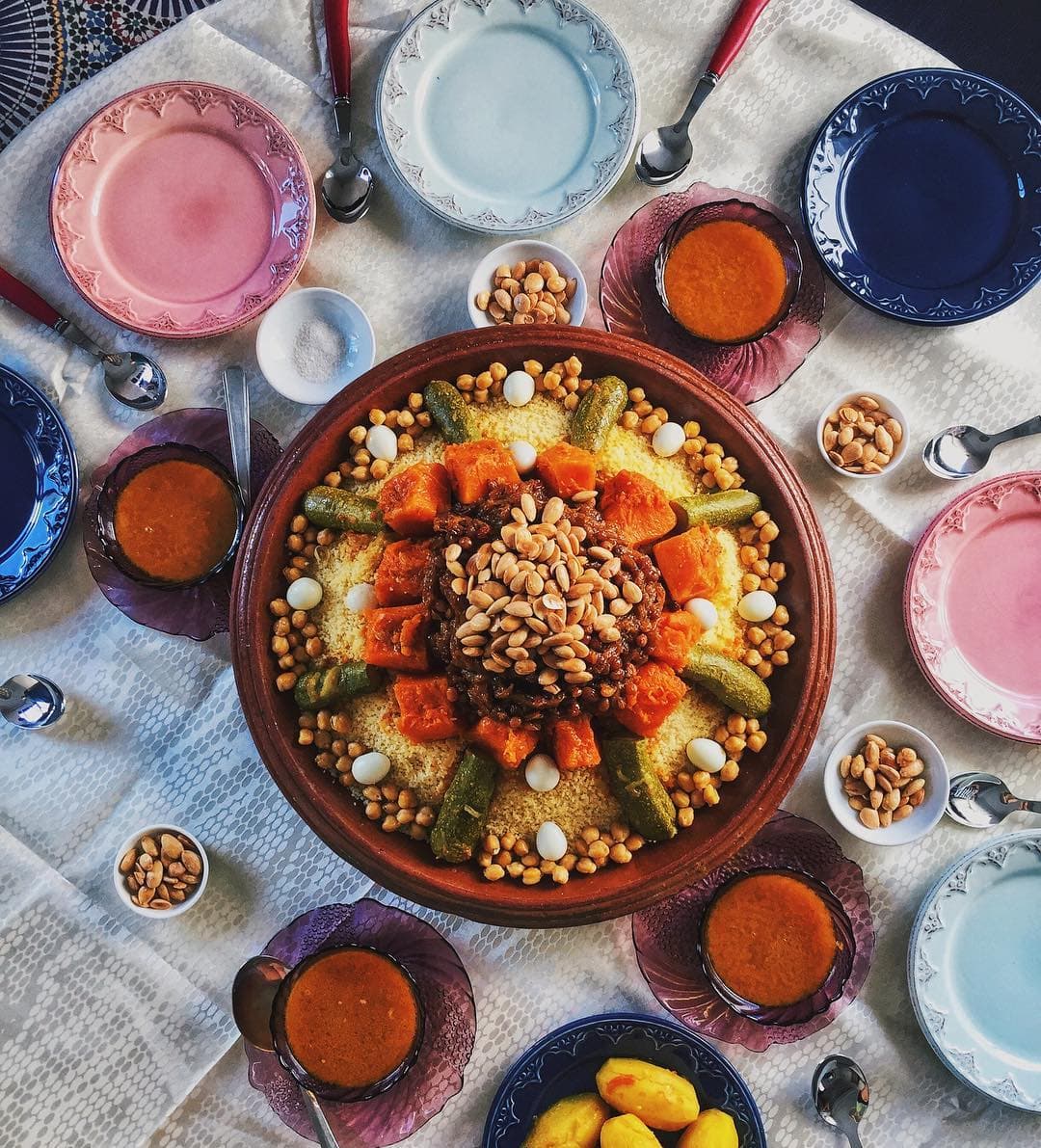
Making couscous by hand is a skill passed down through generations. The grains start as coarse semolina flour which is rolled and rubbed into tiny pellets, then dried in the sun. These tiny grains are then cooked by steaming them in a special two-part pot called a couscoussier, which allows the steam from the broth bubbling below to rise up and cook the grains above. The result is light, fluffy, and delicious.
In Tunisia, couscous is almost always served with a richly spiced stew on top, packed with vegetables like turnips, carrots, courgettes, and chickpeas, and often with lamb or fish. The spice mix used in Tunisian cooking, called tabil, includes coriander, caraway, chilli, and garlic, giving the stew a warmth and depth that is unlike anything else.
Couscous is a dish for sharing. It is traditionally served in a large communal bowl placed in the middle of the table, and everyone eats together from the same dish. On Fridays - the most important day of the week for family gatherings in Tunisia - almost every family will have couscous for their midday meal.