
Classroom lesson · Wildlife · 🇹🇳 Tunisia

Flamingo

A dazzling pink wading bird that turns its own food into colour

Photo · Wikimedia Commons

What is it?

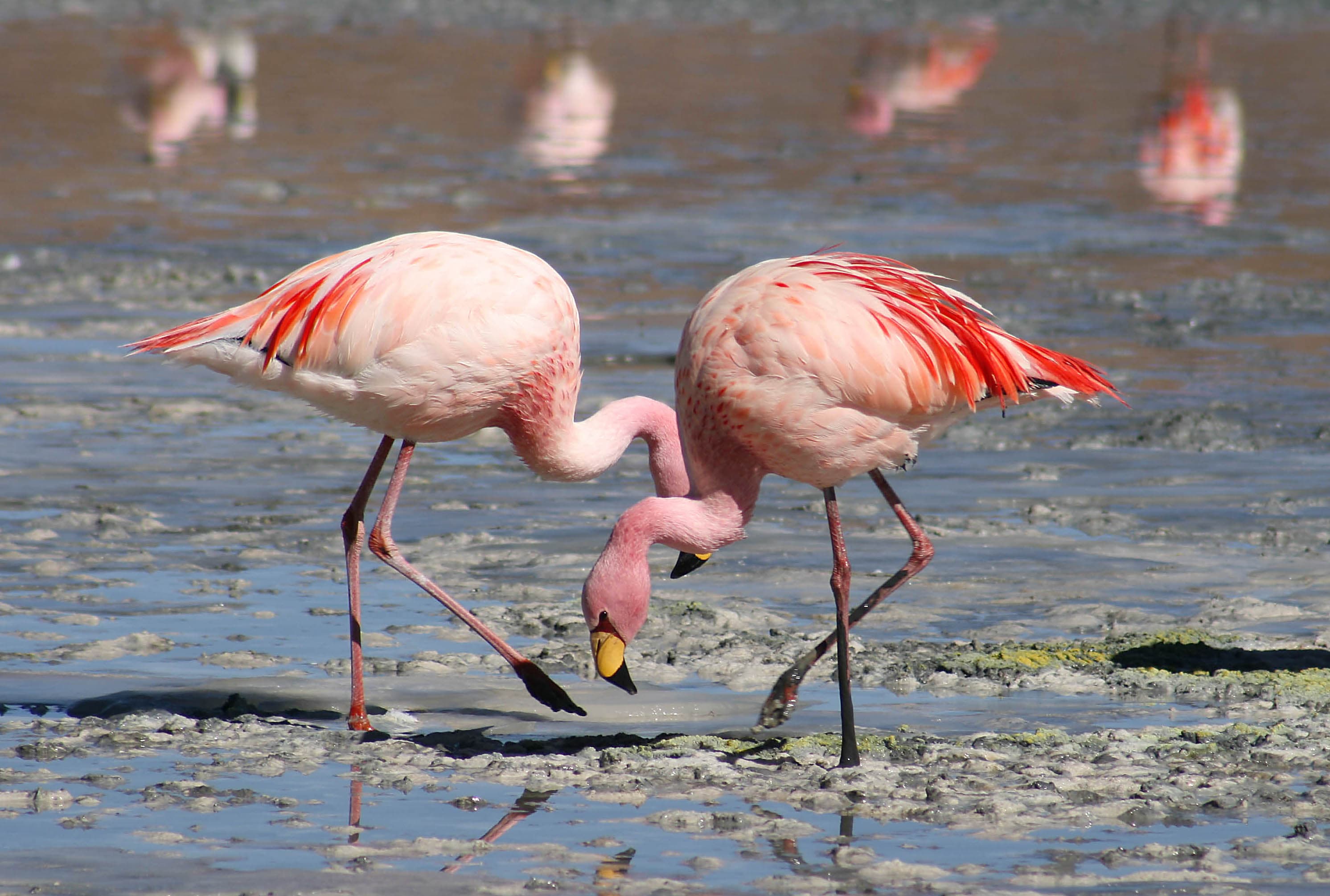
Flamingos are tall, bright pink birds that wade through shallow salt lakes and lagoons on their long, stilt-like legs. They are one of the most eye-catching birds in the world and gather in enormous flocks in Tunisia, especially around Lake Ichkeul and the Chott el Djerid. What makes flamingos pink is something surprising — their food!

Tell me more

Flamingos get their pink colour from tiny shrimps and algae that they eat. These foods contain natural pink and orange pigments, and the colour builds up in the flamingo's feathers over time. A flamingo that does not eat enough of these pink foods gradually turns white! This means you can tell how well-fed a flamingo is just by looking at how bright its feathers are.

The flamingo's beak is one of the most unusual in the bird world. It is bent in the middle like a broken arm, and the flamingo holds it upside-down in the water to feed. Special plates inside act like a strainer, filtering out tiny food while pushing out the muddy water. The tongue pumps in and out dozens of times a minute to help with this.

Flamingos are very social birds and love company. They live in flocks that can number in the thousands, and they are very noisy — a large flock sounds like a busy playground. They build mud nests shaped like small volcanoes and both parents take turns keeping the single egg warm before the fluffy grey chick hatches.

In the classroom

Walk your class through this in 15 minutes.

Talk together

Discussion prompts

  1. 01Flamingos turn pink because of what they eat. Can you think of other ways that food can change how a living thing looks?
  2. 02Why do you think flamingos like living in enormous flocks rather than on their own?
  3. 03If you could turn any colour based on what you ate, what colour would you be?
Try this

Classroom activity

Do a flamingo balance challenge! Stand on one leg and count how long you can hold it. Then try it with your eyes closed. Record everybody's times and make a class bar chart. Discuss: is it easier or harder with eyes closed, and why?