
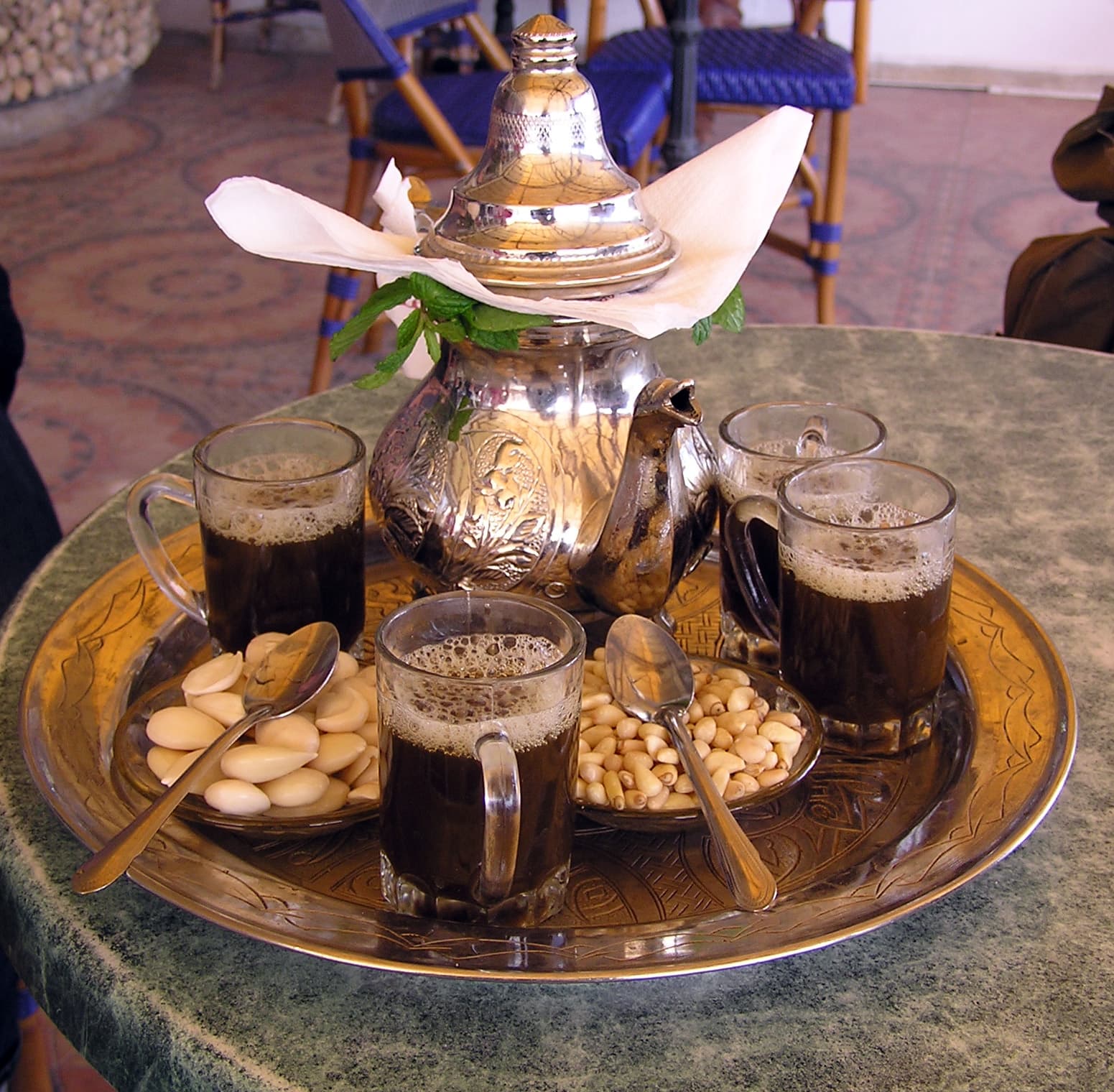
The most impressive part of serving mint tea in Tunisia is the pour. The person making the tea lifts the teapot high above the glasses - sometimes 50 centimetres or more - and pours in a long, thin stream. This is not showing off (though it does look spectacular) - the high pour creates foam on top of the tea and helps mix the sugar, mint, and tea perfectly.
Tea was introduced to North Africa from China through trade routes hundreds of years ago. Over time, Tunisian people made it completely their own by adding large amounts of fresh spearmint and lots of sugar. In the famous café in Sidi Bou Said, the tea is served with a few pine nuts floating on top, adding a gentle, nutty flavour.
In Tunisia, drinking tea is about more than the drink itself - it is about sitting together, talking, and enjoying each other's company. Teashops and cafés, especially in the Medina of Tunis, are filled with people chatting over multiple small glasses throughout the day. Refusing tea when it is offered is considered impolite because it means rejecting the friendship offered along with it.