
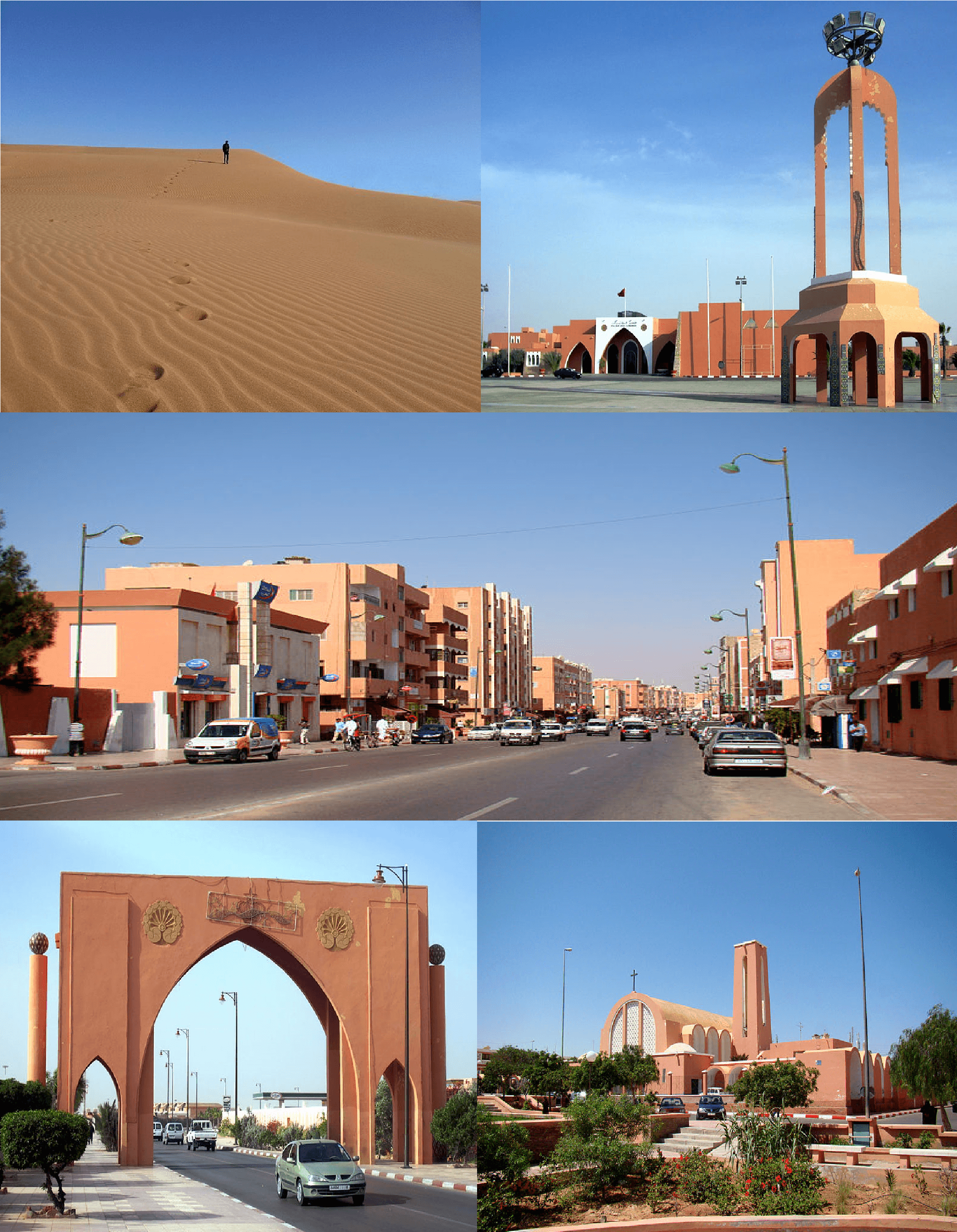
The city has wide, straight boulevards shaded by palm trees - a welcome relief in the desert heat. The central market, or souk, is full of colour and noise: traders selling spices, dates, woven fabrics, and fresh fish brought in from the nearby coast. The smell of cardamom and roasting coffee drifts through the narrow alleyways.
Laayoune grew quickly during the twentieth century because of the nearby phosphate mines at Bou Craa. Phosphate is a mineral used to make fertiliser for farms all over the world, and a long conveyor belt - one of the longest in the world - carries the phosphate from the mines straight to the coast for loading onto ships.
Despite the desert location, the city has parks, schools, a university, and a football stadium. People come from smaller towns and oases to shop, study, and visit family. In the evening, families gather in open squares to drink tea, eat grilled fish and flatbread, and watch children play as the air cools down.