
Classroom lesson · Sahara Desert Dunes · 🇪🇭 Western Sahara

Sahara Desert Dunes

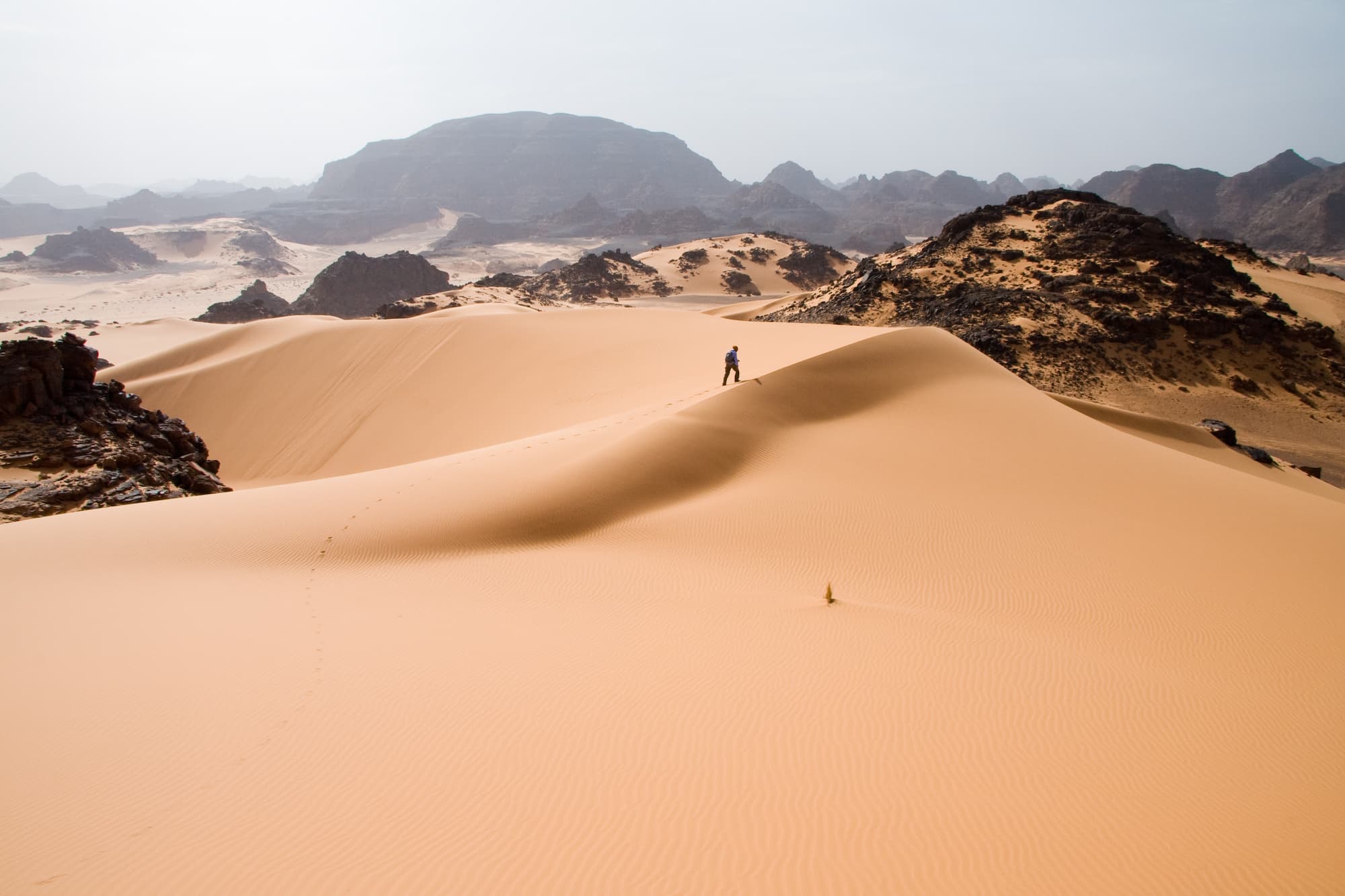
A sea of golden sand stretching to the horizon

Photo · Wikimedia Commons

What is it?

Western Sahara sits on the edge of the Sahara, the largest hot desert on Earth. Huge sand dunes rise and fall like frozen waves, while other parts are flat gravel plains called ergs. The landscape changes colour from orange at sunrise to deep gold at midday and crimson at sunset.

Tell me more

The sand dunes here can grow taller than a ten-storey building. Strong desert winds sculpt them into perfect curves and push them slowly across the land — a big dune can move several metres in a year, almost like a very slow river of sand.

Not all of Western Sahara is soft sand. Large areas are flat, stony gravel plains called regs. The gravel is smoothed flat by thousands of years of wind, and you can see for kilometres in every direction without a single tree blocking the view. On clear nights, the stars over these plains are breathtaking.

Desert temperatures swing wildly. During the day the sun can heat the sand until it burns to touch. At night the same desert can turn surprisingly chilly because there are no clouds to trap the warmth. Saharan people have learned exactly when to travel, rest, and seek shade.

In the classroom

Walk your class through this in 15 minutes.

Talk together

Discussion prompts

  1. 01If the sand dunes are always moving, what problems might that cause for someone building a road or a house nearby?
  2. 02Why do you think desert temperatures drop so much at night when there are no clouds?
  3. 03What would you pack in a bag if you were going to travel through the Sahara for a week?
Try this

Classroom activity

Fill a shallow tray with dry sand or fine salt. Blow gently through a straw at different angles and watch the 'dune' form and move. Draw the dune shapes you make and label which direction the 'wind' was blowing.