
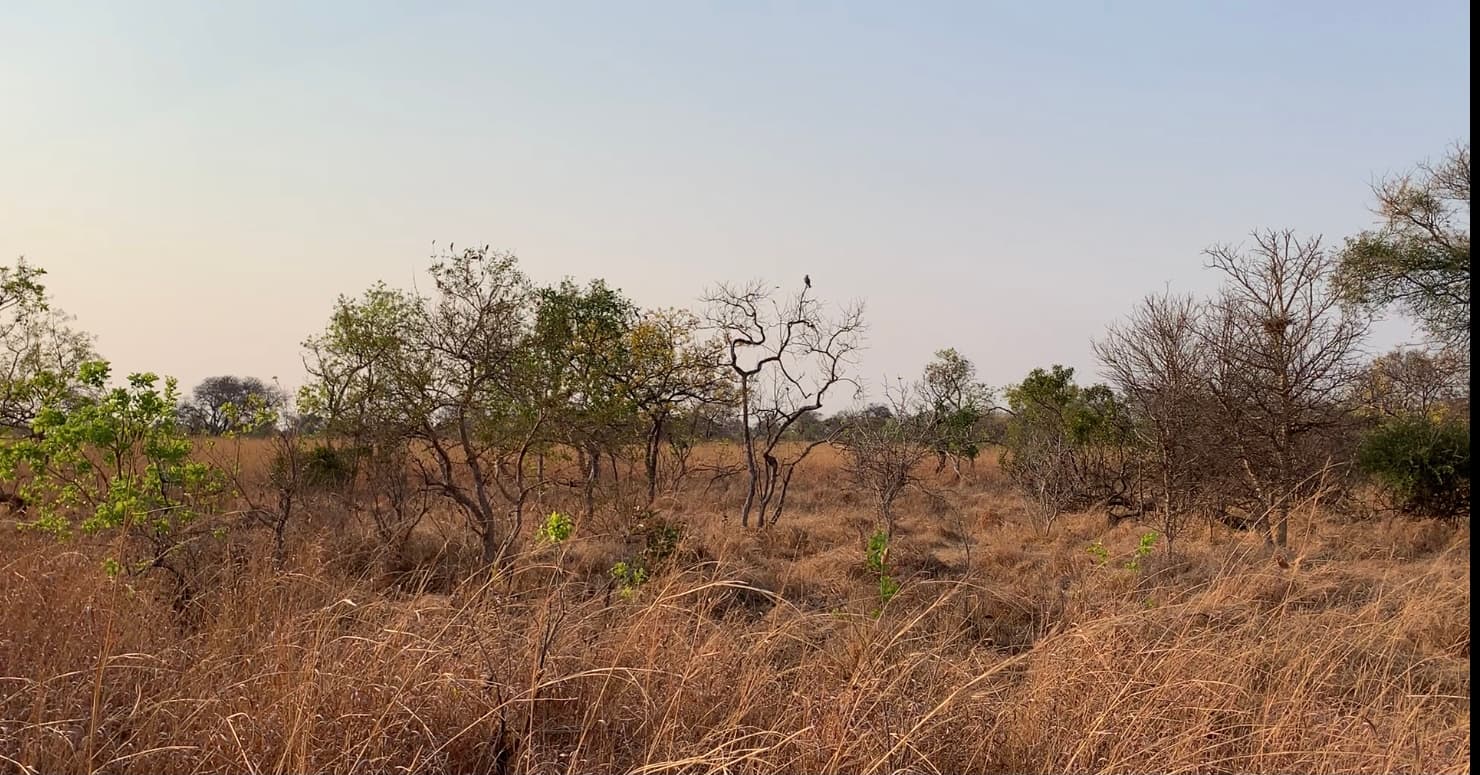
In the north-west of Kafue is a famous flat, grassy area called the Busanga Plains. In the rainy season (December to April), the plains flood and become a vast wetland where birds, fish and hippos thrive. In the dry season, the water drains away and herds of red lechwe and puku antelope spread out across the dried grass.
Kafue is named after the Kafue River, which flows through it. Like the Zambezi, the Kafue is a long, important river - it eventually joins the Zambezi south of Lusaka. The river creates lots of different habitats: thick forest, open grassland, wide floodplains and rocky hills.
The park is home to one of the largest populations of leopards in Africa. Leopards are shy and mostly active at night. Many rangers in Kafue can tell different leopards apart by their spot patterns - just like a fingerprint, no two leopards have the same pattern.
Because it is so huge, parts of Kafue have hardly been explored. Scientists are still finding new things there. In recent years they have spotted very rare birds in the park's most remote corners, and tracked wild dog packs that nobody had recorded before. There is something special about a place big enough to still hold secrets.