
Classroom lesson · Lake Kariba · 🇿🇲 Zambia

Lake Kariba

One of the biggest man-made lakes on Earth - shared with Zimbabwe

Photo · Wikimedia Commons

What is it?

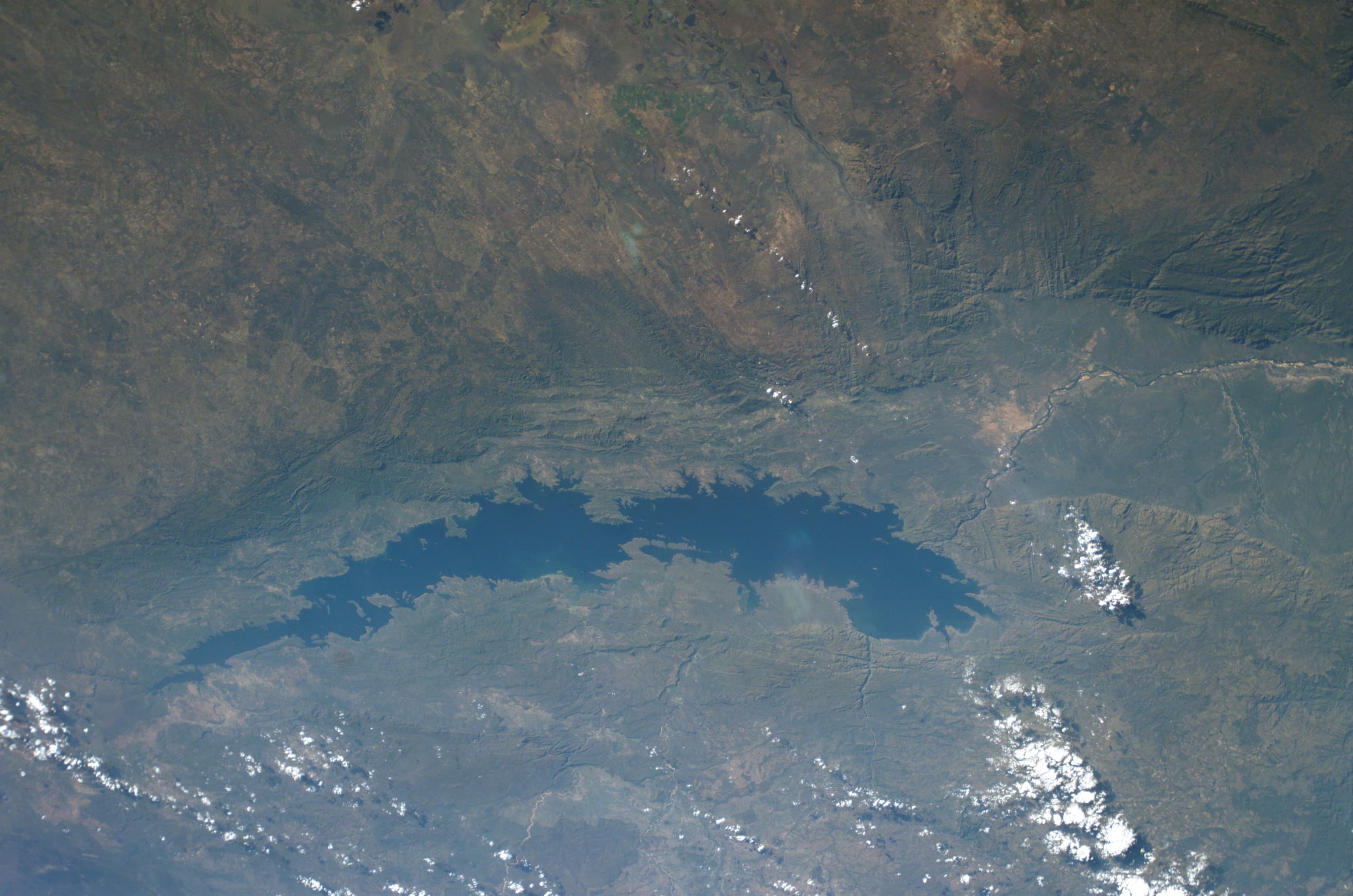
Lake Kariba is a huge lake on the border between Zambia and Zimbabwe. It is 220 kilometres long and 40 kilometres wide. It isn't a natural lake - it was made by building a giant wall across the Zambezi River in the 1950s and 60s. The dam wall is called Kariba Dam.

Tell me more

When the dam was built, the river slowly backed up behind it and filled a long valley. It took about five years to fill completely. The result is one of the largest man-made lakes in the world. From space, Lake Kariba looks like a long blue worm wriggling along the border.

Kariba Dam itself is a giant curved concrete wall, 128 metres tall. Water flowing through it spins enormous turbines that make electricity - enough for millions of homes in both Zambia and Zimbabwe. The two countries share the lake and the power evenly.

Dead trees still stand in the lake in some places, where the old forest never rotted away. They are called 'petrified trees' and create a strange forest under the water surface, perfect for fish to hide among. Tiger fish, bream and Kapenta (a small silver fish about the size of a sardine) live here in huge numbers.

People who live around Lake Kariba fish for Kapenta at night, in special boats with bright lights. The Kapenta swim up towards the lights, thinking they are the moon, and the fishermen catch them in nets. The dried Kapenta is eaten all over southern Africa - it tastes salty and crunchy.

In the classroom

Walk your class through this in 15 minutes.

Talk together

Discussion prompts

  1. 01What changes when humans build a lake by stopping a river? Who gains and what is left behind?
  2. 02Two countries share Lake Kariba and the electricity from it. What might it take for countries to share something this big?
  3. 03Kapenta fish swim towards bright lights. What other animals are attracted to lights at night?
Try this

Classroom activity

Fill a small tray with water to one third. Build a small dam of stones across the middle. Slowly add more water on one side. Watch what happens. Then break the dam and see how the water rushes through. Discuss: how is this like Kariba?