
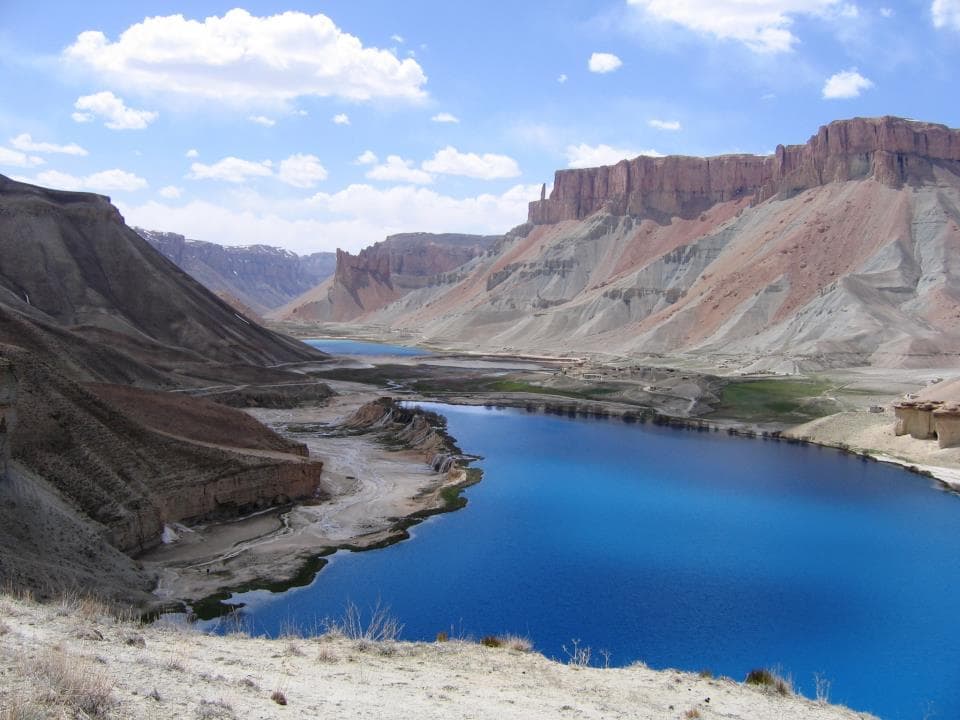
The six lakes sit at about 2,900 metres above sea level - high enough that the air is thin and crisp and the sky seems a deeper blue than usual. Each lake is separated from the next by a natural dam called a travertine dike, which forms when minerals in the water slowly build up and harden into a wall over thousands of years.
The colours of the water shift from turquoise to deep sapphire depending on the time of day and the angle of the sun. In the morning, when the light is low, the water can look almost green. By midday, it blazes a vivid electric blue. Local families travel from many villages to picnic beside the shores.
Ducks, geese and other waterbirds rest on the lakes during long migrations across Asia. The cliffs around the water are home to raptors - birds of prey that soar on warm currents of air rising off the rocks. In spring, wildflowers bloom in the cracks of the pale cliff walls, adding flashes of yellow and red to the blue-and-white scene.