
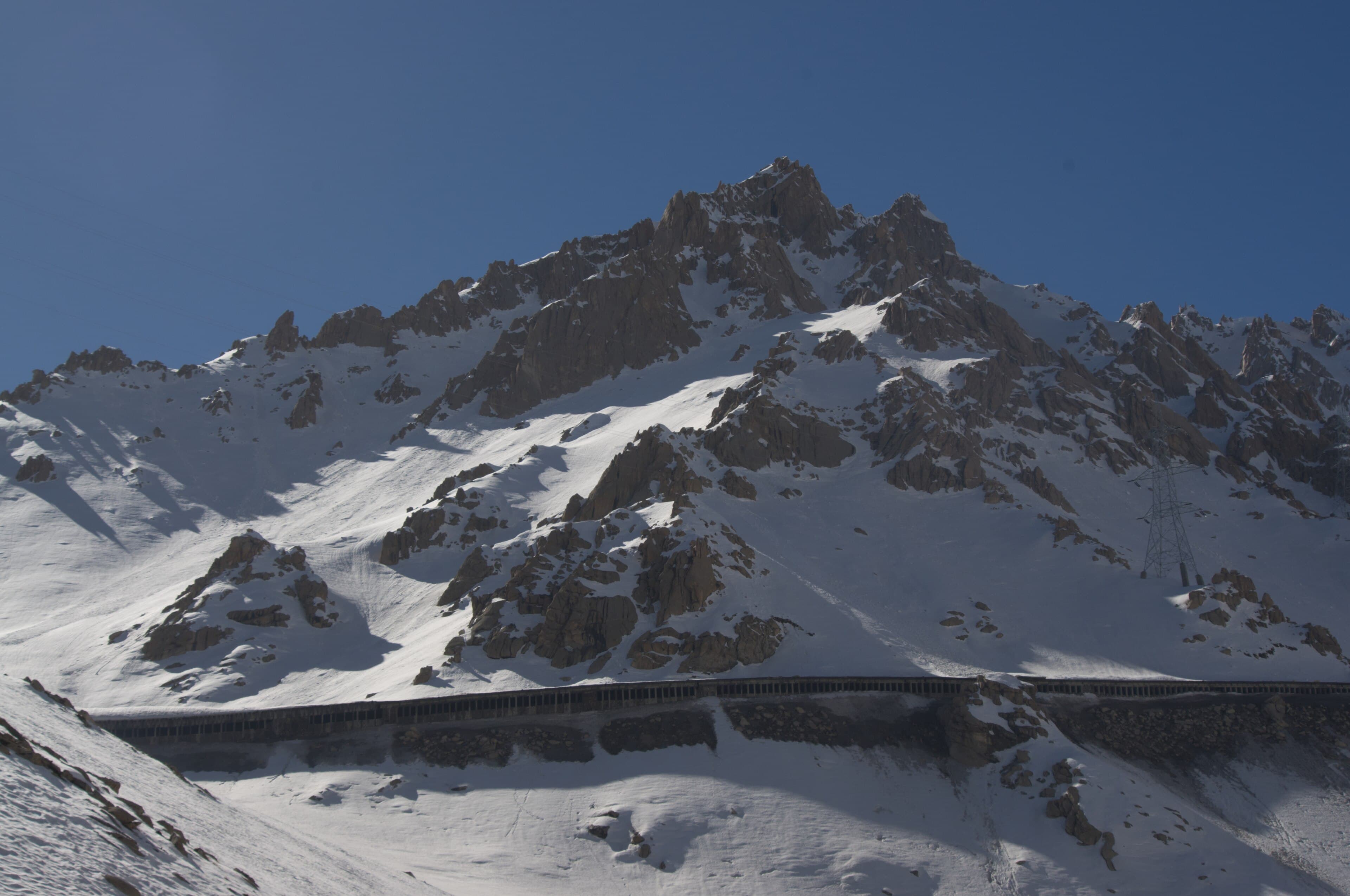
Before the Salang Pass road was built, crossing the Hindu Kush in winter was nearly impossible. Travellers had to choose long, dangerous routes around the mountains or wait for the snow to melt in spring. The road and its tunnel, finished in 1964, cut the journey dramatically and allowed goods and people to move between northern and southern Afghanistan all year round.
The Salang Tunnel at the top is about 2.7 kilometres long and passes straight through solid rock. When you drive through it, you go from one climate zone to almost another - the north side of the pass is often drier, while the south side can be wetter and warmer. Locals say you can almost feel the change in the air as you emerge from the tunnel.
In winter, snow can pile metres deep around the pass, and avalanches - huge slides of snow rushing down the mountain - are a regular part of life up here. Engineers have built long concrete snow sheds over sections of the road to let avalanches slide harmlessly over the top of the traffic below. It is like driving under a stone umbrella.