
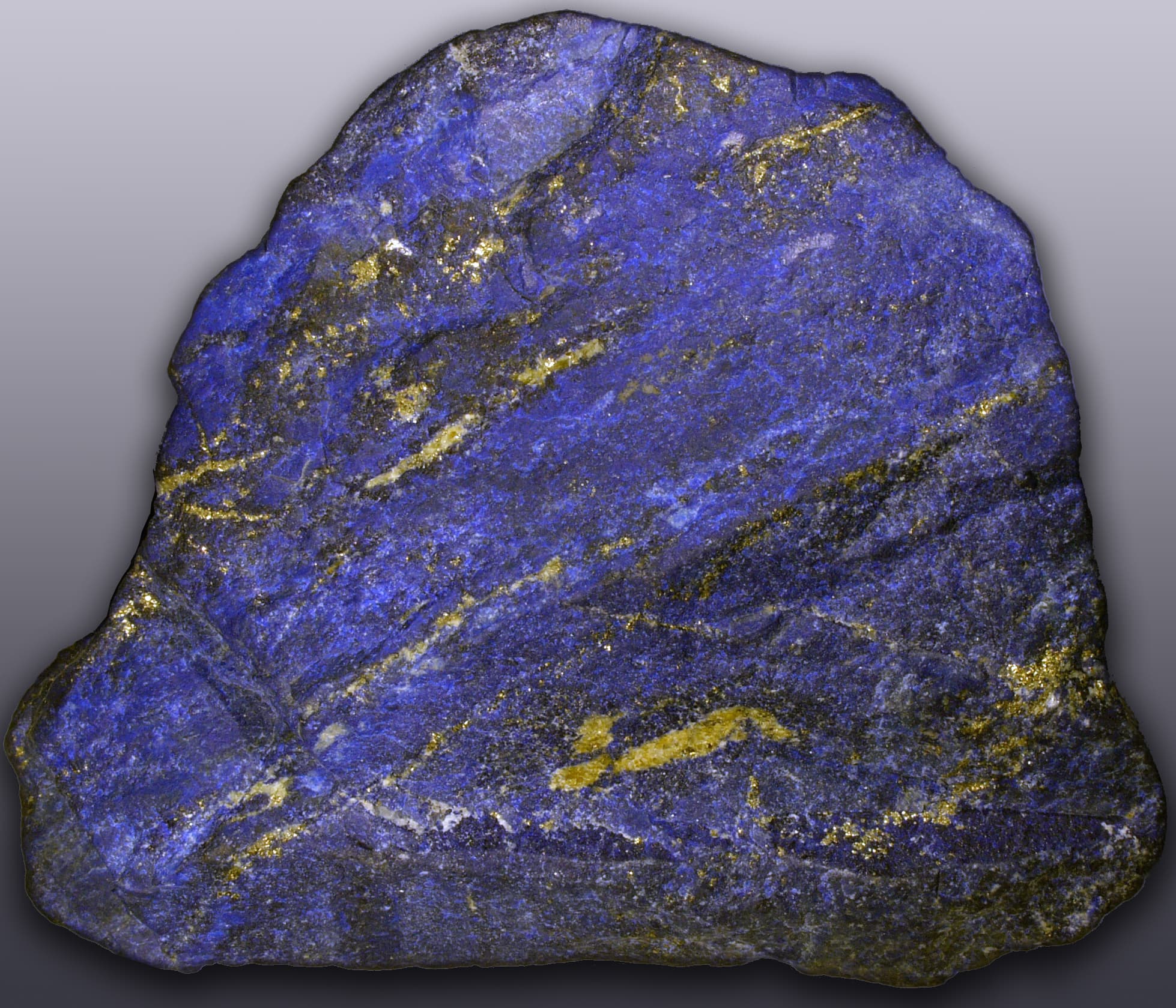
The stone gets its brilliant blue colour from a mineral called lazurite. The best lapis lazuli also has tiny golden flecks of a mineral called pyrite - often called 'fool's gold' because of its shiny yellow colour - scattered through the blue, making it look like a piece of the night sky dotted with stars. The finest quality comes from mines at Sar-e-Sang in the Kokcha river valley, where it has been dug from the mountain for thousands of years.
For centuries, lapis lazuli was ground into a fine powder to make a paint colour called ultramarine - which simply means 'from beyond the sea', because it was shipped across the Mediterranean from Afghanistan to Europe. This brilliant blue was so expensive that painters in the Middle Ages saved it only for the most important parts of their pictures - often the blue robes of figures in sacred paintings. The same colour also coloured the burial mask of Tutankhamun.
Today, lapis lazuli is carved into decorative bowls, jewellery, beads and tiles, as well as still being ground into artist's pigment. The swirling blue stone is used in mosaics and inlay work across Afghanistan and is considered a symbol of the country's deep connection to the mountains. You can find it in markets in Kabul and in museums around the world.