
Classroom lesson · Sport · 🇦🇫 Afghanistan

Marco Polo Sheep

The mountain sheep with the most spectacular curling horns on Earth

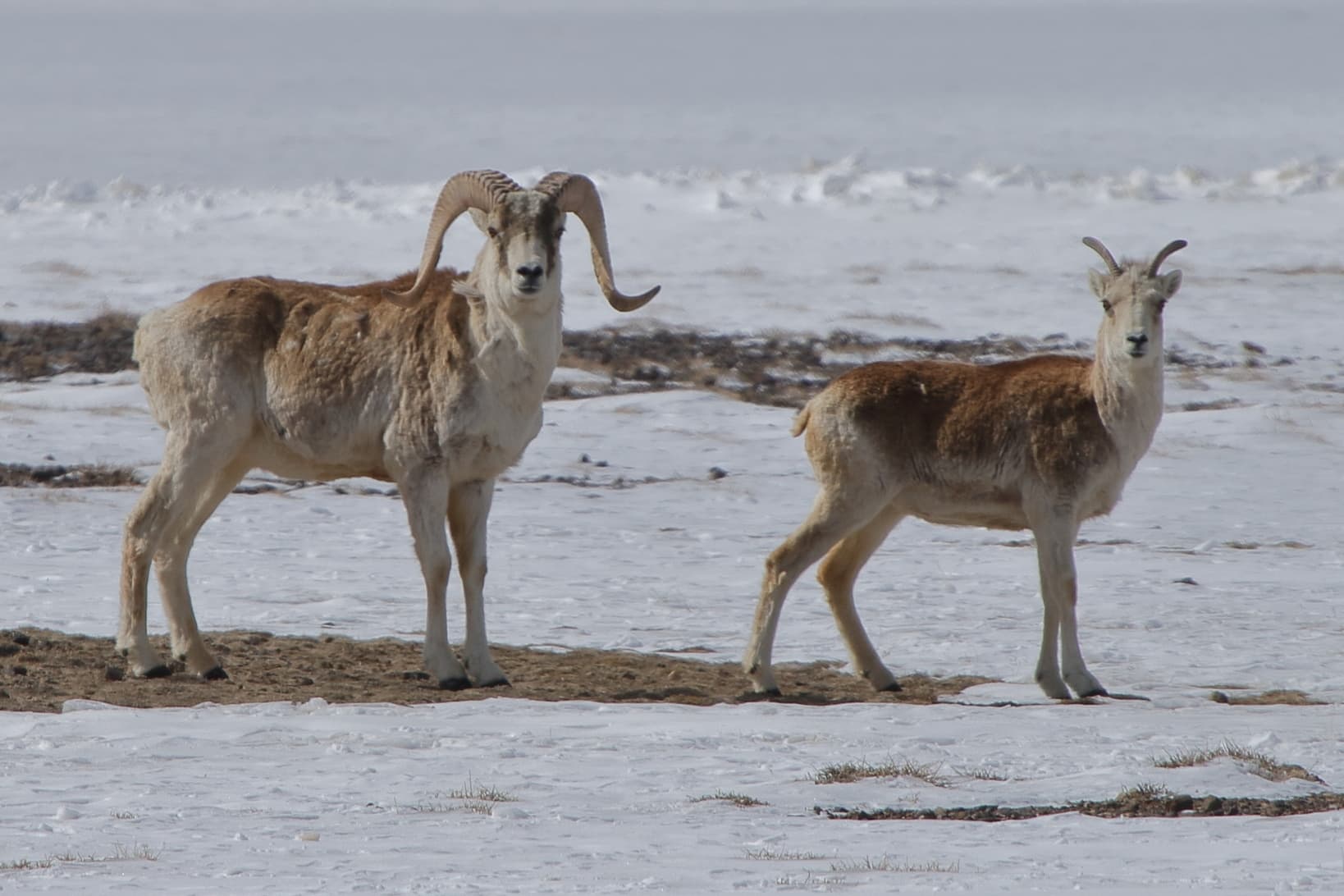
A Marco Polo sheep with enormous spiralling horns standing on a rocky Pamir ridge

Photo · Wikimedia Commons

What is it?

Marco Polo sheep are large wild sheep that live on the high plateaus of the Pamir and Hindu Kush mountains. The males are famous for their extraordinary horns, which spiral outward in enormous curving arcs and can grow longer than a metre and a half from tip to tip. The explorer Marco Polo wrote about them in the 13th century, and scientists named them in his honour.

Tell me more

The horns of a male Marco Polo sheep can reach up to 190 centimetres from tip to tip — longer than a tall adult human is tall. The horns grow throughout the animal's life, adding a new ring each year rather like the rings inside a tree trunk. Scientists can count the rings to estimate a sheep's age. Females have much shorter, straighter horns.

Marco Polo sheep live in herds on high open grasslands called alpine meadows, at altitudes between 3,600 and 5,200 metres. The air up there is thin and cold, but the sheep have thick woolly coats and can travel many kilometres a day in search of the hardy grasses that survive at such heights. In winter, they move down to slightly lower, sheltered valleys to find food under the snow.

These sheep are powerful and agile despite their size. An adult male can weigh as much as 185 kilograms — heavier than two average adults. When two males compete, they rear up on their hind legs and clash their enormous horns together with a crack that echoes across the mountains. The winner earns the right to lead the herd to the best grazing spots.

In the classroom

Walk your class through this in 15 minutes.

Talk together

Discussion prompts

  1. 01Marco Polo saw these sheep and wrote about them 700 years ago. Why do you think scientists decided to name the species after him?
  2. 02The sheep's horns grow a new ring each year. What other things in nature grow in a way that records time?
  3. 03Marco Polo sheep move to lower ground in winter to find food. What other animals do something similar to survive cold seasons?
Try this

Classroom activity

Using a long strip of paper or string, measure out 190 cm on the floor — the maximum width of a Marco Polo sheep's horns. Stand inside that length to feel how big it is. Now measure the height of the tallest person in your class and compare. Write a sentence describing what you discovered.