
Classroom lesson · Andros Blue Holes · 🇧🇸 Bahamas

Andros Blue Holes

The world's largest concentration of underwater blue holes

Photo · Wikimedia Commons

What is it?

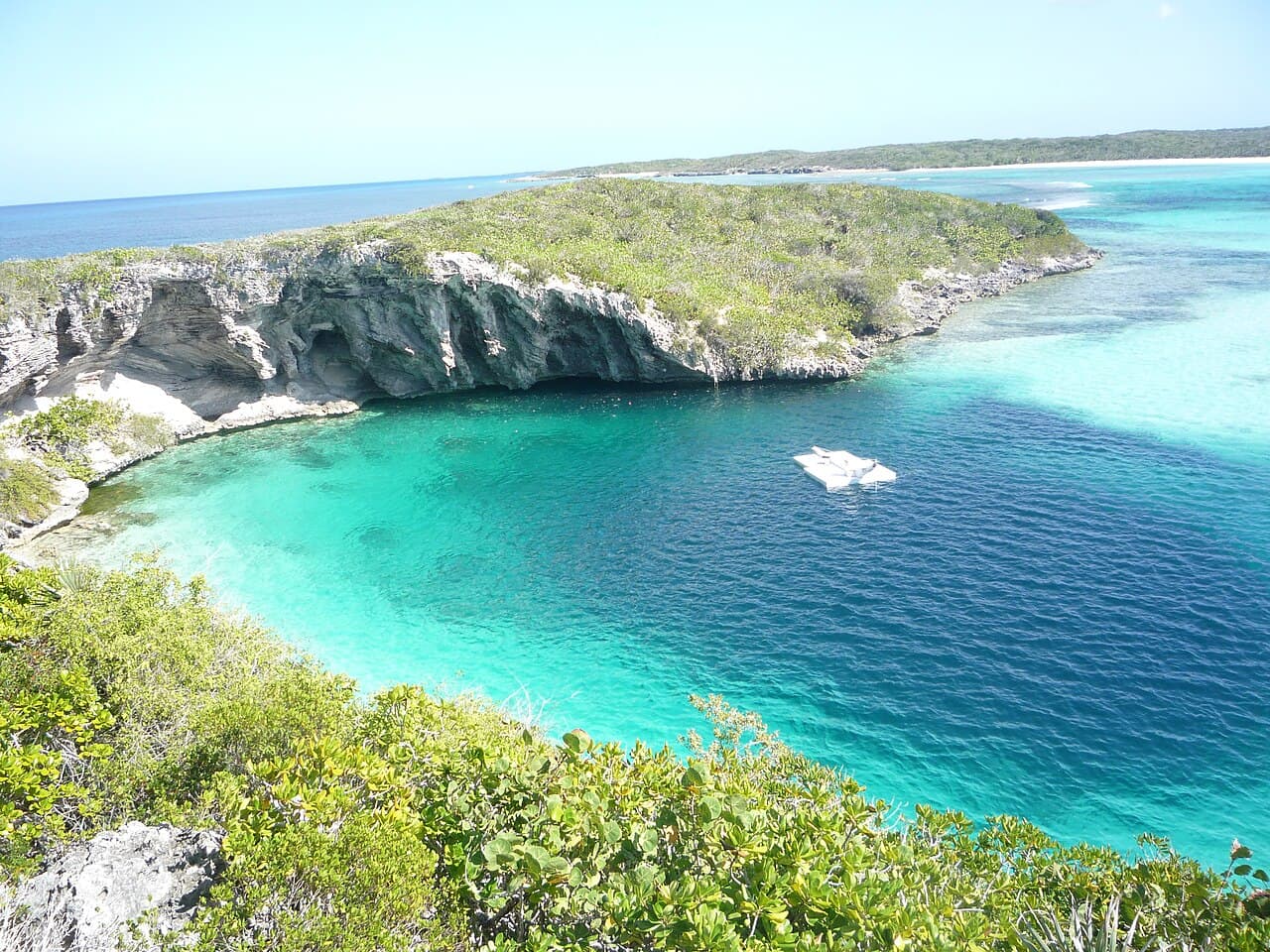
Off the island of Andros in the Bahamas there are hundreds of extraordinary underwater caves called blue holes. They look like dark blue circles in the middle of bright shallow water. The Bahamas has more blue holes than anywhere else in the world, making Andros one of the most exciting places for ocean explorers.

Tell me more

A blue hole is a flooded cave that formed in the limestone rock thousands of years ago, when the sea level was much lower and rainwater slowly carved tunnels underground. When the sea rose, these caves filled with water and became the deep, round pools we see today. From above, they glow a much darker, richer blue than the shallow water around them.

Some blue holes are in the ocean, while others — called inland blue holes — are found on the land of Andros island itself, surrounded by trees. You can find them by looking for a sudden dark circle among the green vegetation or the pale sandy shallows. Scientists love them because the layers of water inside can be like a time capsule, holding clues about what the Earth was like long ago.

Inside a blue hole, the deeper you go, the darker and more mysterious it gets. Marine life including fish, sponges, and crustaceans live near the opening where sunlight still reaches. The caves twist and branch in amazing directions underground. Trained divers who explore them sometimes discover completely new tunnels that no human has ever seen before.

The Andros Barrier Reef, just offshore, is the third-largest barrier reef in the world. Together with the blue holes, it makes Andros an underwater wonderland. Local Bahamians sometimes call the blue holes magical, and it is easy to see why — they look like secret portals into another world.

In the classroom

Walk your class through this in 15 minutes.

Talk together

Discussion prompts

  1. 01Blue holes were carved by rainwater over thousands of years. What other landforms can water create over a very long time?
  2. 02Scientists say the layers inside a blue hole are like a time capsule. What do you think they might find there?
  3. 03Would you want to dive into a blue hole? What would excite you — and what might feel scary?
  4. 04Andros also has the world's third-largest barrier reef nearby. Why might lots of different underwater features end up in the same place?
Try this

Classroom activity

Fill a clear glass with water and carefully pour a small amount of dark food colouring at the bottom without stirring. Watch how the layers sit. This models how different layers of water sit in a blue hole. Sketch what you see and label 'sunlit layer', 'middle layer', and 'deep layer'.