
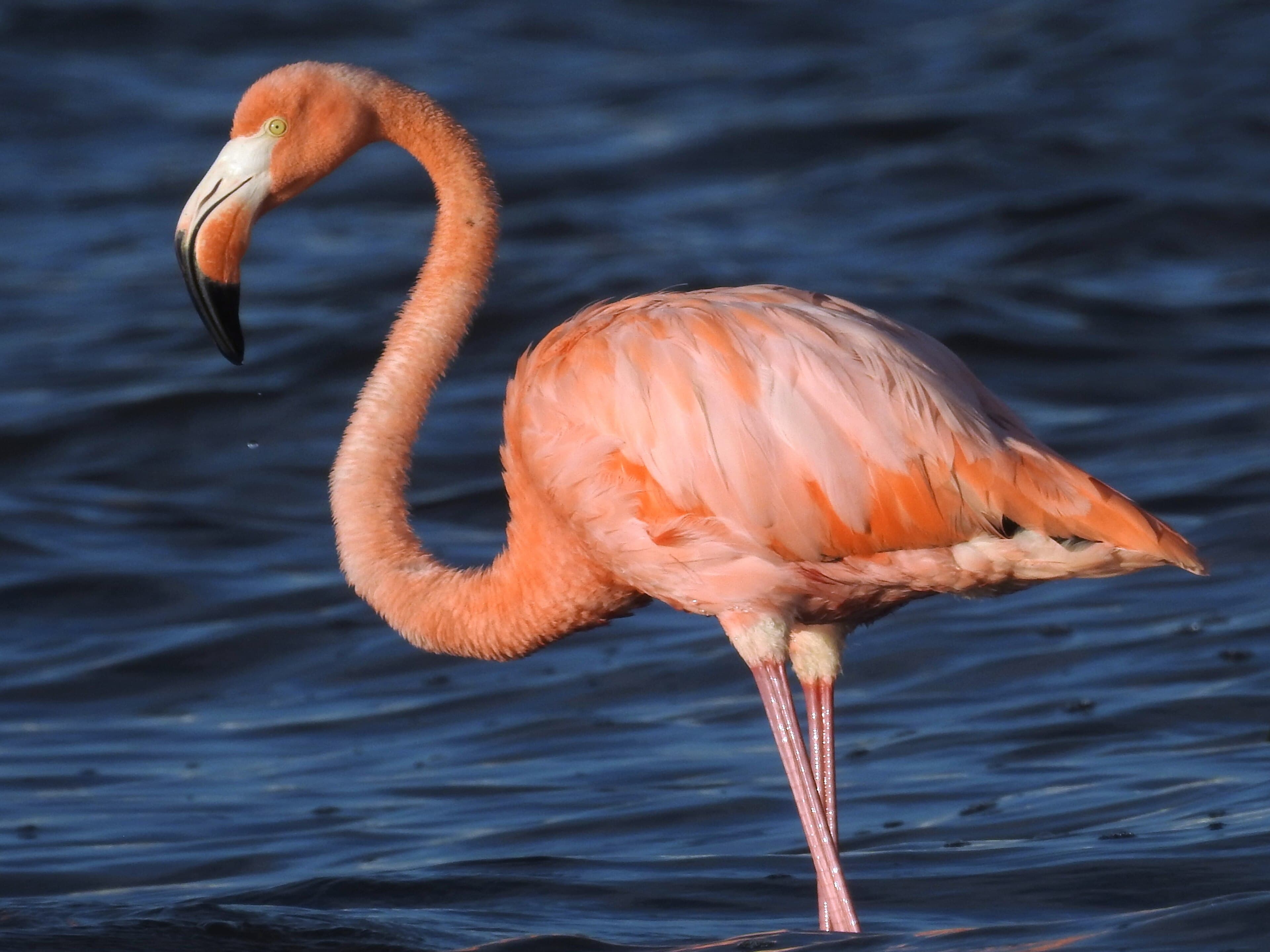
Flamingos are pink because of the food they eat. They feed on tiny shrimp and algae that contain a natural pink pigment called carotenoid. A flamingo that does not eat enough of these shrimp-like creatures gradually turns white! This means a bird's colour is a clue about how well it has been eating.
Inagua, the third-largest island in the Bahamas, is home to about 80,000 flamingos - one of the biggest colonies anywhere on Earth. The island's huge shallow salt lakes are perfect for flamingos because the salty water is full of the tiny creatures they love to eat. The whole lake can turn a breathtaking shade of pink when the birds gather together.
Flamingos have a very clever trick when they feed: they turn their beak upside down and use it like a strainer, pumping water in and out to filter out the tiny animals. The curved, bent shape of a flamingo beak is perfectly designed for this. It is like having a built-in kitchen sieve on your face.
Baby flamingos are born grey or white and take about two years to turn fully pink. Flamingo parents produce a special red liquid called 'crop milk' from their chests to feed their chicks - and this actually makes the parents temporarily paler while the babies grow more colourful.