
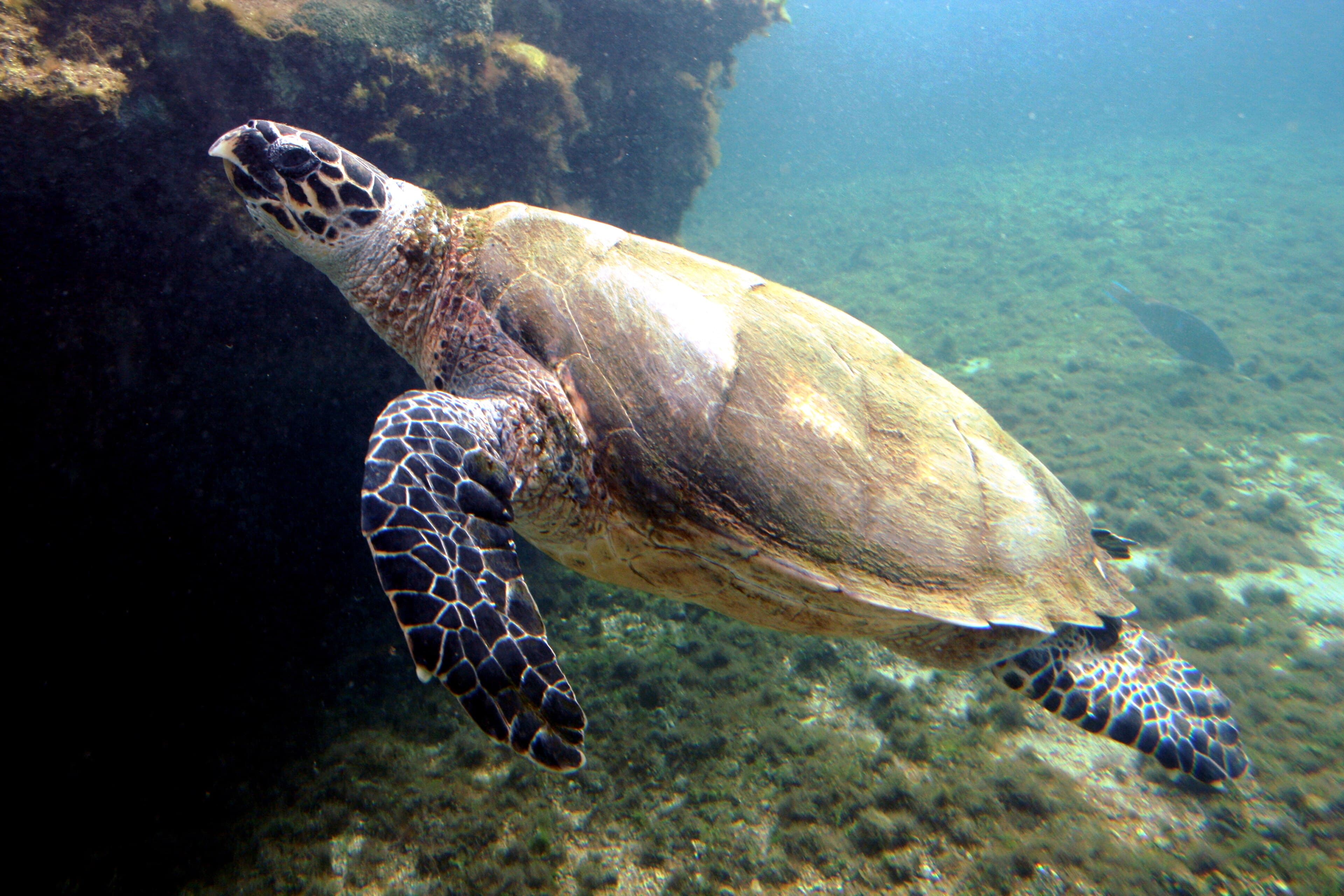
Hawksbill turtles are expert divers, able to hold their breath and explore the reef for long periods. They have a particular taste for sea sponges, which most other animals avoid because sponges can be toxic. By eating sponges, hawksbills help keep coral reefs healthy - without them, sponges would smother the coral and prevent other creatures from thriving.
Female hawksbills return to the same beaches where they were born to lay their own eggs. A mother turtle crawls up the beach at night, digs a deep hole with her flippers, lays around 130 eggs, covers them with sand, and returns to the sea. The warm sand incubates the eggs, and about two months later, tiny hatchlings dig their way out and scurry to the water.
Hawksbill turtles have beautiful patterned shells with overlapping plates that look a little like scales. These shells have the most amazing amber and brown markings, warm and translucent in the sunlight. Scientists can identify individual turtles from the unique pattern of scales on their heads, the same way humans can be identified by their fingerprints.
The Bahamas National Trust and local communities work together to protect turtle nesting beaches. Volunteers measure and count nests, and rangers make sure the beaches are safe for hatchlings. Seeing a baby turtle make its first journey to the sea is one of the most memorable things a person can witness.