
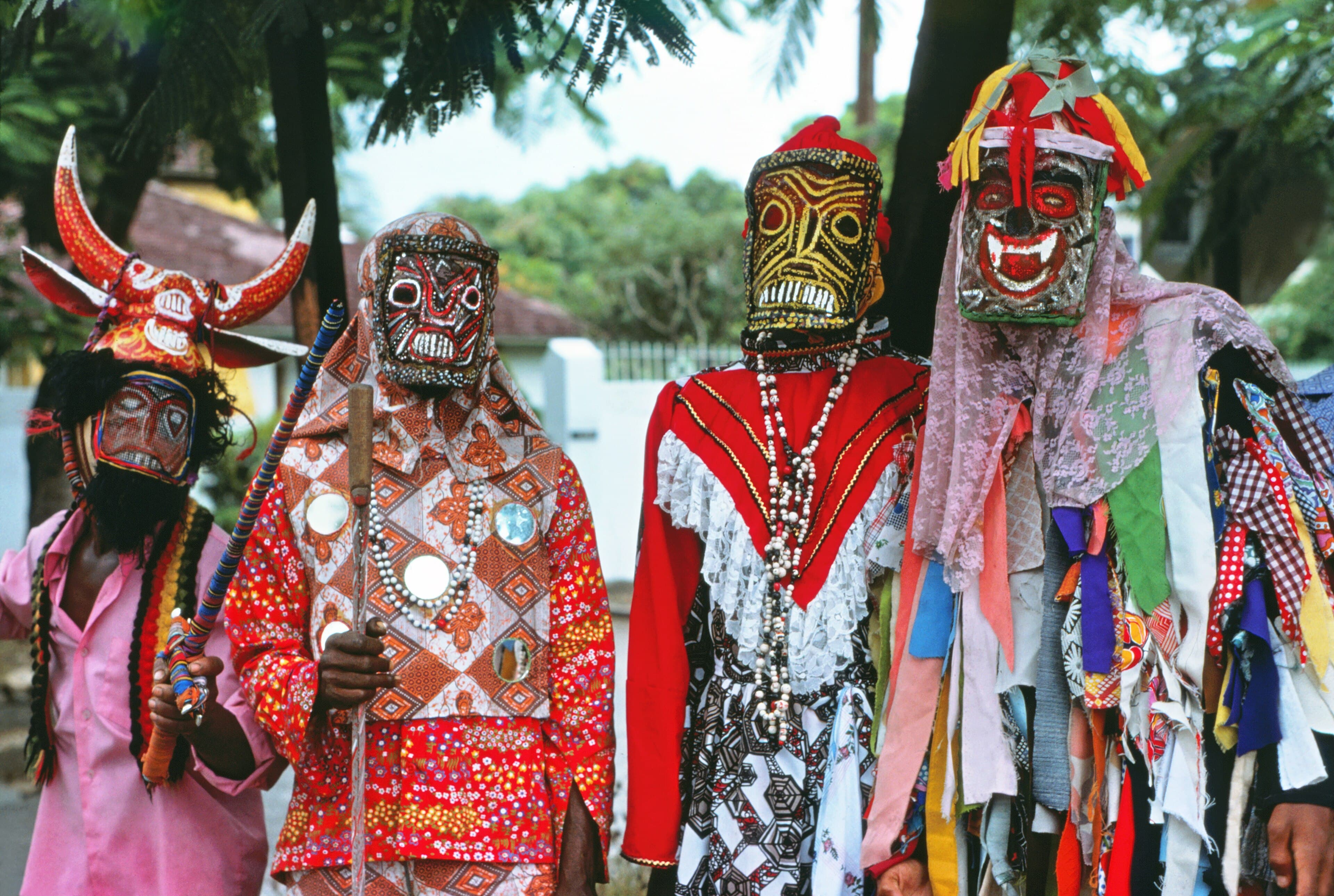
Classroom lesson · Music · 🇧🇸 Bahamas

Junkanoo Music

Cowbells, goombay drums, and horns — the sound of the Bahamas

Photo · Wikimedia Commons

What is it?

Junkanoo music is the heartbeat of the Bahamas — a thundering, joyful mix of goombay drums, cowbells, brass horns, and whistles that fills the streets during the famous Junkanoo parade. The sound is unlike anything else: layers of rhythm building on top of each other until the whole crowd is moving. It is one of the most exciting musical traditions in the Caribbean.

Tell me more

The most important instrument in Junkanoo music is the goombay drum, a large drum made from a wooden barrel with a goatskin stretched across the top. Players beat it with their bare hands, creating deep booming rhythms. Dozens of goombay drums played together create a sound you can feel in your chest before you even hear it with your ears.

Cowbells are another signature Junkanoo sound. Each musician hits the bell with a metal rod in a precise, repeating pattern. When hundreds of cowbells play together in a large group, called a 'shack shack', the sound is hypnotic and energising. Brass horns add melody on top of the percussion, and whistles cut through everything like shouts of excitement.

Junkanoo music is not written down in the same way as classical music — it is learned by playing alongside more experienced musicians. Young children in the Bahamas grow up hearing it and often join junior groups to practise for months before each parade season. The music is passed on through doing, listening, and playing together.

Each Junkanoo group — called a 'shack' — develops its own musical style and rhythm patterns that become a kind of identity. Competing groups work hard to make their sound tighter, louder, and more exciting than any other. The music competition is just as important as the costume competition at the parade.

In the classroom

Walk your class through this in 15 minutes.

Talk together

Discussion prompts

  1. 01Junkanoo music is learned by listening and playing, not from written notes. What other things do people learn this way?
  2. 02Each Junkanoo group has its own rhythm patterns that act as an identity. In what other ways can music tell you something about where it comes from?
  3. 03Dozens of drums and hundreds of cowbells all playing at once — how do you think musicians stay together and in time?
  4. 04Can you think of a music tradition from your own country that is passed down through families and communities?
Try this

Classroom activity

Create a simple classroom percussion piece using whatever rhythm instruments are available (rulers, pencil cases, hand-clapping). Split the class into three groups: one group keeps a slow steady beat, one adds a faster pattern on top, and one adds the fastest layer. Practise until all three layers work together, then perform it.