
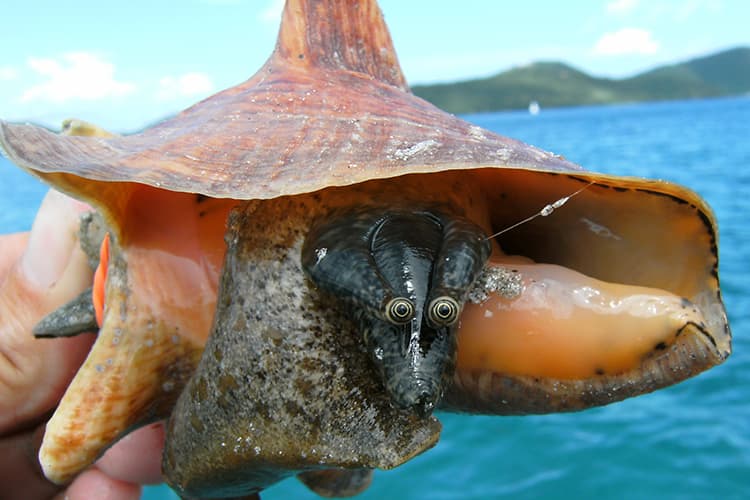
Inside the shell lives the conch animal itself - a soft-bodied creature a bit like a large snail. It uses a muscular foot to move slowly along the sandy sea floor and feeds on algae and sea grass. The conch breathes through a set of gills and can even right itself if it gets flipped over, using a powerful lunge with its foot.
Conch shells have been used by people in the Bahamas for thousands of years. Early inhabitants used them as tools, jewellery, and musical instruments - by blowing through the shell's tip, you can make a loud, resonant horn sound. Conch shell horns were used to call people together and even to communicate between islands.
The shell that most people recognise is actually the conch's outer skeleton, which it grows throughout its life. Young conch have thin, fragile shells; older ones have thick, strong shells with a flared lip. A full-grown queen conch has been building its shell for about five years. The pink colouring inside the shell comes from the animal's diet and the minerals in the surrounding seawater.
Queen conch are an important part of the Bahamian marine ecosystem. Their grazing keeps sea grass beds healthy, and their shells become homes for hermit crabs and other creatures after the conch has gone. The Bahamian government protects conch carefully so that they remain part of the reef for future generations.