
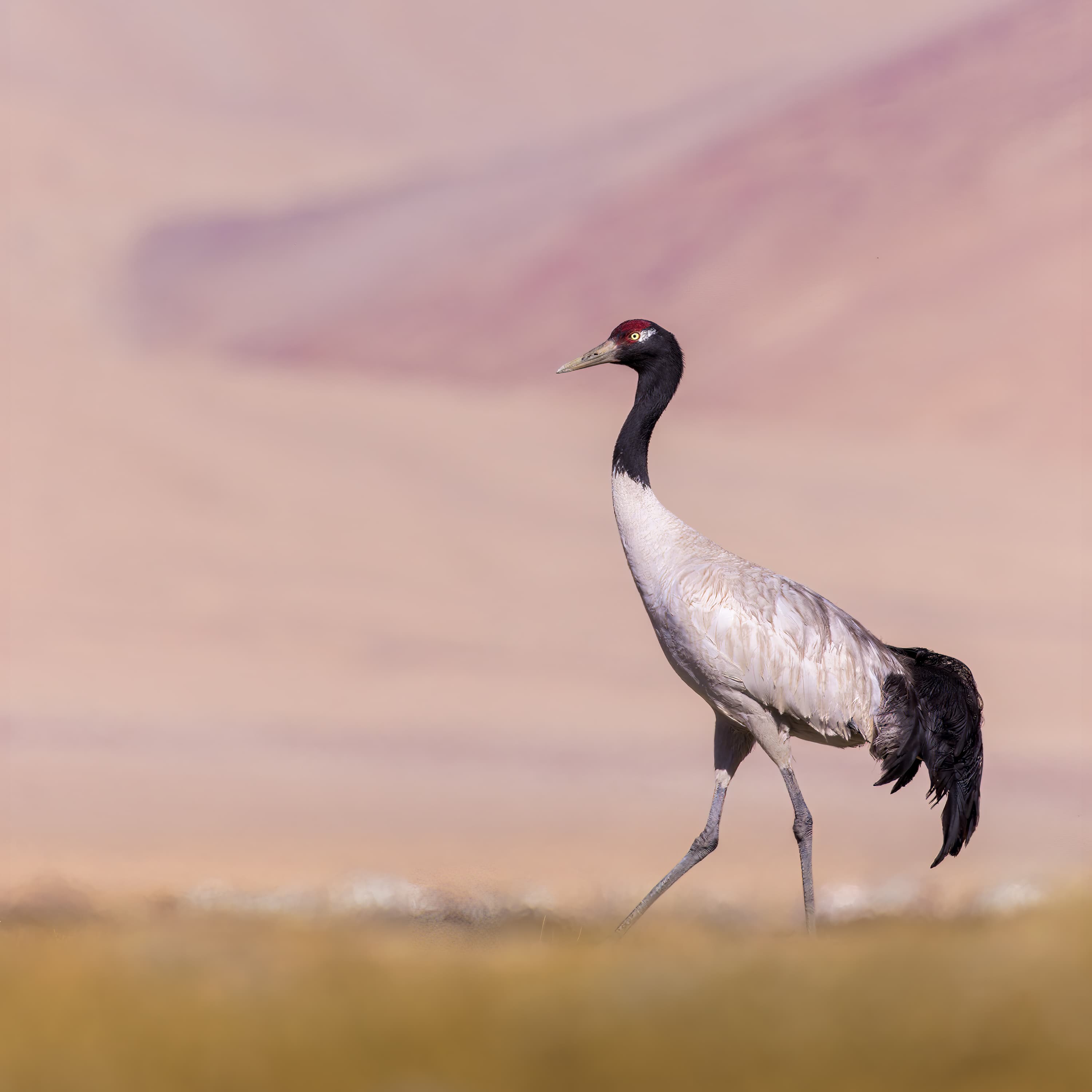
Black-necked cranes are one of the rarest crane species on Earth. They breed on the high, cold marshes of the Tibetan plateau during summer, then fly south in autumn to warmer valleys in Bhutan, India, and other Himalayan countries. The Phobjikha valley in Bhutan is one of their most important winter homes. Families who live there say they can hear the cranes calling as they circle down into the valley - a sound locals look forward to every year.
Cranes are famous for their elaborate dances. During courtship, black-necked cranes jump, bow, spread their wings, and call out loudly to one another in a kind of impressive display. Even outside the breeding season, groups of cranes sometimes break into short bursts of dancing, which scientists think helps them bond as a flock. They also communicate with a range of different calls - from soft honks to loud bugling sounds that echo across the valley.
The community around Phobjikha valley treats the cranes as very special guests. Power lines have been moved so that the birds can land safely, farmers avoid chemicals that could hurt them, and a festival - the Black-Necked Crane Festival - is held every November to celebrate their arrival. Schoolchildren perform crane dances wearing white costumes, and there are art competitions and nature walks. The festival has helped everyone - local and visitor alike - understand how important it is to share the land with wild animals.