
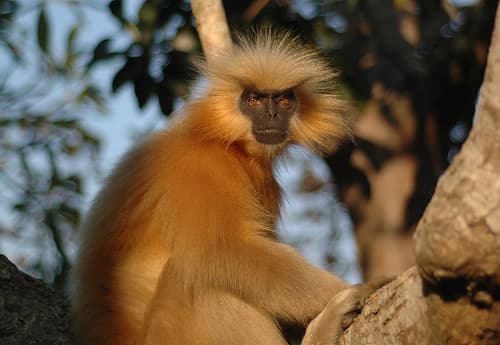
Golden langurs live in troops of between five and thirty animals. They are leaf-eaters - most of their diet comes from leaves, flowers, and unripe fruit that most other animals cannot digest easily. Their large, multi-chambered stomach works like a fermentation tank, breaking down tough plant material the way a cow's stomach does. This means they can eat things other primates skip, which is a clever survival trick in dense forest.
The colour of a golden langur's fur is not the same all year round. In summer, the fur tends to be creamy white or pale gold. In winter it deepens to a richer, darker gold. Baby langurs are born with pure white fur that gradually changes as they grow. The contrast between babies and adults moving together through green forest is one of the most striking sights in Bhutan's wildlife.
Golden langurs are found only in a very small strip of forest between southern Bhutan and the Assam region of India. Bhutan's forests and wildlife reserves are among the most important refuges for the species anywhere on Earth. Scientists study them to learn more about their behaviour and help ensure the forests they depend on are protected for the future.