
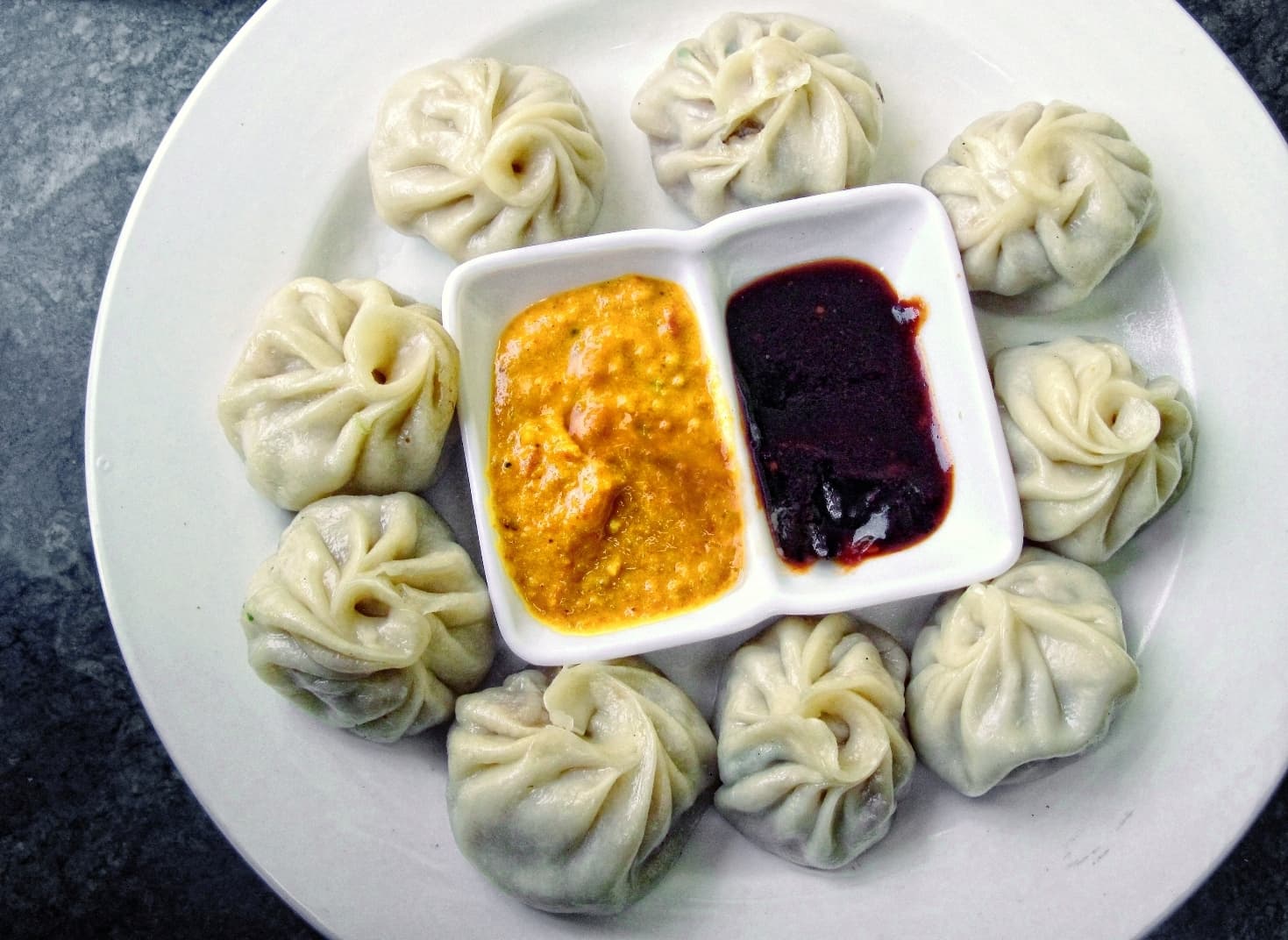
Making momos is a craft in itself. The dough must be thin enough to be soft when steamed but strong enough not to tear. The filling - usually minced pork, beef, yak meat, or vegetables mixed with onion and spices - is placed in the centre. Then the edge of the dough circle is carefully gathered into a series of small pleats and pinched together at the top to seal the dumpling shut. A skilled momo-maker can pleat one in seconds.
Momos are cooked in special bamboo steamers stacked on top of a pot of boiling water. After about fifteen minutes, the dough turns soft and slightly translucent, and the filling inside is cooked through. The dumplings come out fragrant and juicy. Some versions are fried after steaming to give them a crispy bottom - these are called 'kothey' momos.
Momos are found all the way across the Himalayan region, from Bhutan and Nepal to Tibet and northern India. Each area has its own favourite fillings and dipping sauces. In Bhutan, they are eaten as a snack, a meal, or at celebrations. Many families make them together as a group activity - everyone sits around the table, chatting and folding, until there is a huge pile ready to steam. It is one of those foods that brings people together.