
Classroom lesson ยท Wildlife ยท ๐Ÿ‡ง๐Ÿ‡น Bhutan

Red Panda

A rusty-red tree climber with a ringed tail and a passion for bamboo

Photo ยท Wikimedia Commons

What is it?

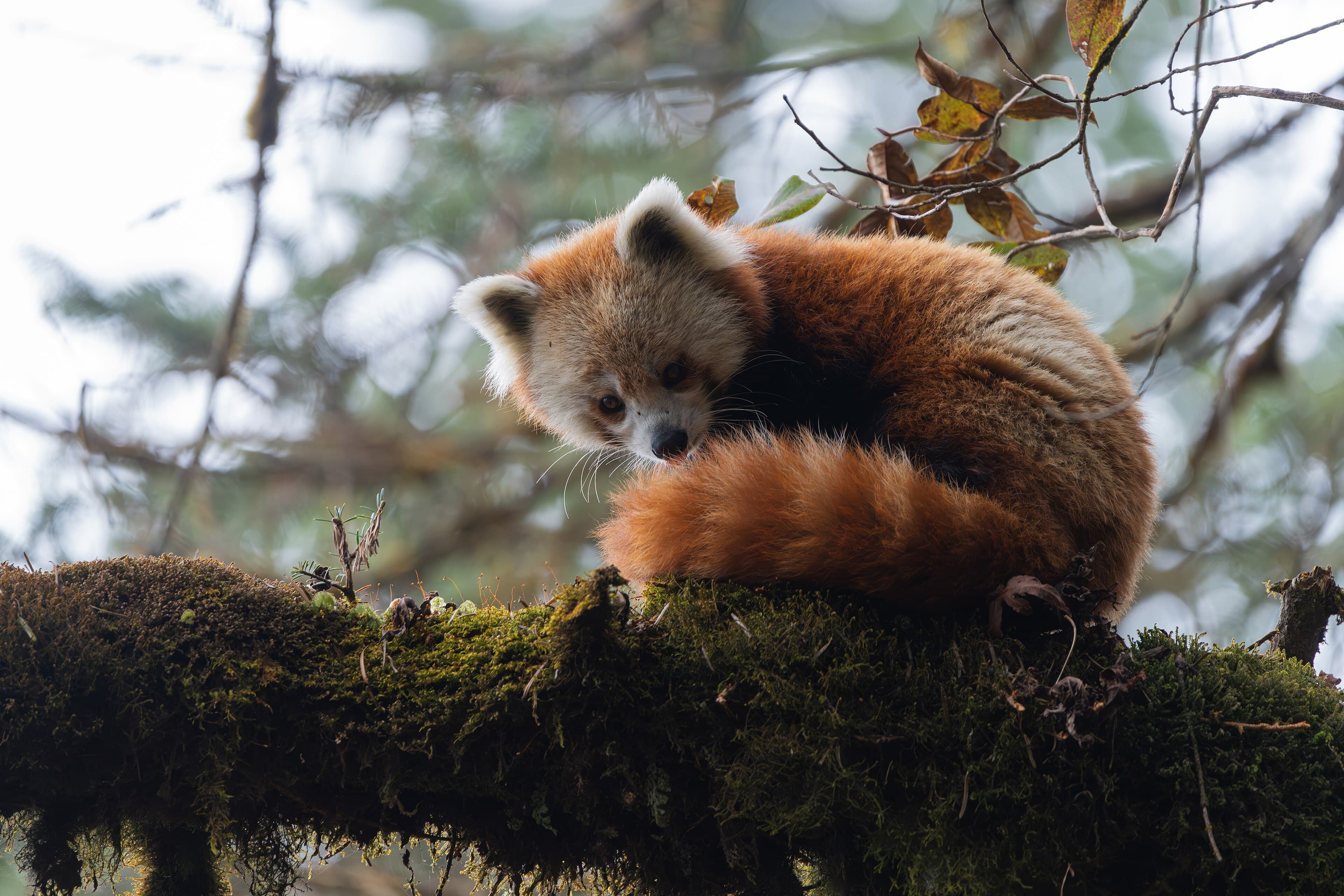
The red panda is one of the most beautiful and distinctive animals in Bhutan's forests. About the size of a house cat, it has rich russet-red fur, a striped bushy tail, a white-edged face with teardrop markings, and nimble paws perfect for climbing trees. It is not closely related to the giant black-and-white panda โ€” it is in a family all of its own.

Tell me more

Red pandas spend most of their time up in trees, where their curved claws grip branches tightly and their thick fur keeps them warm in the cool mountain air. They are most active at dawn and dusk, and spend a large part of each day resting in the fork of a branch with their tail wrapped around themselves like a fluffy scarf. When they walk on the ground, they move in a rolling, bear-like waddle.

Bamboo shoots and leaves make up most of the red panda's diet, though they also eat berries, flowers, and sometimes eggs. Like the giant panda, the red panda has a special 'false thumb' โ€” a modified wrist bone that acts like an extra finger, helping them grip bamboo stalks. Despite eating mainly bamboo, red pandas are actually classified by scientists as carnivores, meaning their bodies are built for eating meat โ€” they just prefer bamboo.

Red pandas live in the temperate forests of Bhutan, Nepal, northern India, and parts of China. Their numbers in the wild are quite small โ€” probably only a few thousand โ€” and Bhutan's protected forest areas are a vital refuge for them. Local people in Bhutan know the red panda by the name 'wah' because of the short cry it makes when alarmed.

In the classroom

Walk your class through this in 15 minutes.

Talk together

Discussion prompts

  1. 01Red pandas and giant pandas both eat bamboo and have a 'false thumb', but they are not close relatives. What does that tell us about how animals can develop similar features independently?
  2. 02If you spent most of your life in trees, what features would be most useful to have? Compare your list to the red panda's real adaptations.
  3. 03Red panda numbers are small. What might be the biggest threats to an animal that lives in mountain forests?
Try this

Classroom activity

Create a 'Red Panda Fact File' poster. Include a large coloured drawing, a map showing where red pandas live, five facts you found most surprising, and one thing you could do at school to help protect wild forests.