
Classroom lesson ยท Ardoukoba Volcano ยท ๐Ÿ‡ฉ๐Ÿ‡ฏ Djibouti

Ardoukoba Volcano

A young volcano on the edge of two giant plates of Earth's crust

Photo ยท Wikimedia Commons

What is it?

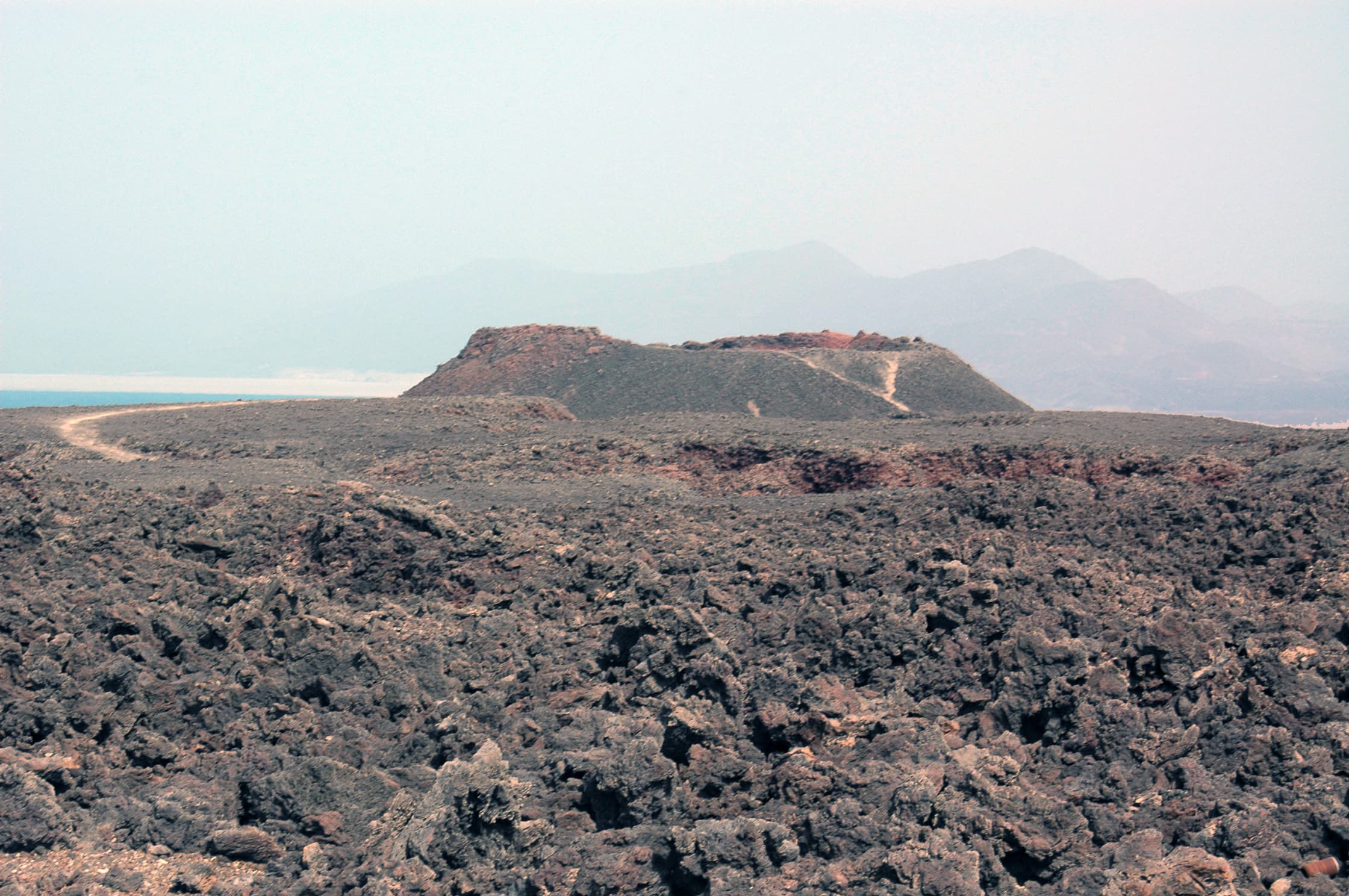
Ardoukoba is a small but very young volcano in Djibouti, sitting in one of the most geologically exciting spots on Earth. It last erupted in 1978 and its dark lava fields are still fresh-looking compared to the ancient rocks around it. Djibouti sits right where three huge pieces of the Earth's crust are slowly pulling apart, which is why there are so many volcanoes and hot springs here.

Tell me more

The Earth's outer shell is made up of giant pieces called tectonic plates, and most of the time they move so slowly you cannot feel it at all โ€“ just a few centimetres a year, roughly as fast as your fingernails grow. But in Djibouti, three plates are pulling apart from each other, and the gap between them โ€“ called a rift โ€“ is slowly getting wider every year.

Ardoukoba sits right in this rift zone. When it erupted in 1978, molten rock poured out and flowed across the landscape, cooling into the rough black lava fields you can still see today. Walking on the lava feels like walking on a giant sponge made of stone โ€“ full of holes and bubbles where gases escaped as the rock cooled.

Around Ardoukoba, you can also find hot springs โ€“ places where water heated by underground rocks bubbles up to the surface. These springs are sometimes colourful because of the minerals dissolved in them, and they smell of rotten eggs because of sulphur โ€“ a gas that comes from deep inside the Earth.

Djibouti's landscape is actually what the bottom of a future ocean might look like. Over millions of years, as the rift gets wider, the land here is expected to sink and fill with sea water, extending the Red Sea. Scientists come from all over the world to study this rare and remarkable place.

In the classroom

Walk your class through this in 15 minutes.

Talk together

Discussion prompts

  1. 01If the ground under your feet is slowly moving, why don't we feel it every day?
  2. 02Djibouti's landscape might become an ocean floor millions of years from now. What do you think the sea creatures of the future might find there?
  3. 03Hot springs smell of sulphur โ€“ like rotten eggs. Why do you think scientists still go and study them even though they smell bad?
Try this

Classroom activity

Make a simple model of a rift valley using a block of soft clay or playdough. Push two pieces slowly apart and watch the gap form in the middle. Drip a little red food colouring into the gap to show 'magma' rising up. Label the two plates and the rift on a card placed beside your model.