
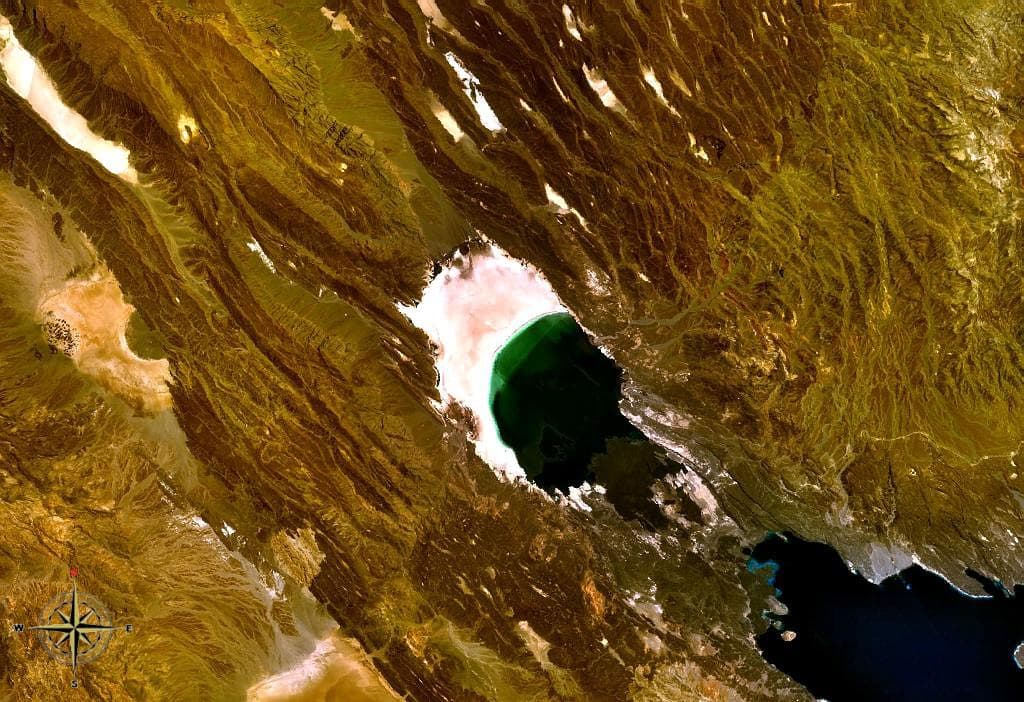
If you tossed a handful of salt into a glass of sea water, it would taste about as salty as the ocean. Now imagine doing that ten times over - that is roughly how salty Lake Assal is. The water is so heavy with salt that you bob up to the surface like a cork and find it almost impossible to sink.
The lake formed inside an old volcano crater, surrounded by dark lava fields that look almost like a moonscape. On sunny days the salt crust glitters brilliant white against the dark rock, and the lake itself shimmers in shades of blue and green depending on the light. There is very little rain here, so water evaporates quickly and the salt is left behind, building up thicker and thicker over thousands of years.
Local people have harvested salt from Lake Assal for a very long time, loading it onto donkeys and camels to sell at markets. Today it is still collected by hand, chipped from the shore in solid blocks. The salt trade was one of Djibouti's earliest businesses and helped connect the country to trading routes across the region.
Because the lake sits so far below sea level and the surrounding land is one of the hottest on Earth, only a few tough creatures survive here. Some bacteria love extremely salty water and tint parts of the lake in pale pink and orange - like a natural painting.