
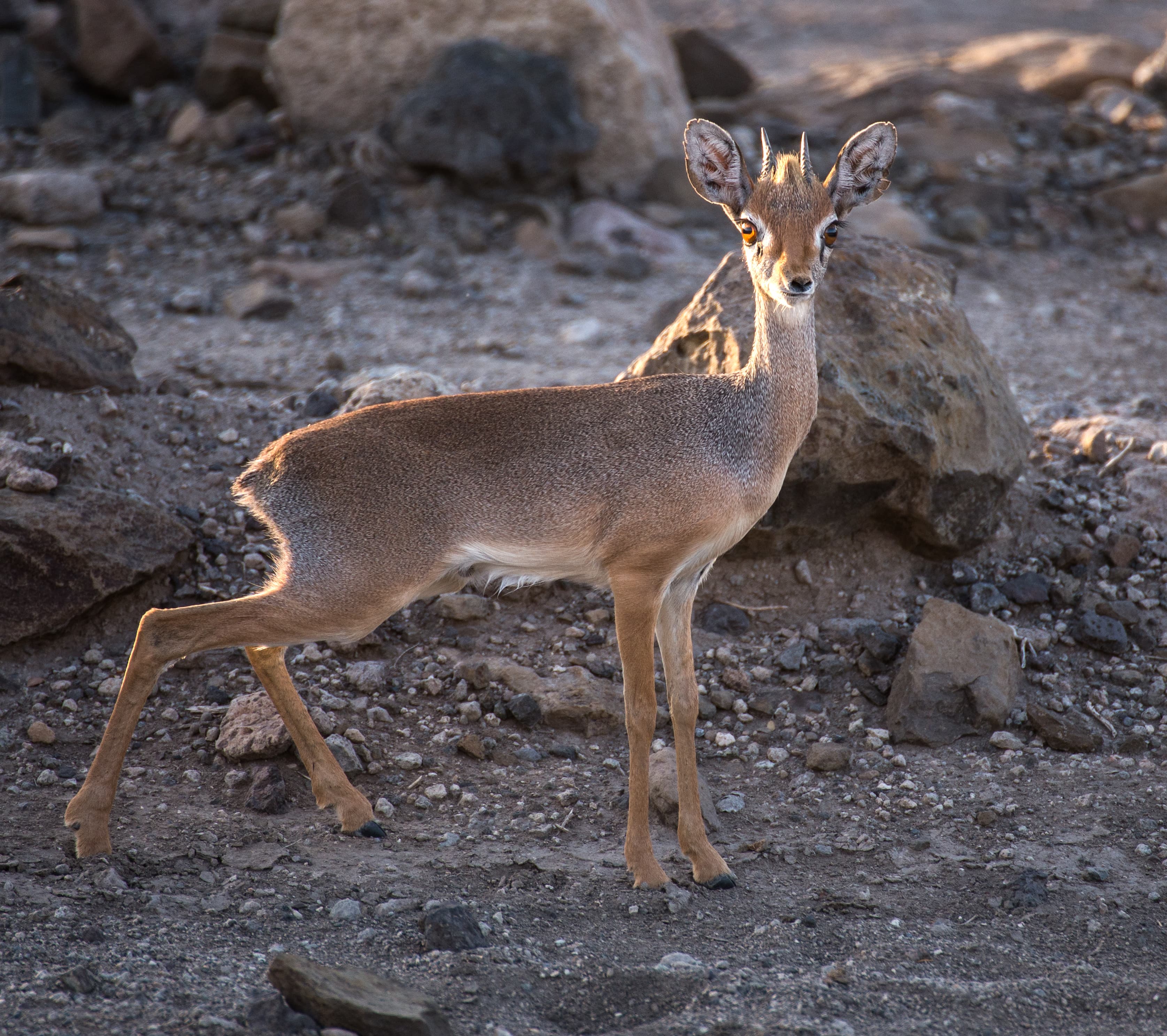
Dik-diks are built for life in the heat. Their huge eyes give them excellent vision to spot approaching animals, and a long flexible nose acts like a natural air conditioner - blood flowing through it cools down before returning to the body. They can also get most of the water they need from the plants they eat, so they rarely need to find a drinking hole.
These little antelopes live in pairs their whole lives. A male and female choose each other and stay together, marking the edges of their home territory by rubbing a dark scent gland near their eyes against twigs and branches. If you look carefully at bushes in dik-dik country, you might spot the dark sticky marks they leave behind.
Dik-diks are very shy. At the first sign of anything unusual, they freeze and stare, then bolt in a zigzag pattern through the bushes, making that loud 'dik-dik!' alarm call as they run. Their sandy-brown colouring blends perfectly with dry scrub, so they can be surprisingly hard to spot even when they are standing still just a few metres away.
The horns on a dik-dik belong only to the male, and they are short and slightly ringed - sometimes partly hidden under a tuft of longer fur on the forehead. Males can look a little fluffy-topped, which makes them one of the more unexpectedly cute animals of the African scrubland.