
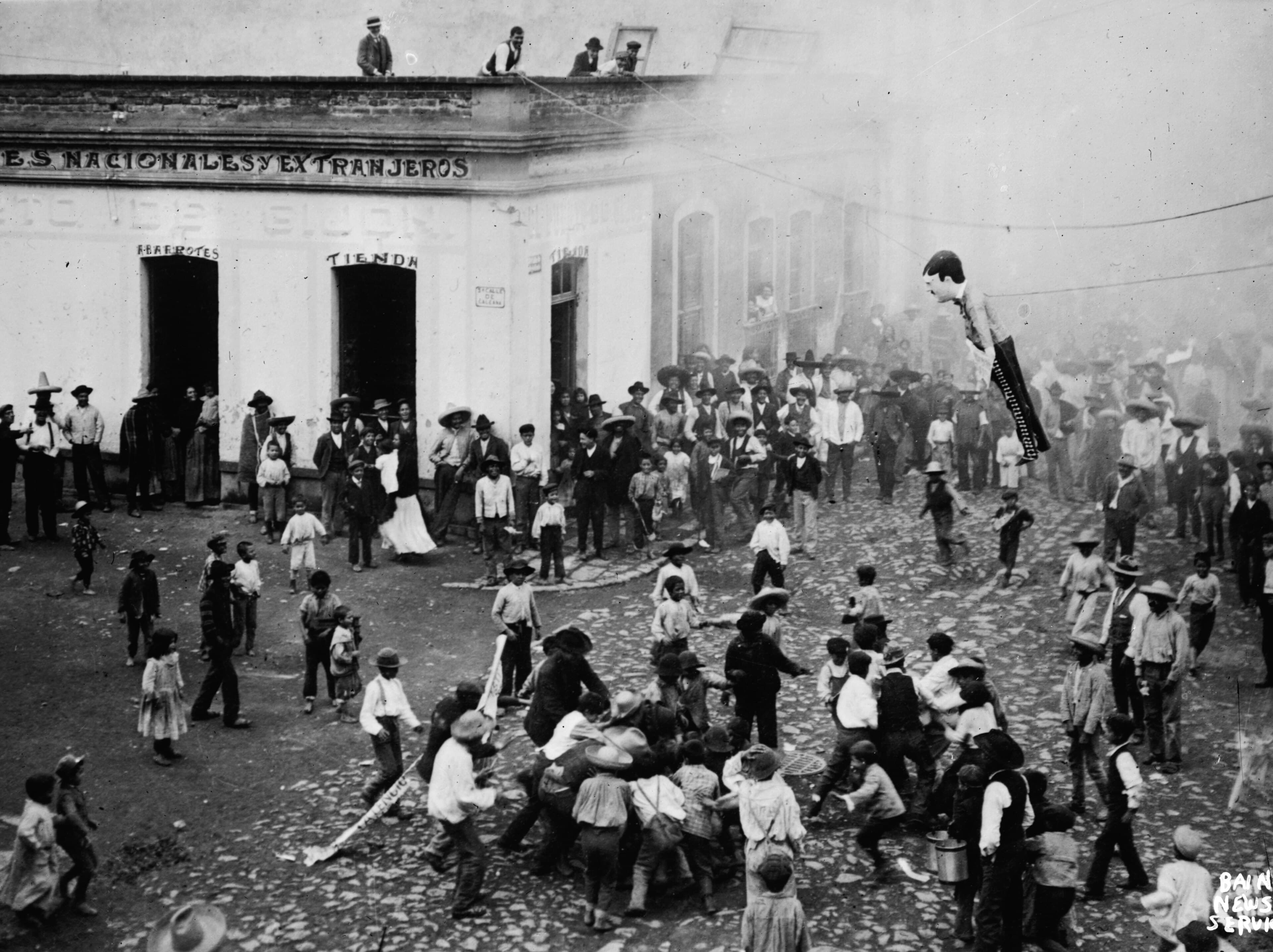
The tradition began as a way of purifying the home before Christmas. The idea is that sweeping every corner and burning the rubbish gets rid of anything negative, making space for something good. Over time it has grown into a community event where neighbours come out into the streets together.
The papier-mâché devil figures made for the festival are often enormous - and many are quite comedic. Artists and families spend weeks creating them in bold colours, with exaggerated features, horns, and fanciful costumes. Far from being scary, they are meant to be fun, and people enjoy looking at the most creative ones before they are set alight.
Fireworks - especially small rockets called cohetes - are a huge part of the celebration. Guatemala loves fireworks, and 7 December is one of the noisiest nights of the year. In Guatemalan towns and cities, the sound of fireworks going off in the evening is a sure sign that the Christmas season has officially started.
The cleaning of the house before the bonfire is taken seriously by many families. Children help sweep, dust, and tidy, and the whole house has to be done before sunset. The idea of starting the Christmas season with a completely clean home - and then celebrating that cleanliness together with neighbours - gives the festival a warm, communal feel.