
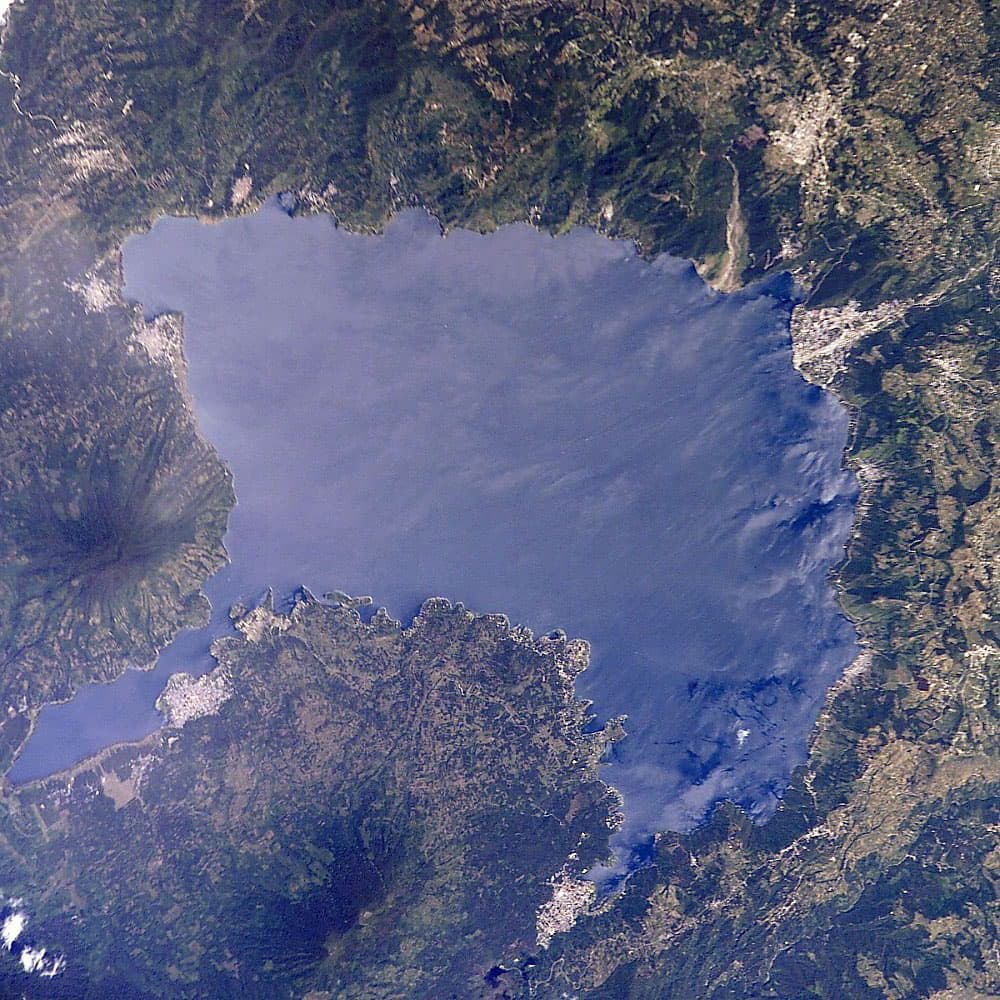
The lake is about 130 metres deep in places - that is deeper than a forty-storey building is tall. The water is so clear that it looks almost as if you could see straight to the bottom. Small wooden boats called lanchas carry people between the villages dotted around the shore.
The three volcanoes - Atitlán, Tolimán, and San Pedro - rise steeply from the water's edge. They are called sleeping volcanoes, which means they are not erupting now but could wake up again one day. Clouds often circle around their peaks in the afternoon, making them look like they are wearing soft grey hats.
Twelve Indigenous Maya villages surround the lake, each with its own unique style of woven clothing and traditions. In some villages the women still weave fabric on backstrap looms, just as they have done for thousands of years. The patterns in the cloth carry stories about the community and its history.
The highlands air around Lake Atitlán is cool and fresh, quite different from the hot lowland jungles. Hummingbirds dart between the flowers, and fishermen head out on the lake before sunrise in their wooden boats. Watching the sun rise over the volcanoes and turn the water from dark purple to shimmering gold is something visitors never forget.