
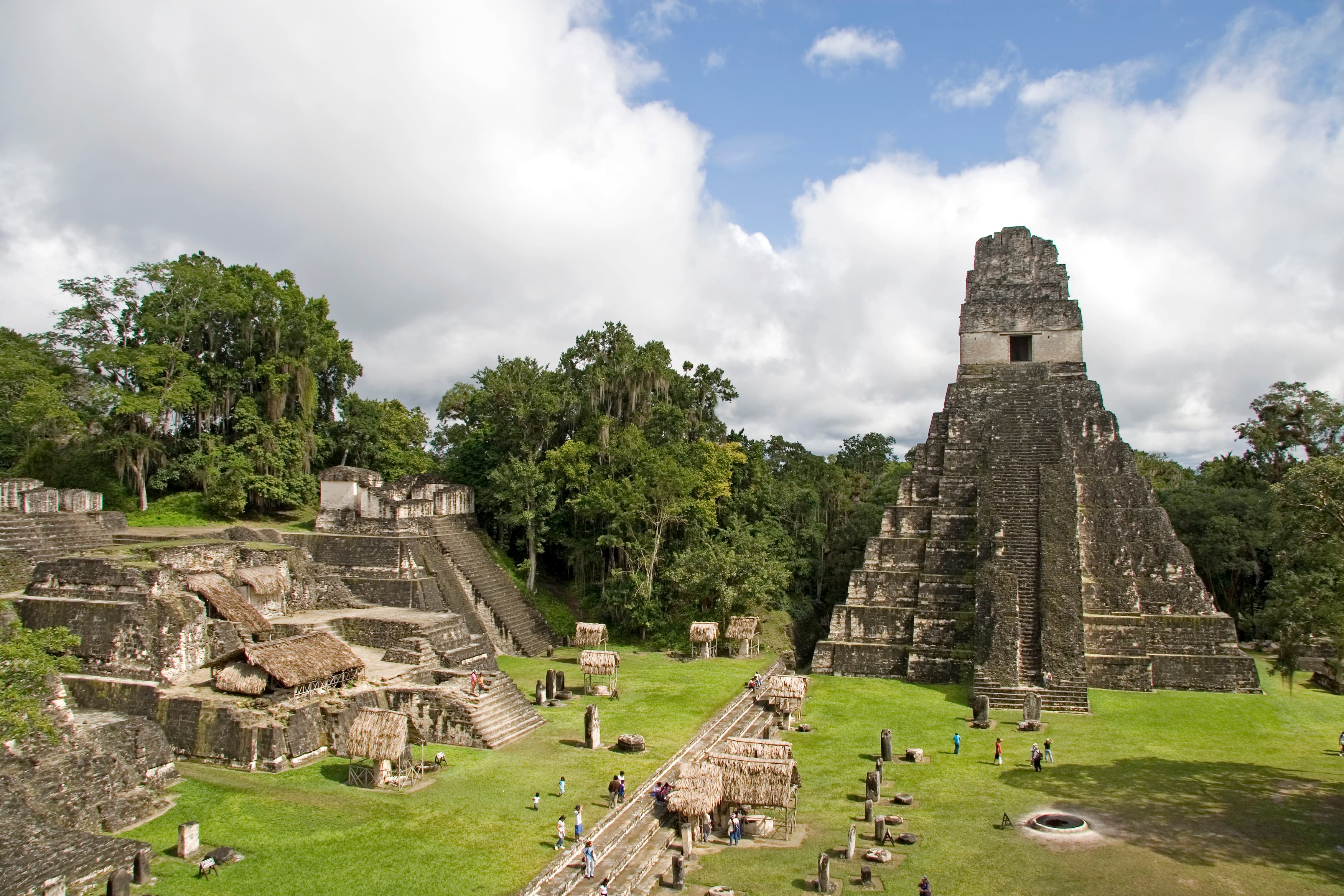
The Maya were brilliant builders who did not have metal tools or wheels. They shaped every stone by hand, carrying it into place without any machinery. Temple I, the most famous of all, is 47 metres tall and was completed around 700 CE. Archaeologists call it the Temple of the Great Jaguar.
At Tikal's peak, around 100,000 people lived here - about the same as a medium-sized town today. They had plazas, markets, schools and even astronomical observatories so they could track the stars and planets. The Maya calendar they created was so accurate that it is still studied by scientists.
When the city was no longer lived in, the jungle slowly crept back over it. Trees grew on top of the temples and vines wrapped around the stones. For hundreds of years, Tikal was almost completely hidden. Researchers began uncovering it again in the 1800s, and the work of discovery is still going on.
Today Tikal is a national park and a UNESCO World Heritage Site. Howler monkeys crash through the trees above the temples, and toucans and parrots fly past the stone steps. Walking through the ruins early in the morning, with mist swirling around the tree-tops, feels like being inside an adventure story.