
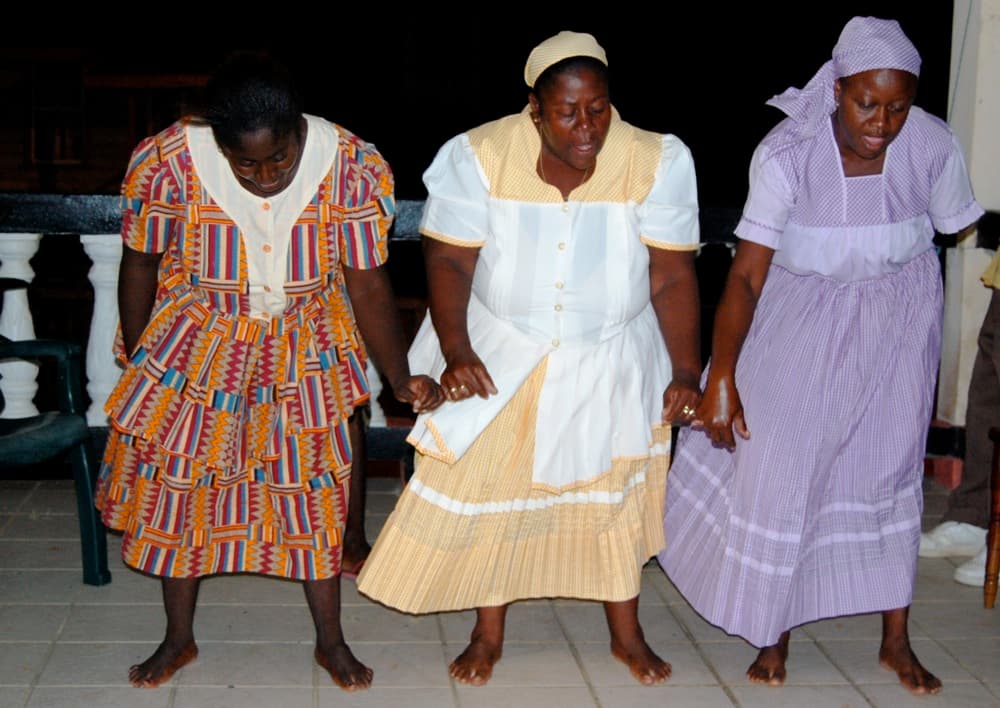
The Garifuna people have one of the most remarkable stories of any group in the Americas. They descend from the Indigenous Caribs and Arawaks of the Caribbean islands, and from African people who were shipwrecked near St Vincent and joined the island community in the 17th century. The two groups blended over generations into the unique Garifuna culture.
On 12 April each year, Garifuna communities re-enact the arrival by paddling traditional dugout canoes called dories onto the shore, dressed in historical clothing, while crowds cheer from the beach. It is a powerful and moving ceremony that connects modern Garifuna people to their ancestors.
After the canoe landing ceremony, the celebrations begin in earnest. Punta drums fill the air, traditional foods like hudut (a coconut fish stew) and ereba (cassava bread) are shared, and people dance in the streets for hours.
Garifuna Settlement Day is not just a party - it is a statement of cultural survival and pride. The Garifuna people have maintained their language, music, food, and traditions through centuries of change. This celebration reminds everyone, especially young Garifuna children, that their heritage is precious.
UNESCO recognised Garifuna language, dance, and music as a Masterpiece of Intangible Cultural Heritage in 2001, and it was inscribed on the Representative List in 2008. Garifuna Settlement Day honours this globally recognised cultural treasure.