
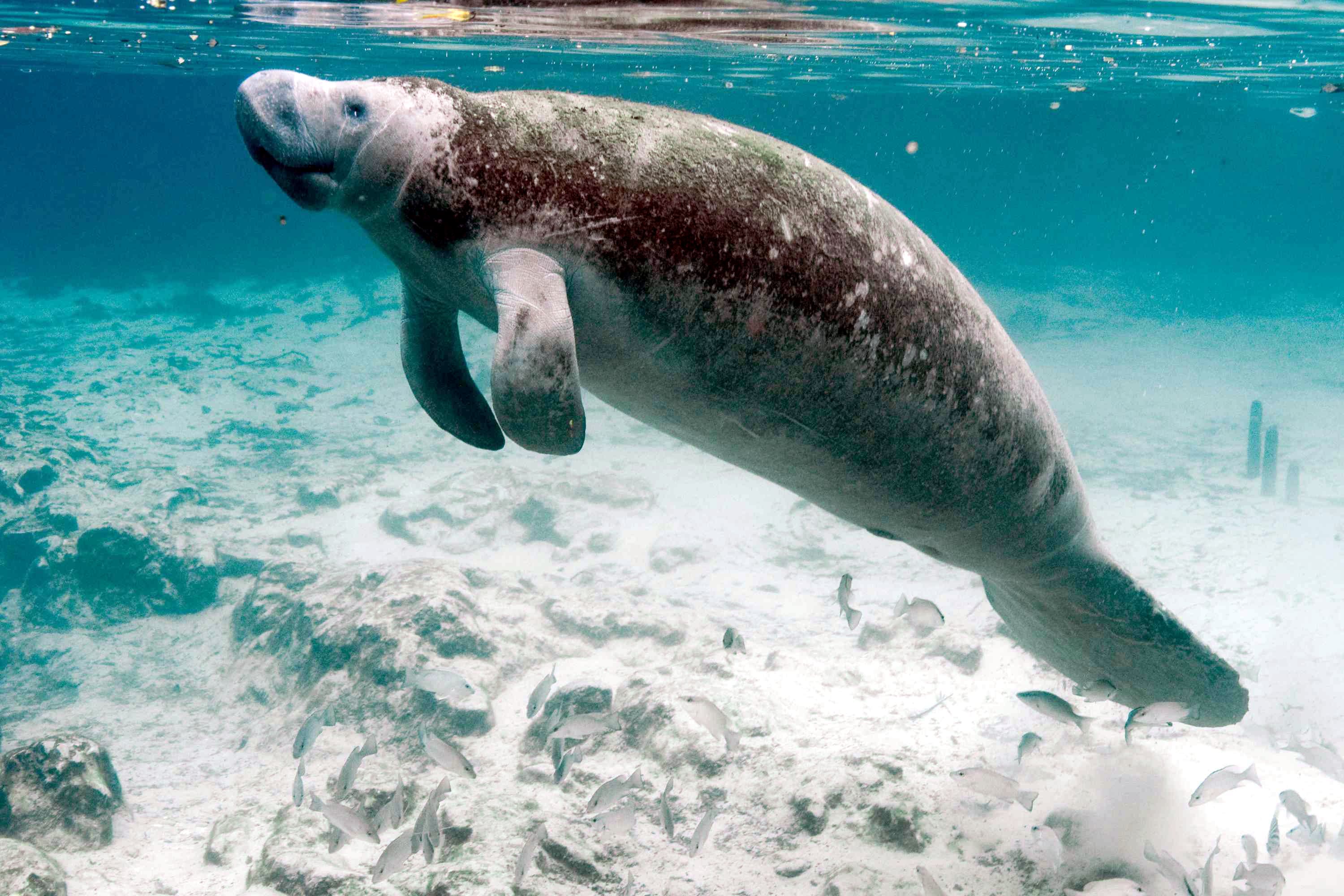
West Indian manatees live along the Caribbean coast of Honduras and in the rivers and lagoons of the Río Plátano Biosphere Reserve. They can grow up to 3.5 metres long and weigh as much as 600 kilograms - about the weight of a small car.
Manatees are related to elephants, which sounds surprising but makes sense when you look closely at their wrinkled grey skin, their sturdy flippers (which have finger bones inside, just like your hand), and the way they use their flexible lip to grab food.
A manatee can eat up to 10% of its body weight in sea grass and aquatic plants every day. They graze slowly along the seabed, munching away for most of the day. Because of this, they are vital for keeping seagrass beds healthy, which in turn provides habitat for fish, turtles, and other sea life.
Manatees are very gentle and curious animals. They sometimes approach boats and divers slowly, turning to look with their small, kind eyes. They communicate with each other through quiet chirps and squeaks that are almost too high-pitched for people to hear.
Manatees are listed as a vulnerable species and are protected by law in Honduras. Boat-speed restrictions in manatee areas help keep the animals safe, and communities around the coast help watch over them.