
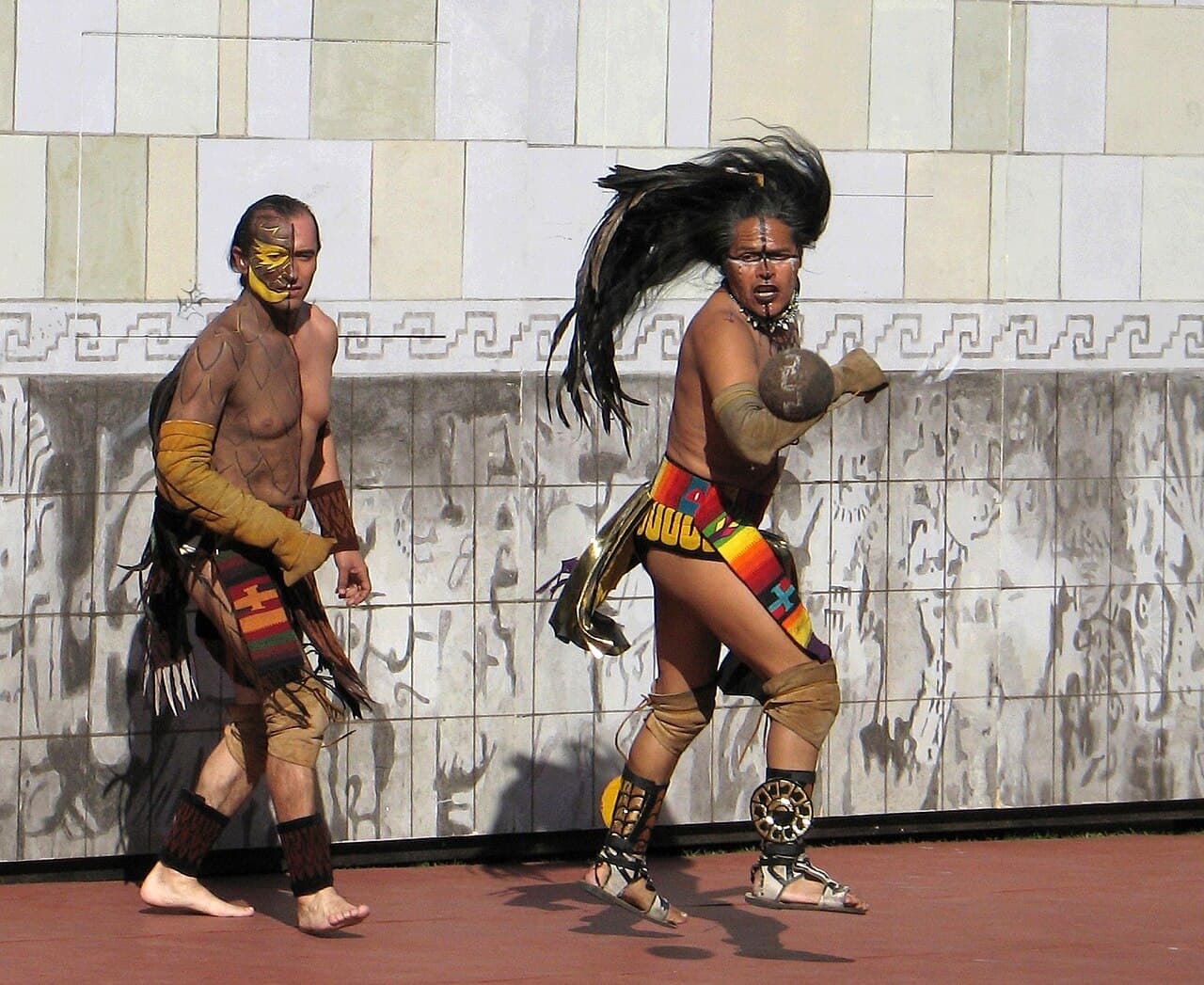
The ball court at Copán is one of the best-preserved in all of Mesoamerica. It is a long rectangular playing area with sloping stone walls on both sides. The players had to keep the heavy rubber ball moving without letting it touch the ground, using their hips, knees, and elbows to strike it.
The rubber ball used in the game was surprisingly large - up to the size of a football - and incredibly heavy, made from solid rubber. Players wore special padding on their hips and knees to protect themselves from the hard impacts. The ball could weigh as much as 4 kilograms.
The Maya ball game was about much more than sport. It had religious and astronomical meaning. Games were played during important ceremonies and linked to the movements of the sun and the moon. Some carvings at Copán show ball-game scenes connected to stories of cosmic battles in the sky.
Teams from different cities sometimes played against each other. The game required strength, agility, and teamwork - skills the Maya greatly admired. Stone rings mounted high on the court walls acted as goals: getting the ball through the ring was an extraordinary feat.
Some people believe the Maya ball game is the distant ancestor of modern football, basketball, and other ball sports. It spread across Mesoamerica and influenced many ancient cultures, from Mexico all the way to Honduras and beyond.