
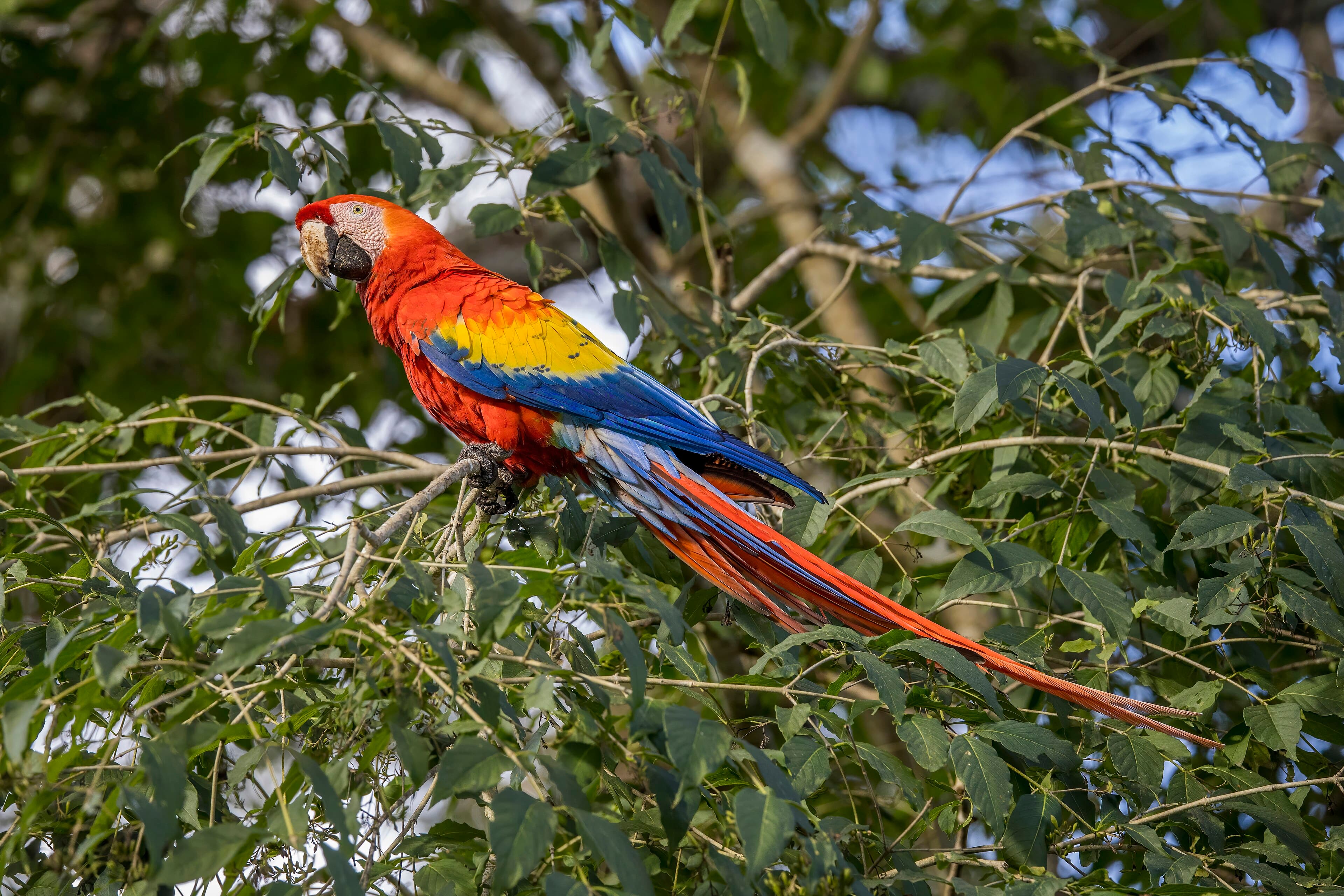
Scarlet macaws can grow up to 85 centimetres long, with more than half of that made up of their glorious long tail feathers. When a flock takes off from the forest canopy, the flash of red against the green trees is unforgettable.
Macaws use their strong curved beaks to crack open even the hardest nuts and seeds. They also eat fruit, flowers, and clay from riverbanks - the clay helps them digest seeds that would otherwise be toxic. They are one of the few animals clever enough to do this.
These birds are very social and intelligent. They can mimic sounds and even simple words. In the wild, they live in noisy flocks and spend hours grooming each other, playing, and exploring. Scientists have found that macaws can solve puzzles and use basic tools.
The scarlet macaw was sacred to the ancient Maya, who kept them at Copán and used their feathers in ceremonies. Images of macaws appear in Maya carvings and paintings throughout Honduras and the region.
Honduras has a wonderful macaw rescue and release programme in the Copán area, where injured or rescued macaws are cared for and then returned to the wild. Because of this work, wild scarlet macaw numbers in Honduras are slowly growing again.