
Classroom lesson · Wildlife · 🇨🇮 Ivory Coast

Diana Monkey

A strikingly patterned monkey of the forest canopy

Photo · Wikimedia Commons

What is it?

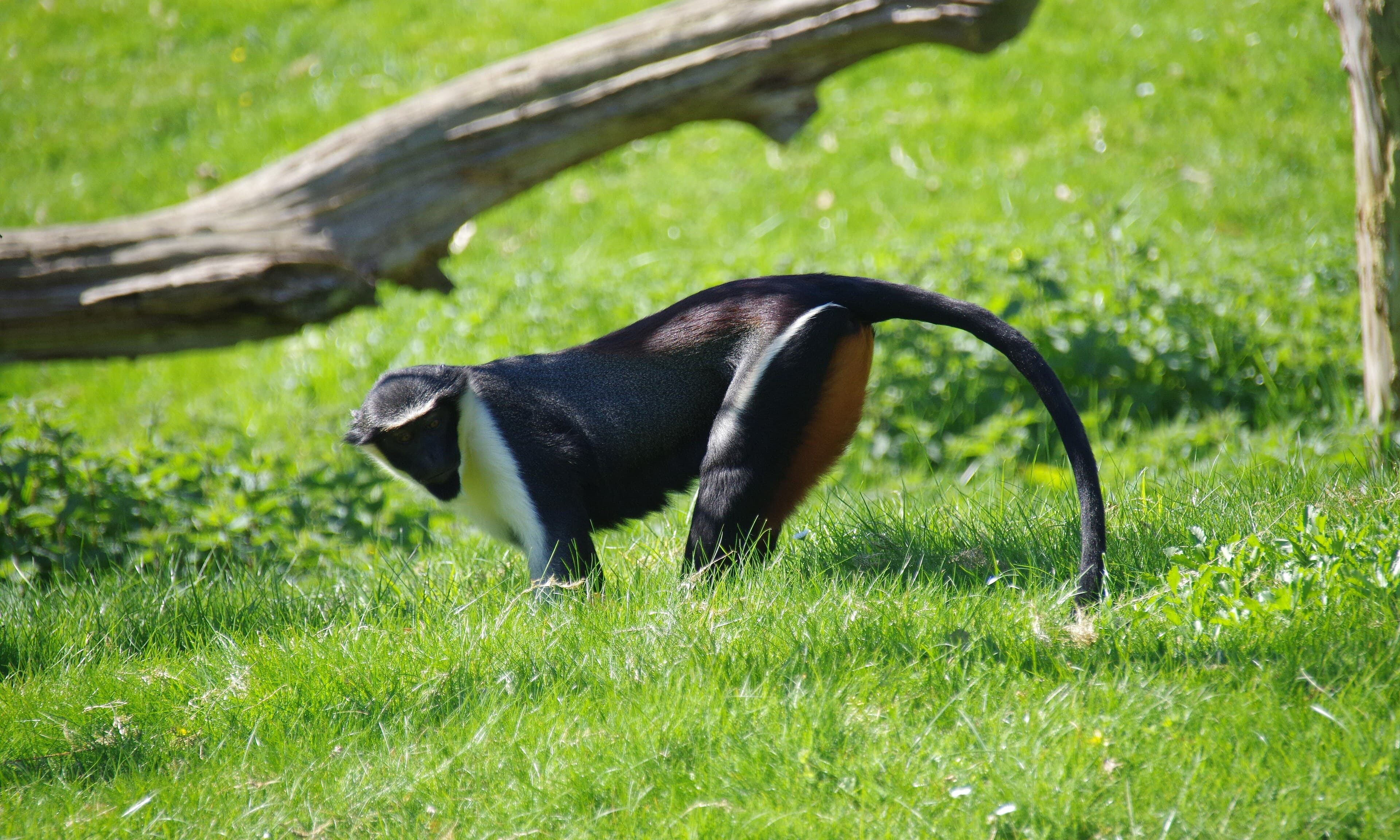
The Diana monkey is one of the most beautiful monkeys in Africa, with a bold pattern of black, white, and chestnut fur. It lives high in the rainforest canopy of West Africa, including the forests of Côte d'Ivoire. Its striking white beard and crescent-shaped brow patch make it unmistakable – and its name may come from the Roman goddess of the hunt.

Tell me more

Diana monkeys live in groups of up to 30 individuals and spend almost their entire lives in the upper canopy of the rainforest, leaping between branches and rarely coming down to the ground. They eat mainly fruit, leaves, and insects, and they are expert at finding food in the dense upper branches.

One of the most fascinating things about Diana monkeys is their alarm call system. They have different calls for different types of predator – one call for eagles above, another for leopards below. Other monkey species that live nearby, like red colobus monkeys, can actually understand and react to Diana monkey alarm calls. It is a kind of cross-species language.

The Diana monkey is listed as vulnerable, which means its numbers are declining and it needs protection. The biggest threat is the loss of rainforest. Diana monkeys need tall, connected forest to thrive – when forest is broken into small patches, the monkeys cannot move easily between them.

In the classroom

Walk your class through this in 15 minutes.

Talk together

Discussion prompts

  1. 01The Diana monkey has different calls for different dangers. Can you think of ways humans also use different signals for different emergencies?
  2. 02What does it mean that other monkey species react to Diana monkey alarm calls? What might that tell us about how animals communicate?
  3. 03Why might it be harder for an animal to survive when its forest is cut into separate patches?
Try this

Classroom activity

Create an 'alarm signal' design task. In small groups, invent a set of three different sounds or gestures that each mean something different (for example: a predator from above, a predator from below, food found nearby). Test whether another group can learn and react to your signals correctly.