
Classroom lesson · Highest peak · 🇰🇪 Kenya

Mount Kenya

Africa's second-highest mountain, with snow on the equator

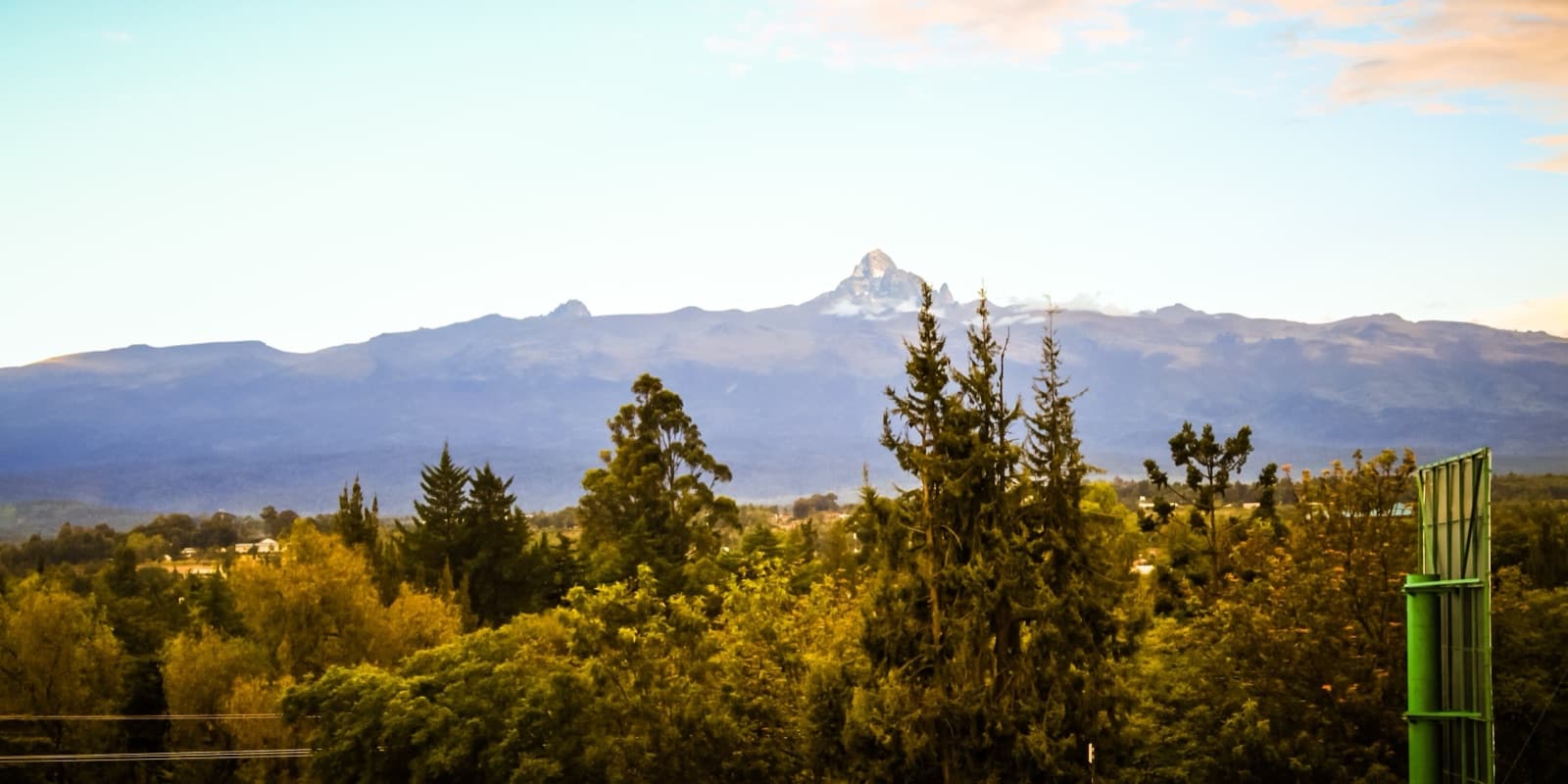
The jagged peaks of Mount Kenya rising above forest

Photo · Wikimedia Commons

What is it?

Mount Kenya is a huge, very old volcano that gives Kenya its name. Even though it sits almost exactly on the equator, where the world is warmest, the very top is covered in glaciers — actual ice — all year round.

Tell me more

Mount Kenya is 5,199 metres tall. That's nearly six times the height of the tallest building in the world's average city. It is the second-highest mountain in Africa, after Kilimanjaro in neighbouring Tanzania.

It used to be a volcano. It hasn't erupted for about three million years, so it is safely 'extinct'. Over millions of years, water and wind have shaped its old crater into jagged peaks called Batian, Nelion and Lenana.

Because it is so tall, climbing Mount Kenya is like travelling through different countries one above the other. At the bottom there are warm farmlands. Higher up there are forests full of monkeys. Higher again, the air is cold and only tough plants survive. At the very top, there is ice.

Mount Kenya is sacred to the Kikuyu people, who live around its slopes. In their tradition, the mountain is called Kĩrĩ-Nyaga — 'the place of brightness'. Many Kikuyu houses are still built so their doors face the mountain.

In the classroom

Walk your class through this in 15 minutes.

Talk together

Discussion prompts

  1. 01How can there be ice at the top of a mountain that sits on the equator? What does that tell us about altitude and temperature?
  2. 02Why might a mountain feel special to a community? Are there places near our school that feel special to people?
  3. 03If you climbed from the bottom of Mount Kenya to the top, what would change as you walked higher?
Try this

Classroom activity

On a sheet of A3, draw Mount Kenya from bottom to top in horizontal bands: farms · forest · moorland · ice. Label one animal or plant that lives in each band. Then label your school's altitude on the side. How many bands above you would you have to climb to reach the snow?