
Classroom lesson · Wildlife · 🇰🇪 Kenya

Plains zebras — the striped horses of Kenya

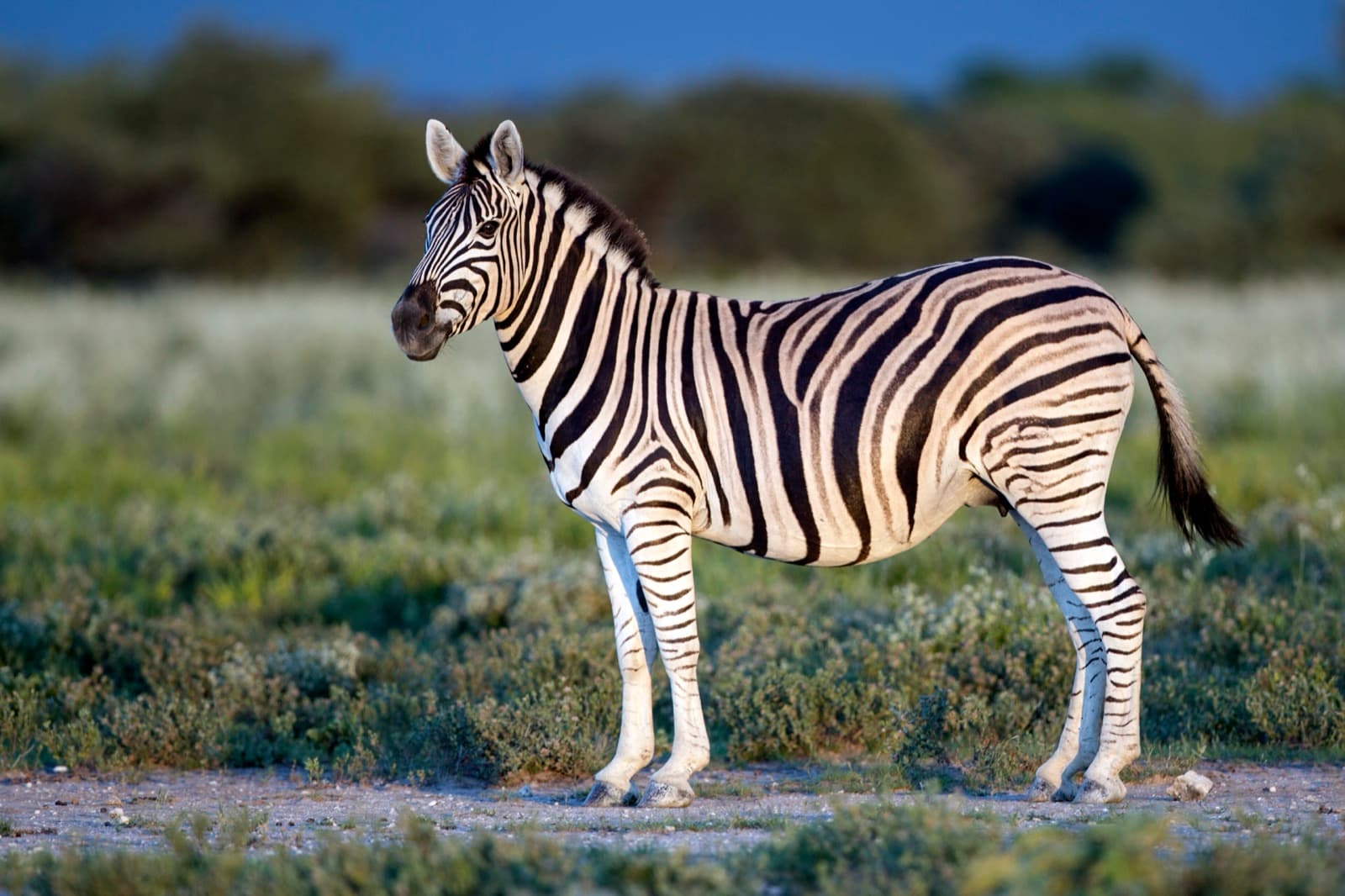
Every zebra has a one-of-a-kind pattern, like a fingerprint

A plains zebra standing on the savannah grassland

Photo · Wikimedia Commons

What is it?

Zebras are wild relatives of the horse, covered in black-and-white stripes. The most common kind in Kenya is the Plains zebra. They are part of the Great Migration, walking with wildebeest through Kenya's grasslands every year.

Tell me more

No two zebras have exactly the same stripes. The pattern of a zebra is as unique as your fingerprint. Scientists who study zebra families take photos of their sides to tell who is who — a bit like school photos for zebras.

Scientists are still arguing about why zebras have stripes. One leading idea is that the stripes confuse biting flies, which then choose not to land. Another idea is that the stripes confuse predators when zebras stand together in a herd — they look like one big striped wobble.

Zebras live in small family groups called harems: usually one stallion (the dad), several mares (the mums), and their foals (the children). When the migration is happening, many harems join together into massive herds for safety.

A baby zebra can stand up within 6 minutes of being born and run within an hour. It needs to — predators are everywhere on the open plains. The mother spends the first few days keeping other zebras away from her foal, so the foal learns to recognise her stripes above all others.

In the classroom

Walk your class through this in 15 minutes.

Talk together

Discussion prompts

  1. 01If your patterns were as unique as a zebra's, how would your friends recognise you?
  2. 02Why might it help to be born ready to stand up and run in just an hour?
  3. 03Lots of animals live in groups — zebras, lions, elephants. What do you think makes living together such a popular choice in nature?
Try this

Classroom activity

On A4, design your own zebra. Each child must give their zebra a unique stripe pattern. Then hold them up at the front and try to tell each one apart. How quickly can you spot your own?