
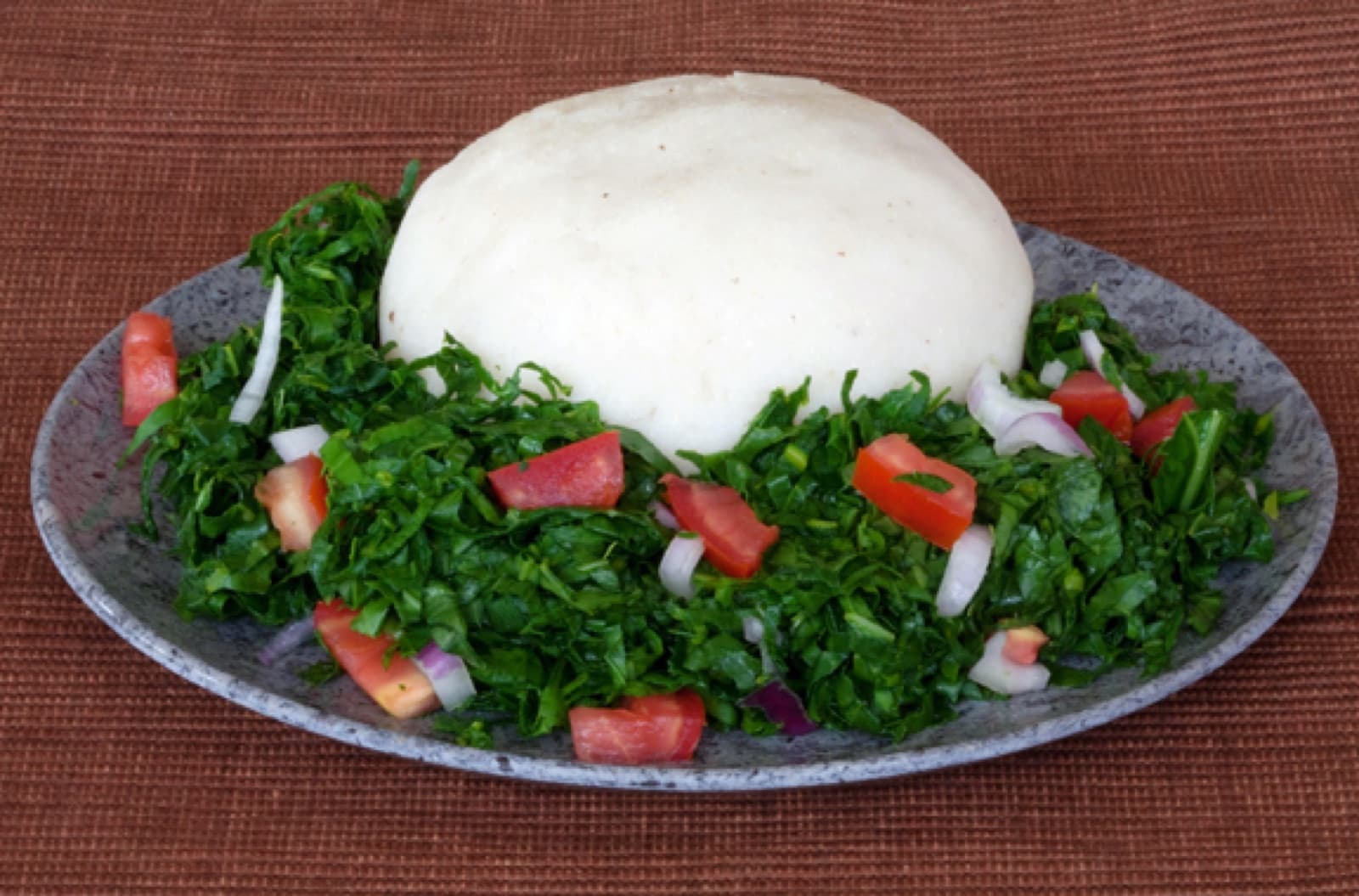
Making ugali is simple but takes a bit of muscle. You boil water in a pot, slowly stir in maize flour, and then stir hard with a wooden spoon as it turns into a thick paste. After a few minutes, the cook tips it onto a plate where it sets into a soft block.
Most Kenyan families eat ugali with their hands. You break off a small piece, roll it gently in your palm to make a little scoop, and use it to pick up the side dishes. The two most common side dishes are sukuma wiki (greens - a bit like kale or spinach, cooked with onions and tomatoes) and a meat stew.
Many countries around the world have a 'staple' food - the everyday food everyone has grown up with. In Italy it might be pasta. In Mexico it might be tortillas. In Japan it might be rice. In Kenya, it is ugali. The dish on the side changes; the ugali is always there.
Maize, the plant ugali is made from, didn't always grow in Kenya. It was originally a crop from the Americas. It travelled all the way around the world hundreds of years ago and is now the most important food crop in many African countries.