
Classroom lesson · Wildlife · 🇱🇻 Latvia

Grey Seal

A chubby, whiskered mammal that rests on Latvia's Baltic Sea rocks

Photo · Wikimedia Commons

What is it?

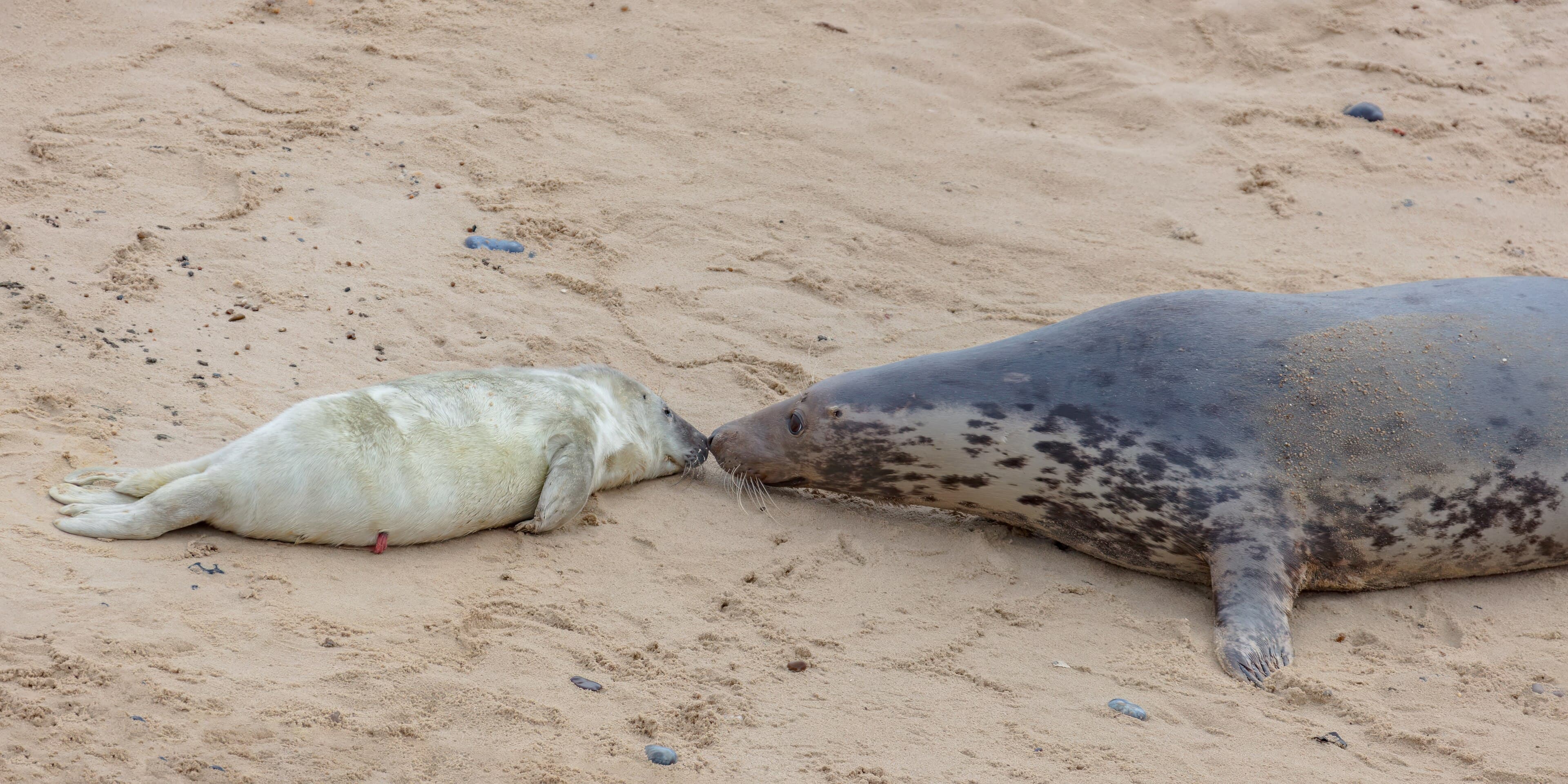
Grey seals are large marine mammals that live in the Baltic Sea and sometimes haul themselves up onto Latvia's rocky coastal shores to rest in the sun. They have big round eyes, long sensitive whiskers and a thick layer of blubber under their skin that keeps them warm in cold Baltic water. Pups are born with fluffy white coats and are incredibly difficult not to find adorable.

Tell me more

Grey seals are the largest wild animals in the Baltic Sea. A big male grey seal can weigh over 200 kilograms and reach nearly two and a half metres long. Females are smaller. On land they move in a shuffling, rolling way — but in the water they are fast, graceful swimmers that can hold their breath for up to 30 minutes.

Seals eat fish — lots of fish. A grey seal can eat several kilograms of fish every day, diving deep to chase herring, sprat, cod and flatfish. Their sensitive whiskers help them feel the tiny water movements made by swimming fish, even in dark or murky water.

For many years, grey seals in the Baltic were in trouble because of pollution and hunting. Today they are protected and their numbers are growing. Seeing a grey seal sunbathing on a rock near the Latvian coast has become more and more common — a sign that the Baltic Sea is getting healthier.

In winter, grey seal mothers come ashore on ice floes or quiet beaches to give birth to their pups. The white-coated pup drinks its mother's very rich, fatty milk and grows extremely quickly — doubling its weight in just a few weeks before its mother leaves and it has to learn to swim and hunt on its own.

In the classroom

Walk your class through this in 15 minutes.

Talk together

Discussion prompts

  1. 01Grey seals were in trouble because of pollution and are recovering now. What does that tell us about the power of protecting the environment?
  2. 02How do you think a seal stays warm in icy Baltic water when we would get very cold very quickly?
  3. 03Why might a seal's whiskers be just as useful as its eyes when hunting?
Try this

Classroom activity

Research one other animal that lives in the Baltic Sea (e.g. porpoise, herring, flounder). Create a simple food chain poster showing how it connects to the grey seal — draw arrows to show 'gets eaten by' and label each animal.