
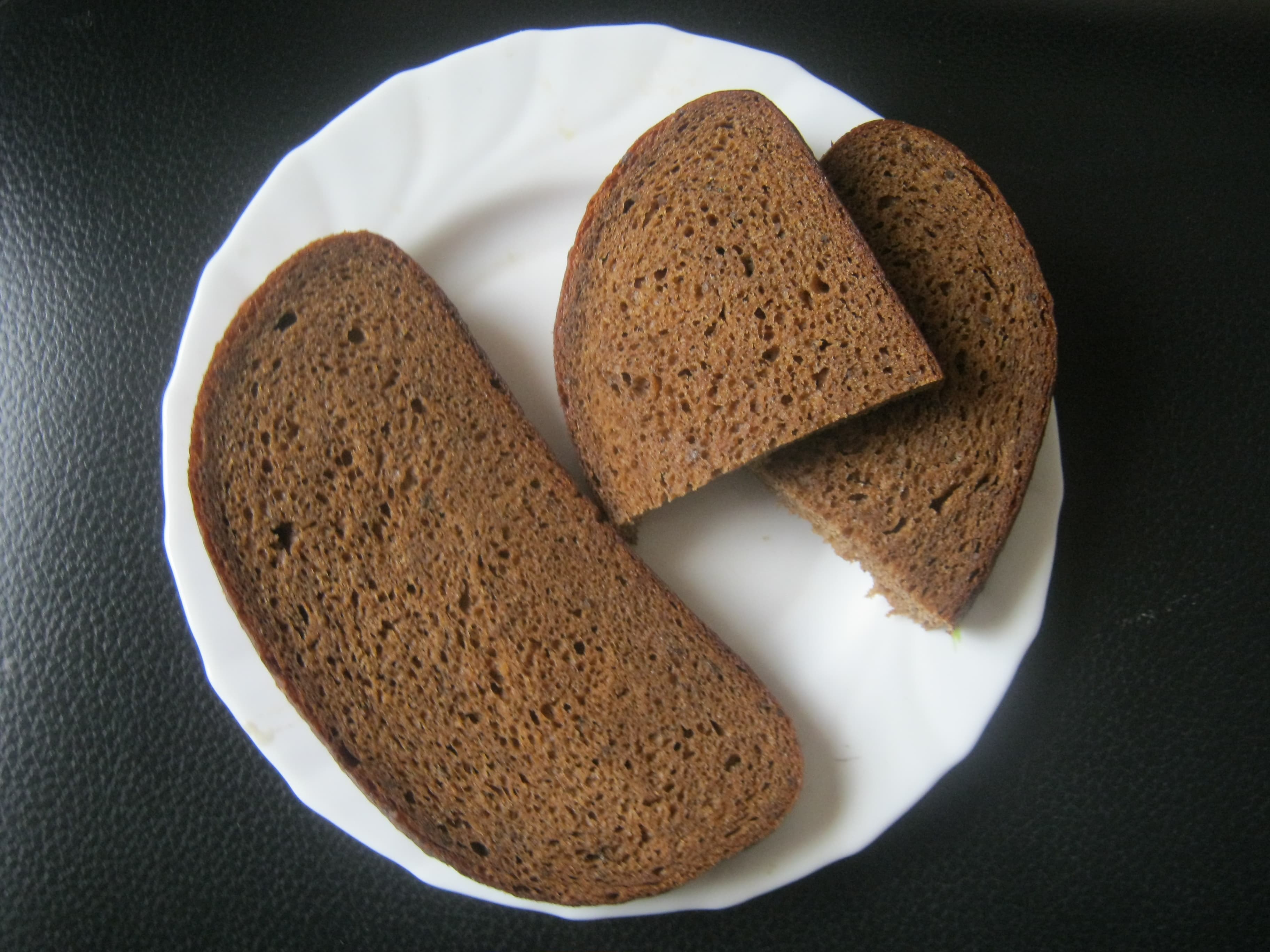
Rye grows very well in the cold, damp climate of Latvia, which is why rye bread has been eaten here for hundreds of years. Rye flour makes a darker, denser bread than wheat flour, and when bakers use a sourdough starter - a living mixture of natural yeast and bacteria - it gives the bread its distinctive sour taste.
A traditional Latvian loaf is baked slowly for many hours at a low temperature. The crust becomes thick and chewy, and the inside stays moist for days. Because the bread keeps so well without going stale, it was perfect for farmers who needed food that lasted a long time.
Latvians eat rupjmaize at almost every meal. Breakfast might be a slice topped with butter and smoked fish; lunch might be thick soup served alongside it; dinner might feature it with cheese and cucumber. There is even a traditional Latvian dessert called maizes zupa - bread soup - made from rye bread soaked in water, sweetened and served with cream.
Today, rupjmaize is considered such an important part of Latvian identity that traditional recipes are carefully recorded and protected. Artisan bakeries take great pride in their sourdough starters, which are sometimes passed down through families for generations - just like an heirloom.