
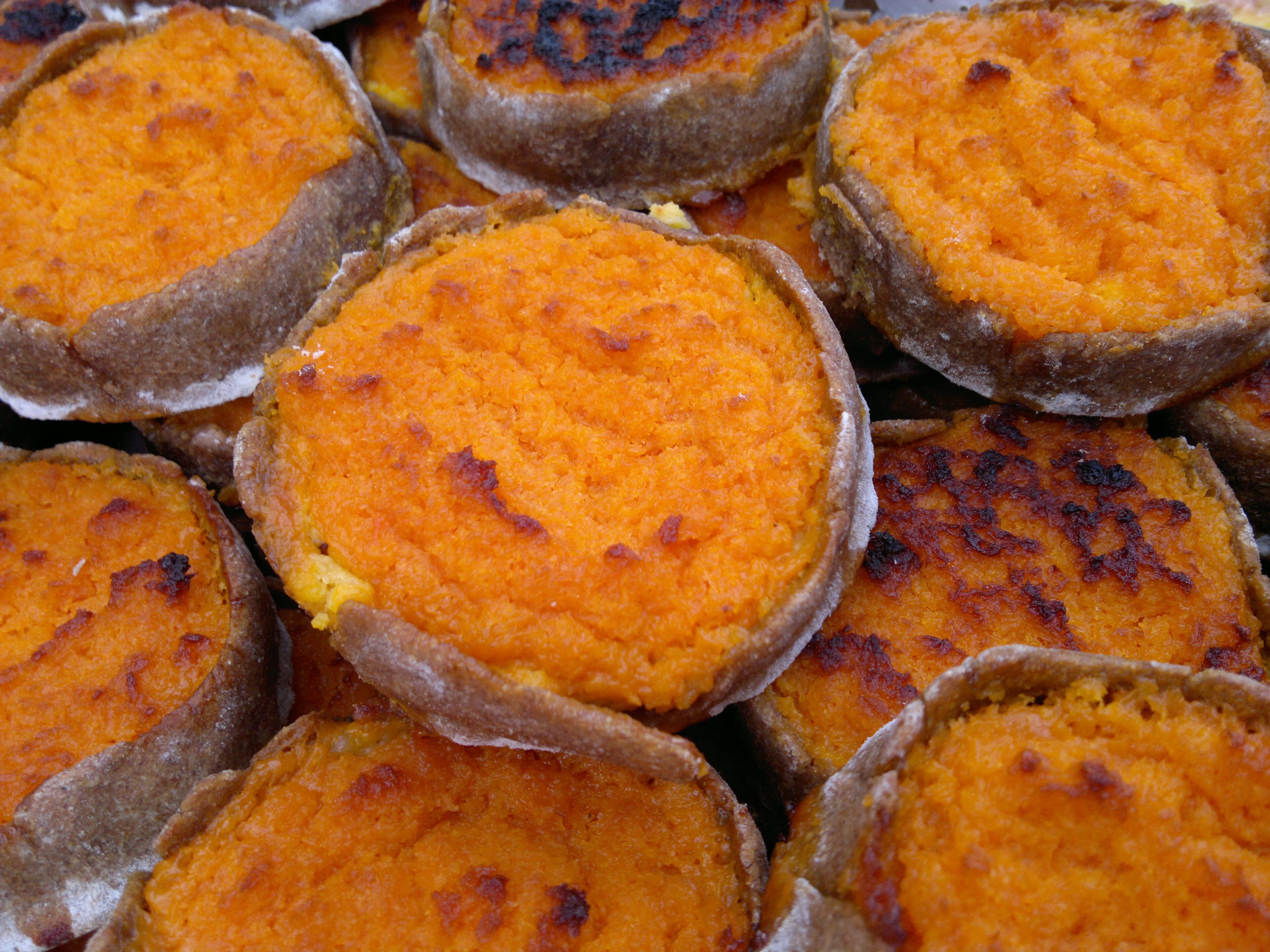
Sklandrausis comes from an ancient rural tradition in Latvia. Before sugar was widely available, carrots were one of the sweetest things that Latvian farmers could grow, so they used them in baking. The name comes from an old regional dialect and is so special to Latvia that the European Union gave it protected status - meaning only the authentic version from Latvia can be sold with that name.
The rye pastry case is made from the same dark rye flour used for rupjmaize bread. It is rolled thin, pressed into a round mould and then filled with the mashed carrot and potato mixture before being baked. The filling puffs up slightly in the oven and turns a lovely deep orange-gold colour.
Traditionally, sklandrausis was made for important celebrations and festivals - especially weddings and the Jāņi midsummer festival. Different regions of Latvia had their own slight variations: some added sour cream to the filling, others brushed the top with egg to make it shiny.
Today you can find sklandrausis in bakeries and markets all over Latvia, and it is often brought out when guests visit. Latvians are proud that this small, humble pastry - made from simple farm ingredients - has become famous enough to be protected as a part of European food heritage.