
Classroom lesson ยท Wildlife ยท ๐Ÿ‡ฑ๐Ÿ‡น Lithuania

Eurasian Lynx

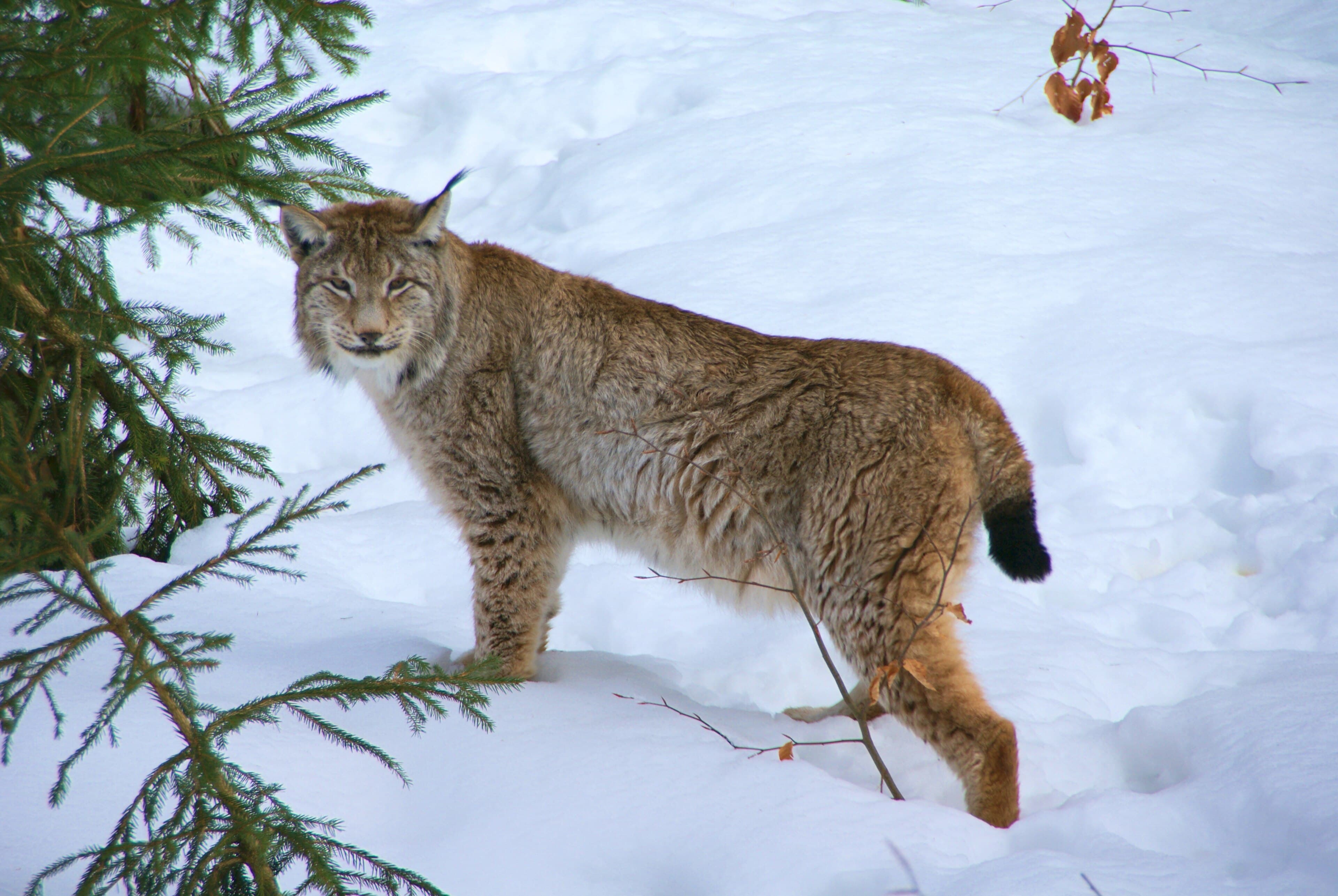
A secretive spotted wild cat with enormous furry paws

Photo ยท Wikimedia Commons

What is it?

The Eurasian lynx is the largest wild cat in Europe and one of Lithuania's most secretive forest residents. It has spotted tawny fur, tufted ears, a short stumpy tail, and enormous padded paws that act like natural snowshoes. Lynx are so quiet and so good at hiding that most people who live near them never see one in their lifetime.

Tell me more

A lynx's paws are huge compared to its body โ€” the wide surface area spreads its weight across deep snow, allowing it to walk silently without sinking. This makes the lynx a very effective hunter in winter when other animals struggle to move quickly. The famous ear tufts help the lynx to hear sounds from far away, making them exceptional listeners.

Lynx hunt mainly deer, roe deer, and hares. Unlike wolves, they hunt entirely alone, using patience and stealth rather than speed. A lynx may stalk a deer for a long time before making its move โ€” it is a master of the slow, silent approach.

Lithuania's older forests, with their dense undergrowth and fallen logs, are perfect lynx habitat. Camera traps occasionally capture rare photographs of lynx trotting through the trees at night. These images are always exciting news for local wildlife researchers and nature fans.

Lynx kittens are born in spring, usually two or three at a time, in a hidden den. The mother raises them alone and teaches them to hunt by letting them practice on small prey first. By their first winter the kittens can already survive short periods on their own.

In the classroom

Walk your class through this in 15 minutes.

Talk together

Discussion prompts

  1. 01The lynx hunts using patience and silence rather than speed. Can you think of other animals that use patience as their main hunting tool?
  2. 02Why might being secretive and hard to spot be an advantage for a wild animal?
  3. 03Camera traps let us photograph animals without disturbing them. Why is studying animals in their natural habitat important?
Try this

Classroom activity

Play a lynx stalking game. One student is the 'lynx' and one is the 'deer'. The lynx must move across the room as slowly and quietly as possible without the deer (who is blindfolded) hearing them. After two minutes, swap roles. Discuss: what makes the lynx so good at staying silent?