
Classroom lesson ยท Wildlife ยท ๐Ÿ‡ฑ๐Ÿ‡น Lithuania

Grey Wolf

The clever pack hunter of Lithuania's forests

Photo ยท Wikimedia Commons

What is it?

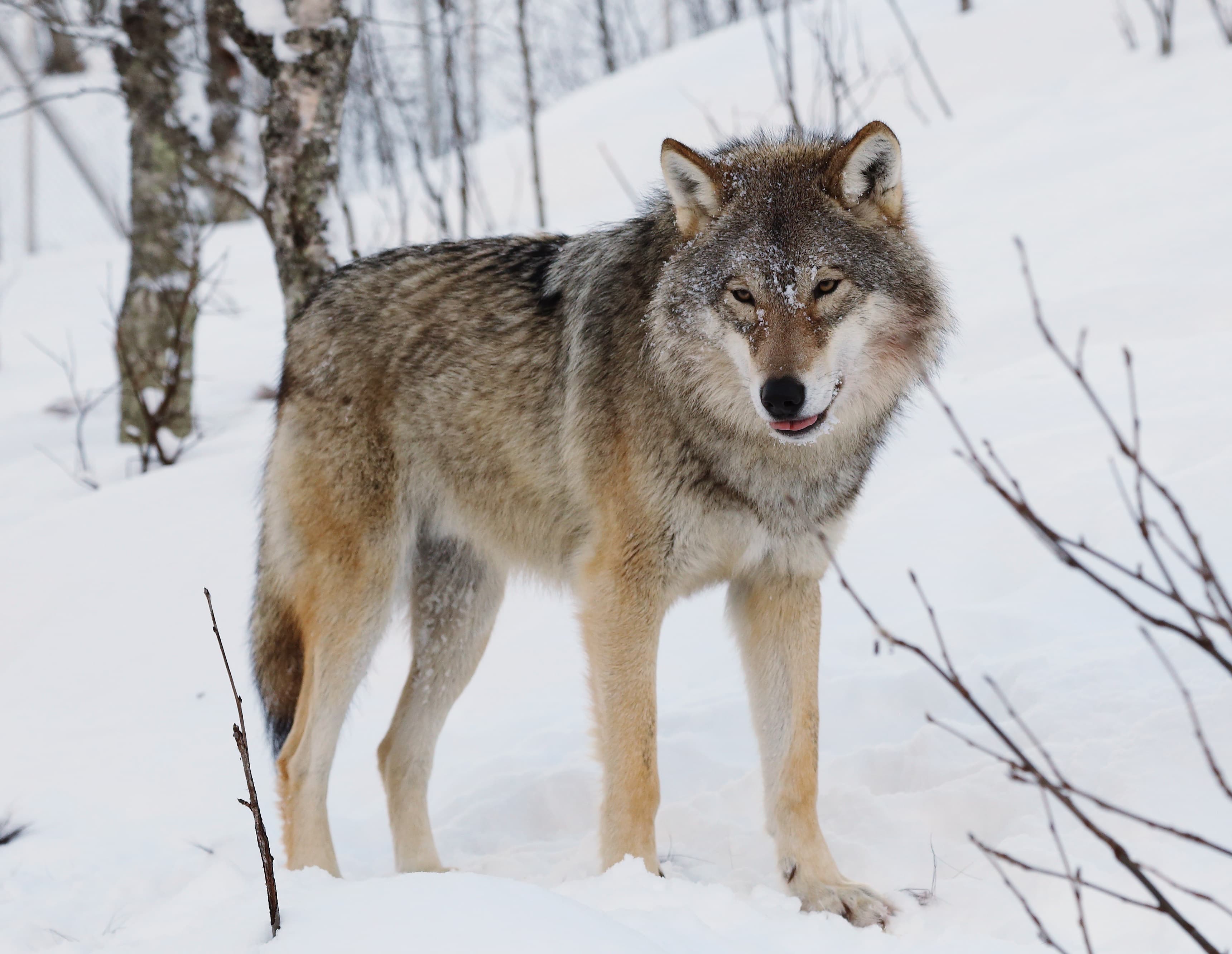
Grey wolves are wild dogs that live in packs and roam Lithuania's vast forests and farmland edges. They are intelligent, fast, and highly social animals โ€” every pack has its own family structure, territory, and way of communicating. Hearing a wolf howl echoing through the forest on a winter night is one of the most memorable sounds in Lithuanian nature.

Tell me more

Wolves are the ancestors of every domestic dog in the world โ€” all dogs, from tiny chihuahuas to enormous Saint Bernards, are descended from wolves that humans began living alongside thousands of years ago. Looking at a wolf's face, you can often see the similarity to familiar dog breeds.

A wolf pack is usually made up of a close family: two parents and their young from recent years. The pack works together to raise pups, find food, and defend territory. They communicate through howling, body language, and facial expressions โ€” their faces are surprisingly expressive and easy to read once you know what to look for.

Wolves in Lithuania are mainly active at dawn and dusk, which makes them hard to spot. They cover enormous distances โ€” a pack might patrol a territory of several hundred square kilometres. Researchers track them using radio collars and GPS devices to understand their movements and habits.

Wolves play an important role in keeping forest ecosystems healthy. By hunting deer and wild boar, they prevent those animals from becoming too numerous and damaging the forest. Scientists call this 'keeping the balance', and it helps many other plants and animals to thrive.

In the classroom

Walk your class through this in 15 minutes.

Talk together

Discussion prompts

  1. 01Every pet dog in the world is related to wolves. How are dogs and wolves similar? How are they different?
  2. 02Wolves communicate through howling, body language, and facial expressions. How do humans communicate without words?
  3. 03Wolves help keep the forest balanced by hunting. Why might it matter which animals live in a forest?
Try this

Classroom activity

Design a wolf territory map. On a large sheet of paper, draw a forest with rivers, clearings, and a den. Mark where the pack hunts, where they sleep, and how they mark their borders (wolves use scent markings). Add a compass rose and a scale bar.