
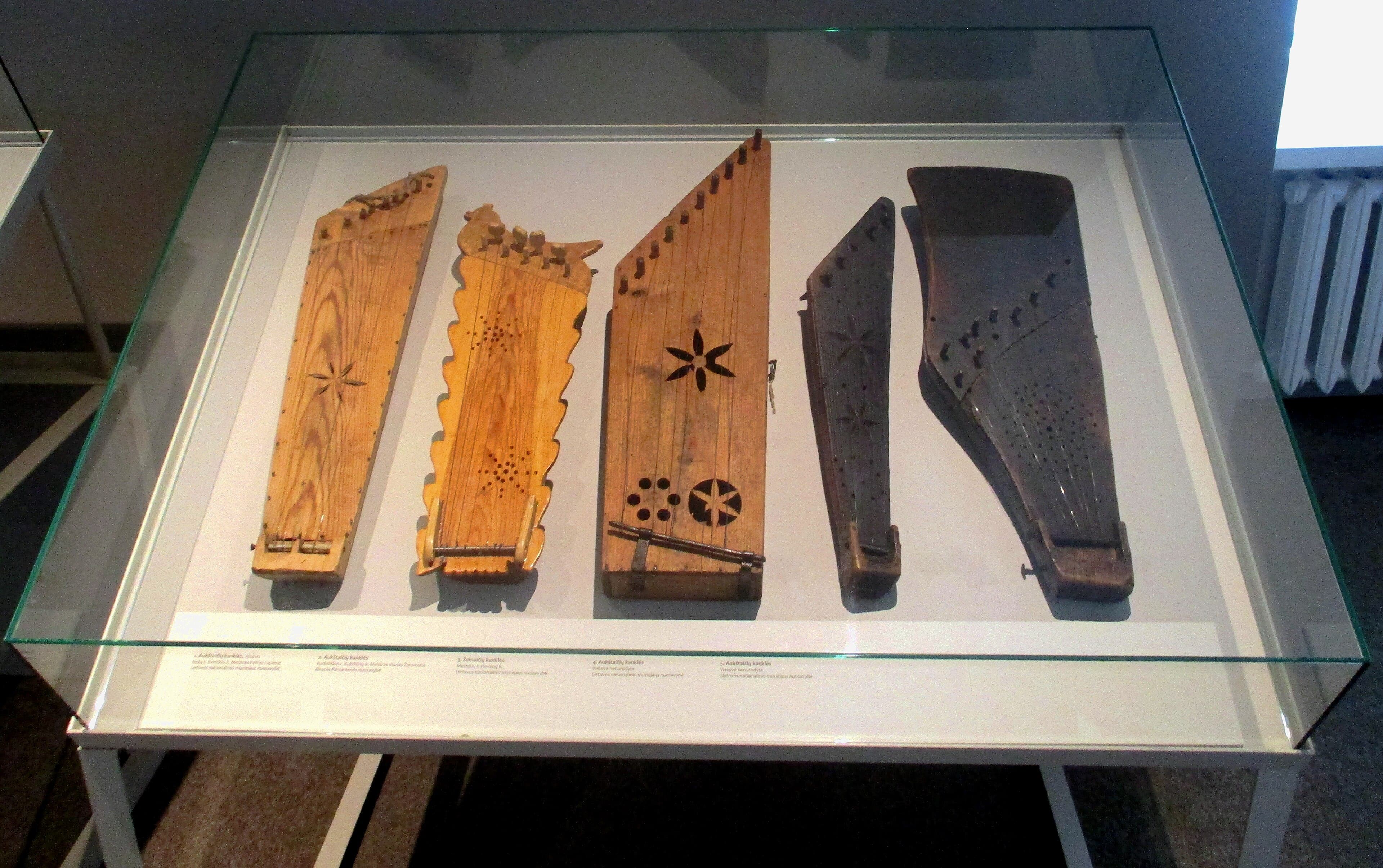
The kanklės has been played in Lithuania for thousands of years. Ancient versions had only five to twelve strings; modern performance versions can have up to 29 strings and a much wider range of notes. Old kanklės were carved from a single piece of wood - usually maple, birch, or pine - shaped to bring out the best resonance.
Playing the kanklės involves plucking the strings with the fingers of both hands - one hand plays the melody while the other provides a gentle accompaniment. Traditional kanklės music has a flowing, lyrical quality that sounds like running water or wind through pine trees. It is music that feels deeply connected to the Lithuanian landscape.
The kanklės went through periods when it was rarely played and nearly forgotten, but in the late 19th and early 20th centuries a wave of enthusiasm for Lithuanian culture brought it back to life. Today it is taught in music schools across Lithuania and there are kanklės orchestras - whole groups of players performing together.
Festivals dedicated to kanklės music are held around Lithuania, where players of all ages perform. Seeing a group of children playing kanklės together at a folk festival is a sight that makes Lithuanians very proud - it means the music is being passed on to the next generation.