
Classroom lesson · Food · 🇱🇹 Lithuania

Kibinai

Flaky hand-held pastries from the Karaite community of Trakai

Photo · Wikimedia Commons

What is it?

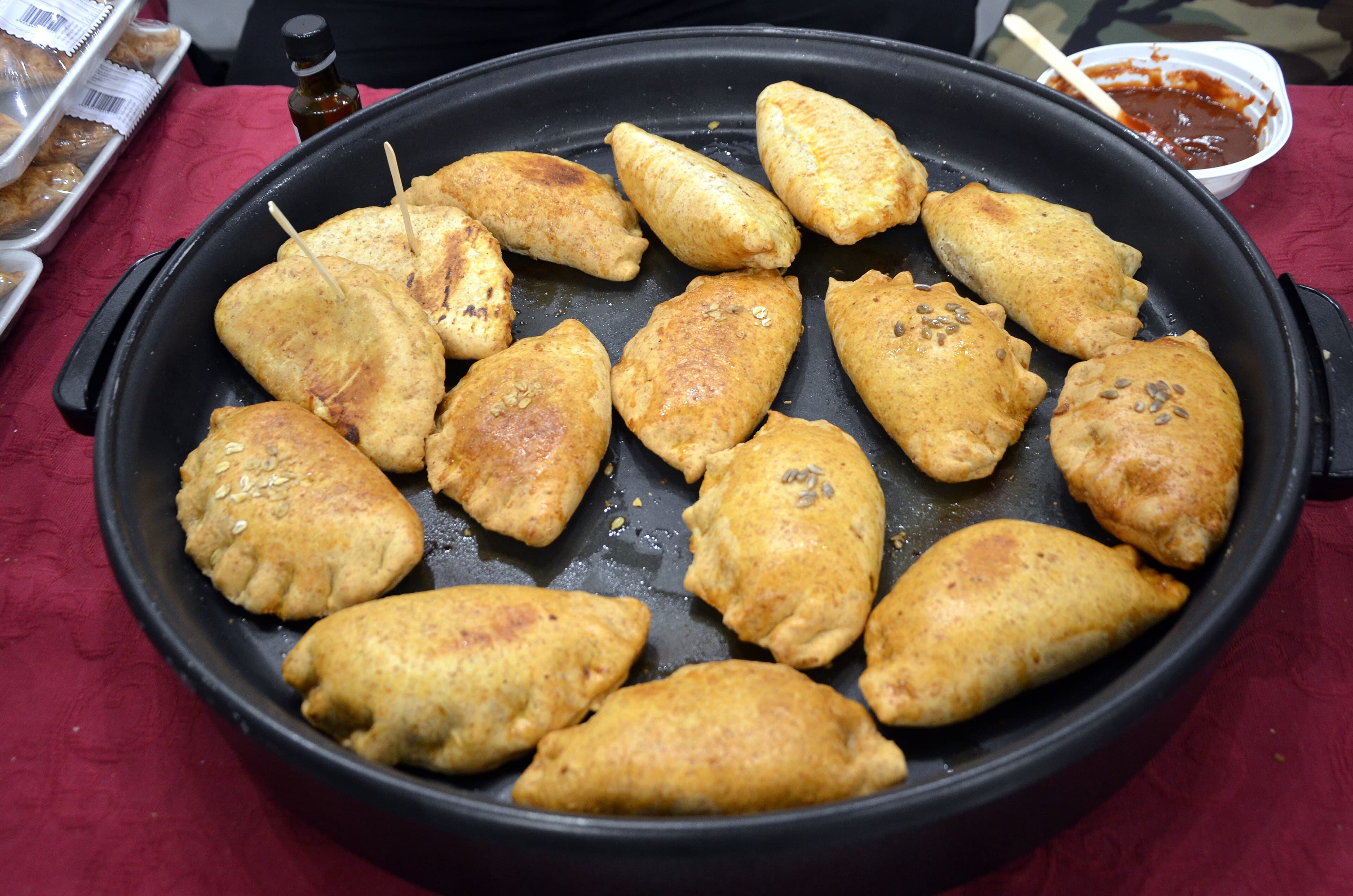
Kibinai (say: kih-BEE-nai) are small, crescent-shaped pastries with a crispy, flaky crust and a warm savoury filling inside. They come from the Karaite community who have lived in Trakai for over 600 years, and today they are loved all over Lithuania. Eating a warm kibinai while standing by Lake Galvė looking at the island castle is one of the classic Lithuanian experiences.

Tell me more

A kibinai pastry is made from a rich, buttery dough that bakes into many thin, crispy layers — a bit like a cross between a pie and a croissant. The filling is traditionally mutton (lamb), onion, and pepper, lightly seasoned and packed inside before the pastry is pinched shut and baked until golden.

The Karaite community who created kibinai arrived in Trakai from Crimea (a region near the Black Sea) over 600 years ago. They were invited to settle here and brought their food traditions with them. Kibinai were originally made at home for special occasions, but they have since become so popular that small restaurants in Trakai called 'kibininės' serve them all day long.

Today you can find kibinai with different fillings — chicken, cheese and potato, or even sweet apple versions for dessert. But purists insist the classic mutton filling is the only authentic one. Each kibinai is sealed at the top with a pinched ridge that is both decorative and practical — it keeps the filling from spilling out.

Eating a kibinai is a hands-on experience. They are designed to be held and bitten into — no knife and fork required. The pastry is dry and flaky on the outside and full of juicy, flavourful filling inside. They are typically eaten with a glass of black tea or a bowl of hot broth.

In the classroom

Walk your class through this in 15 minutes.

Talk together

Discussion prompts

  1. 01The Karaite community brought kibinai from a faraway region 600 years ago, and now it is loved by everyone in Lithuania. Can you think of foods in your country that originally came from another culture?
  2. 02What does it mean when a community brings its food traditions to a new home? What might food tell us about where people come from?
  3. 03If you were creating a new pastry, what shape would you make it and what would you put inside?
Try this

Classroom activity

Map the journey of kibinai. On a simple world map, mark Trakai in Lithuania and the Crimea region near the Black Sea. Draw an arrow showing the route the Karaite community may have travelled. Estimate the distance in kilometres. Then design a menu card for a kibinai restaurant, with the pastry name, filling, price, and a small drawing.