
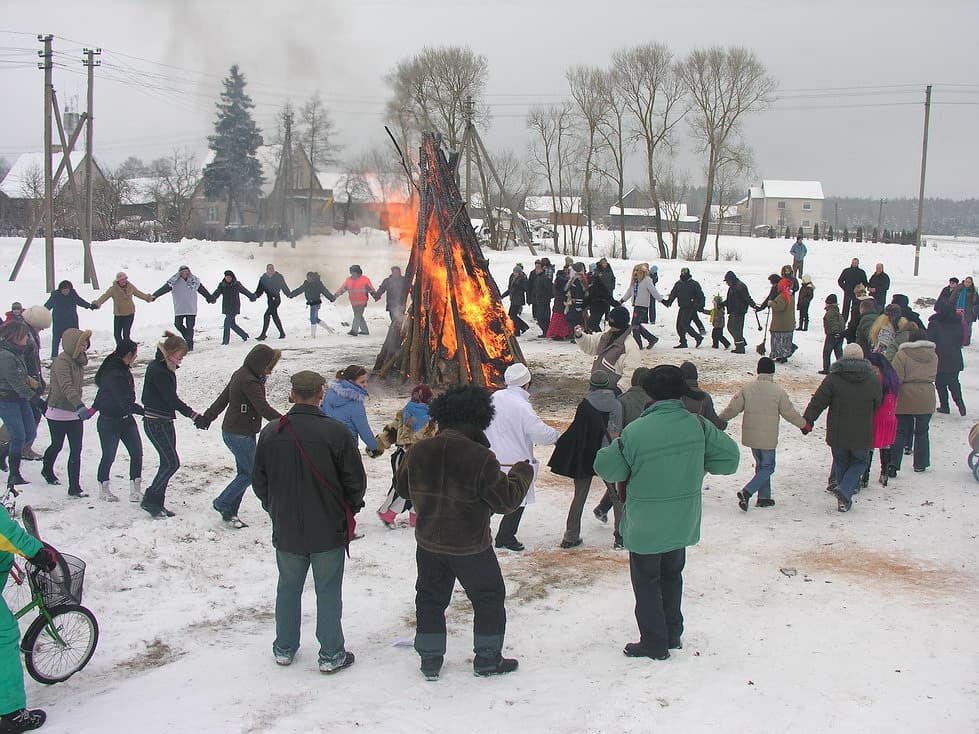
Užgavėnės falls on Shrove Tuesday - the same day as Mardi Gras in France or Pancake Day in the UK. In Lithuania, the tradition is very old and draws on both Christian and much older nature-based beliefs about the turning of the seasons. The name means roughly 'chasing away winter', which tells you exactly what the festival is about.
The masks worn at Užgavėnės are spectacular and deliberately a little scary. They represent characters from Lithuanian folk tradition: the Devil, a witch, a goat, a bear, a crane. The idea is that the loud noise, the masks, and the general mayhem will frighten winter spirits away. It is theatrical and fun - children love it.
Eating pancakes (called blynai in Lithuanian) is central to the day. Thin, round, golden pancakes symbolise the sun returning after winter. Families and communities make hundreds of them, served with jam, honey, or sour cream. Some competitions see who can eat the most - the winner is crowned champion of the feast.
The highlight of the day is the burning of Morė - a large straw figure dressed in old clothes. As the fire is lit, people cheer, sing, and dance. The smoke drifting away symbolises winter leaving. The next day, spring is expected - and in Lithuania's cold climate, this symbolic sending-off of winter is taken very seriously indeed.