
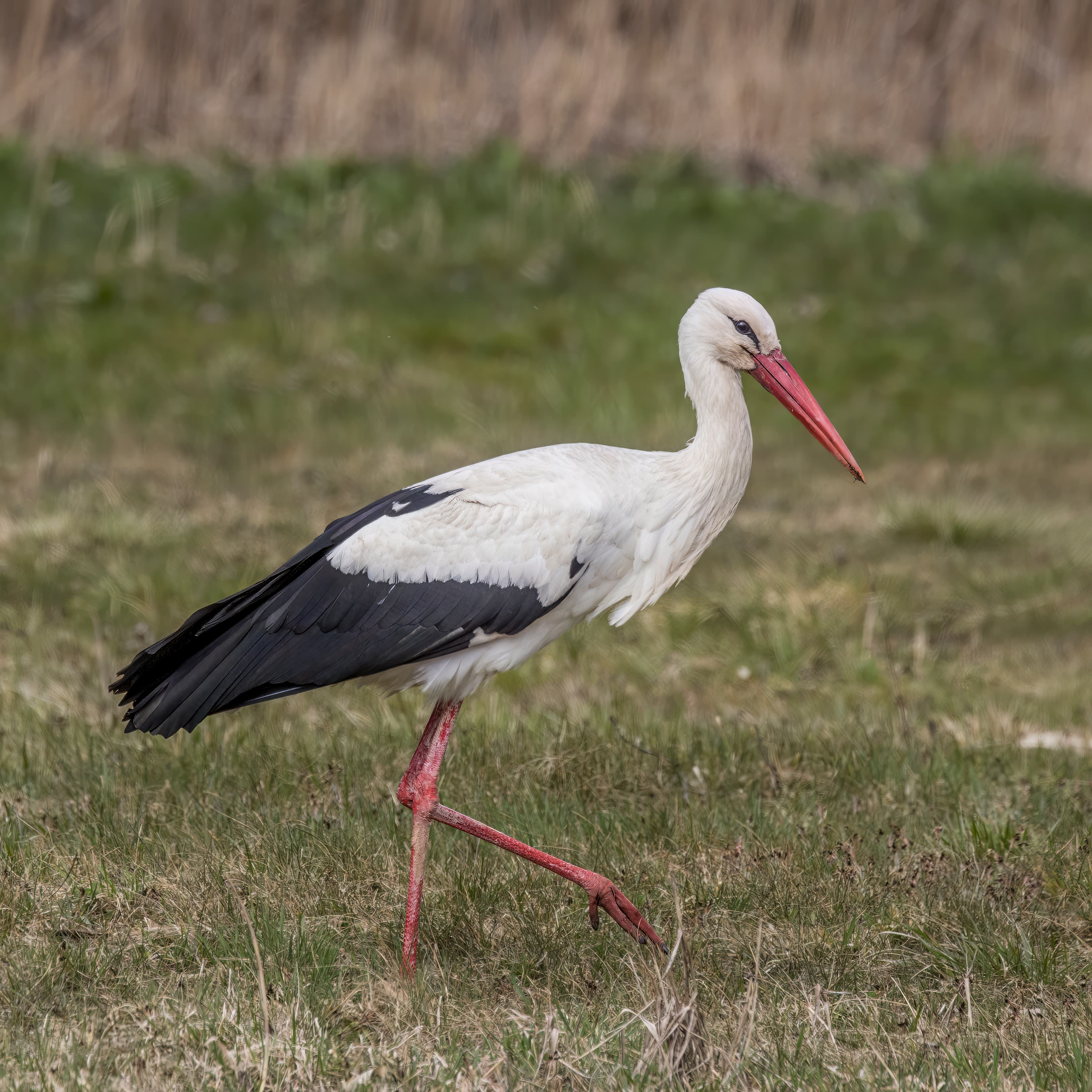
White storks spend the winter in Africa and fly to Lithuania every spring - a journey of up to 10,000 kilometres. They navigate without maps or GPS, using the sun, the Earth's magnetic field, and landmarks they remember from previous journeys. Young storks make the journey for the first time entirely on instinct.
A stork's nest is enormous. Pairs build and add to the same nest year after year until it can be over two metres wide and weigh several hundred kilograms - heavier than a grand piano. The same nest is often used for generations, passed from one pair of storks to the next.
Lithuania has one of the highest concentrations of white storks in the world. In some villages there are more stork nests than houses! Farmers welcome storks because they eat large numbers of frogs, insects, and small rodents - helpful animals for keeping farmland healthy.
In Lithuanian tradition, the stork is a symbol of good luck, spring, and new beginnings. Old sayings describe storks as bringers of happiness to the families whose homes they choose to nest on. Children grow up watching the same family of storks return to their village roof every single year.