
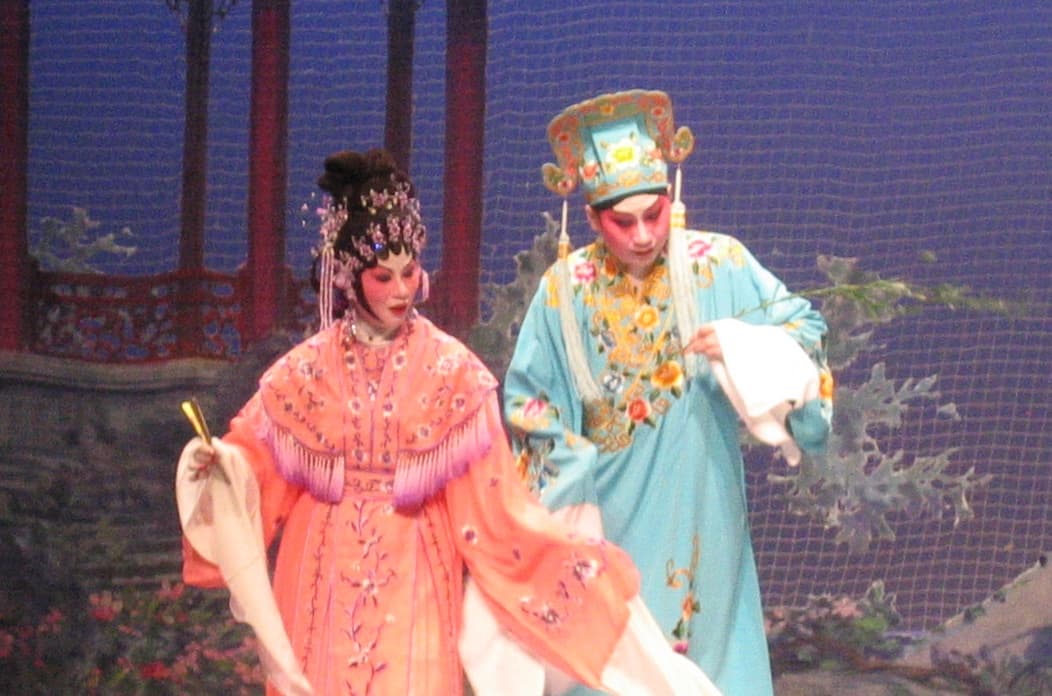
Learning to perform Cantonese opera takes many years of training. Young performers must learn to sing in a very particular style, with a high, clear voice that can carry over the whole theatre. They also learn elaborate hand gestures - every movement of the wrist, finger or eye has a specific meaning that the audience understands. A wave of a sleeve can mean 'goodbye'; a particular eye movement can show fear.
The costumes are extraordinarily detailed. Silk robes can weigh several kilograms and are embroidered with dragons, phoenixes and flowers using gold and silver thread. The headdresses worn by characters playing royalty can be enormous and decorated with hundreds of tiny ornaments, tassels and jewels. Performers must train their neck muscles to carry these heavy headdresses gracefully.
The music in Cantonese opera uses traditional Chinese instruments. The two-stringed erhu plays the melody in a haunting, expressive way. Percussion instruments - drums, cymbals and wooden blocks - create the dramatic timing for acrobatic moments. The music is live, played by a small orchestra seated at the side of the stage, and performers adjust their pace slightly to match each night's musicians.
Macau has a long tradition of Cantonese opera and has hosted performances in dedicated venues, temples and outdoor stages throughout the year. The Macau International Music Festival each autumn often features Cantonese opera alongside Western classical music, showing how Macau celebrates both of its cultural traditions.