
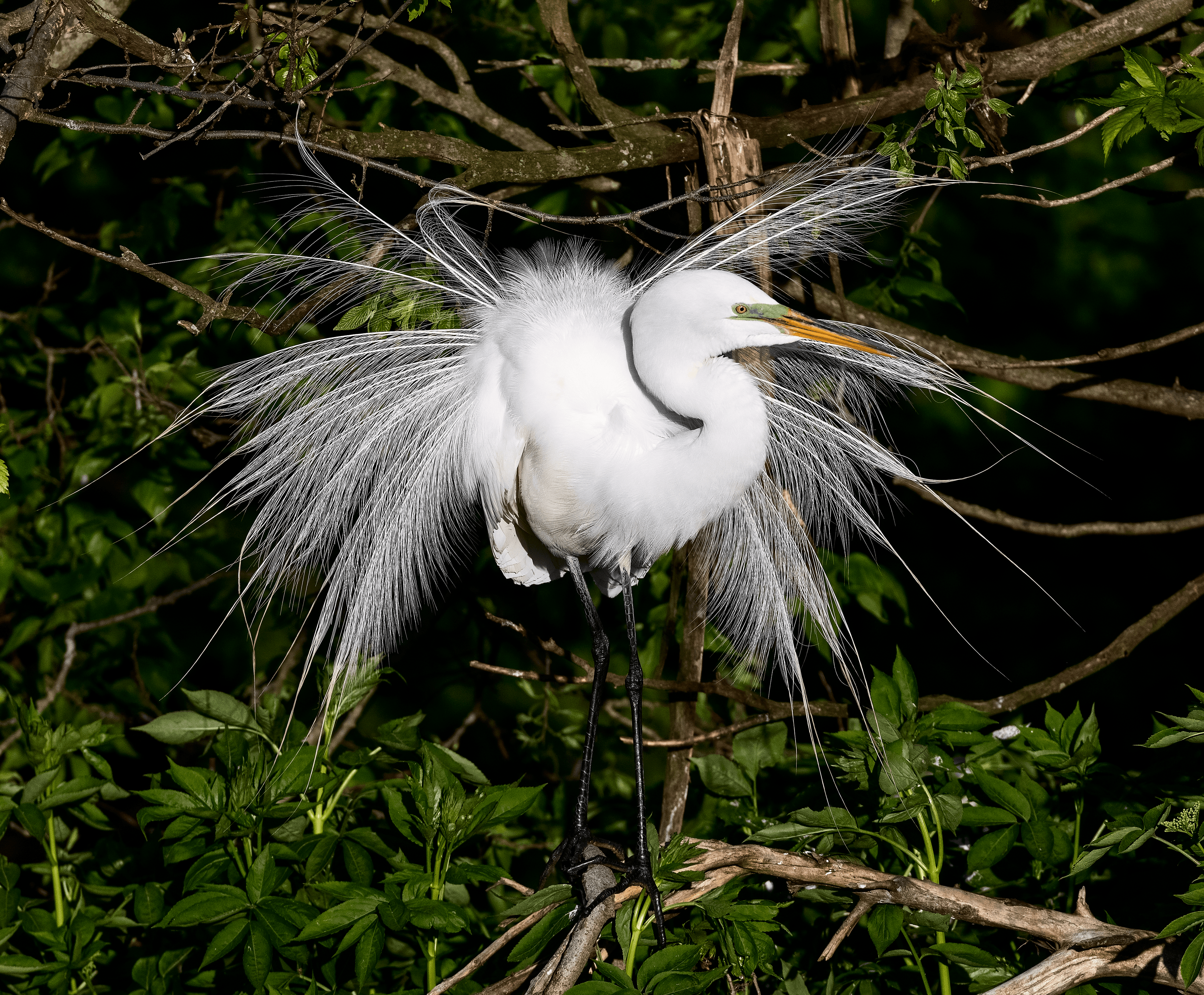
Standing about 90 centimetres tall, the great egret is one of the largest wading birds in Asia. Its white feathers are always immaculate - they somehow seem to stay brilliant white even when the bird is wading through muddy water. When the egret takes flight, it folds its long neck into an S-shape and the wingbeats are slow and powerful, giving it a very dignified look in the air.
In the breeding season, great egrets grow special long, wispy feathers called 'aigrettes' along their backs. These are the feathers that once made the bird very famous - in the 1800s, they were used to decorate hats, which led people to hunt egrets so heavily that the population collapsed. Conservation laws around the world eventually put a stop to the hunting, and the egret made a strong comeback. Today, seeing one feels like a happy success story.
Egrets are patient hunters. They stand almost completely still in shallow water, sometimes for several minutes, watching the water surface for the shape of a fish or frog moving below. When the moment is right, the long neck shoots out in a fraction of a second, and the beak spears the prey. They swallow small fish whole.
Macau's wetlands and tidal mudflats are a stop-off point for many migratory birds travelling between Siberia and Australia or Southeast Asia. The egret is one of the most visible visitors, easy to spot standing out as a bright white shape against grey mud or green reeds. Local birdwatchers often gather at the Hac Sa area in autumn to spot egrets and other wading birds.