
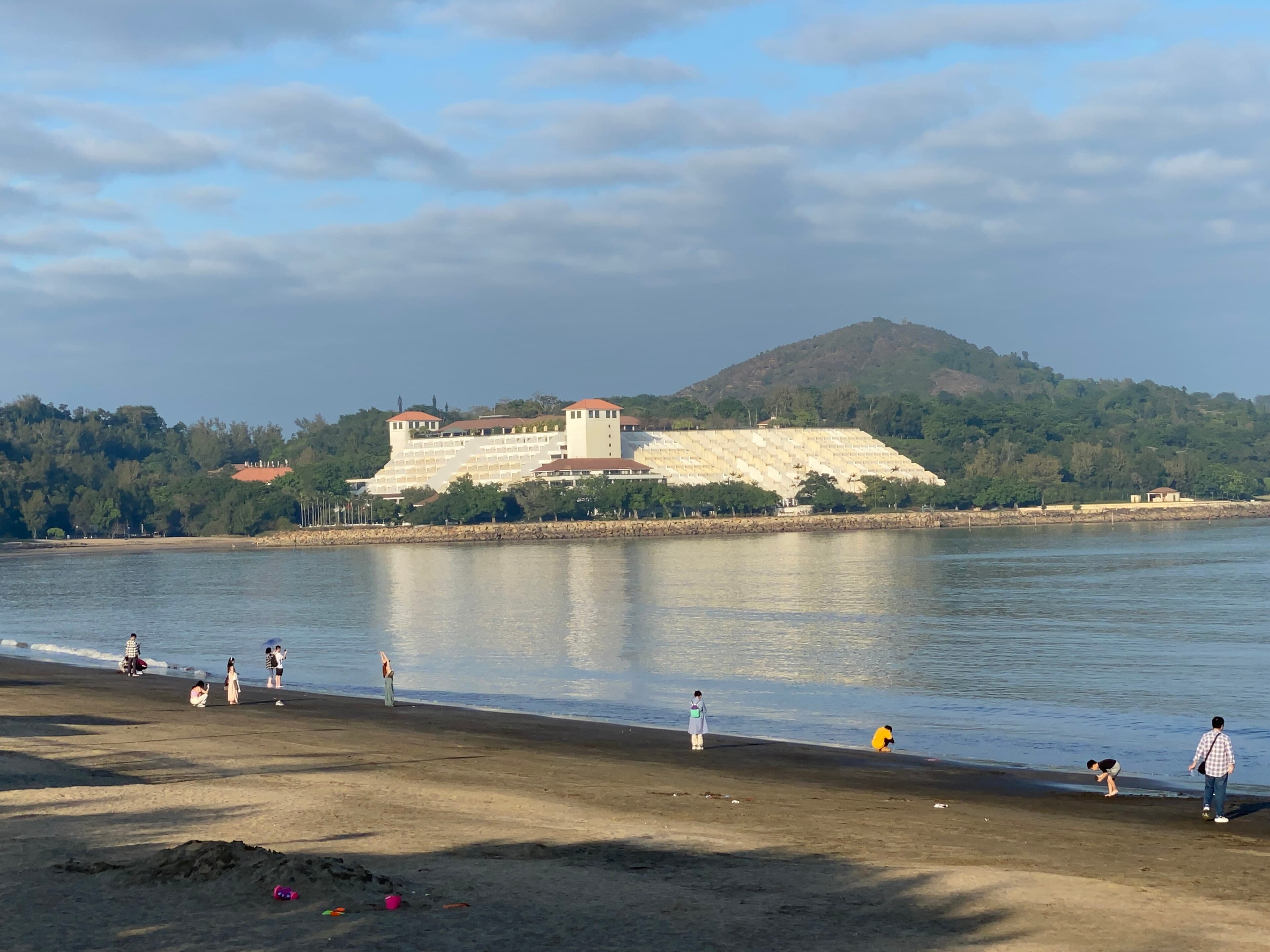
The dark colour of the sand is completely natural. Volcanic rock on the seabed and along the coast gradually breaks down into tiny particles, and those particles contain iron and other dark minerals that give the beach its distinctive look. When the sand is wet, it shines with a silvery sheen - quite magical on a sunny day.
Hac Sa is the longest beach in Macau, stretching for about one kilometre. Behind the beach, a park has picnic areas, barbecue pits and a freshwater swimming pool, so local families often spend whole days there. The water is calm in the sheltered bay, and small waves lap the dark sand in a very relaxing rhythm.
At low tide, interesting shells and bits of sea-worn stone wash up on the beach. Because the sand is dark, pale shells and colourful pebbles stand out very clearly - a bit like finding treasure on a dark velvet cloth. Children often collect smooth, egg-shaped stones that have been rounded by years of rolling in the surf.
The hills behind the beach are forested, and you can walk from the beach straight up into Coloane Country Park on a trail through trees. At dusk, swallows skim over the water catching insects, and the sky turns the dark sand from grey to warm purple as the light changes. It is one of those places that looks completely different depending on the time of day.