
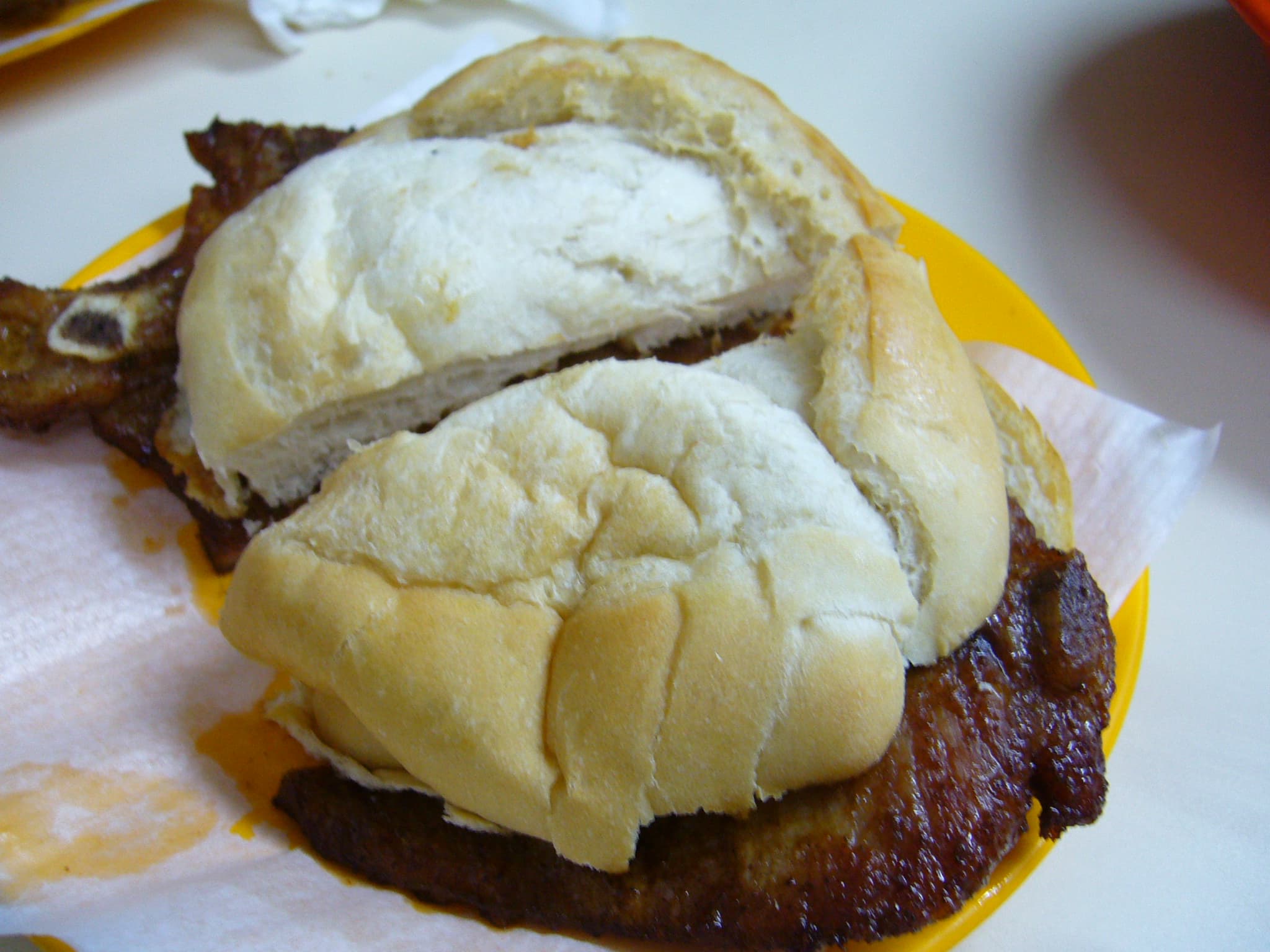
The bread roll used for a pork-chop bun is called 'papo-seco' in Portuguese - a traditional round roll baked in a very hot oven so the outside bakes crisp while the inside stays airy and soft. This bread style came to Macau from Portugal. The pork chop inside is seasoned with a marinade that often includes soy sauce, rice wine and five-spice powder - all distinctly Chinese ingredients - then cooked until the edges are slightly charred.
The most famous place to eat a pork-chop bun is the village on Coloane Island, where a handful of small restaurants have been serving the sandwich for decades. On weekends, queues of visitors stretch along the pavement, and the smell of frying pork drifts across the square. Eating one while sitting on a little wall outside is considered the proper Macanese way.
What makes the pork-chop bun so interesting is the way it shows Macau's two food cultures in a single bite. The bread is European; the pork marinade is Chinese. Neither is changed very much - they are simply put together, and the result is better than either alone. Food historians call this 'Macanese cuisine', a distinct cooking tradition that belongs entirely to Macau.
Street food in Macau is taken very seriously. There are bun-tasting events and competitions where bakers test who can produce the crispiest outside and the juiciest pork. Locals have strong opinions about exactly how brown the crust should be, and whether you should add any extra sauce.