
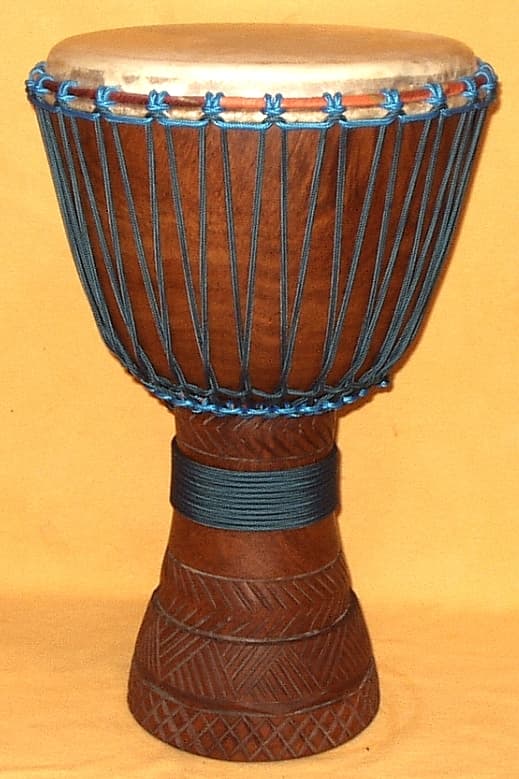
Djembe drums come in different sizes, from small ones a child can hold between their knees to large ones half a metre tall. The skin is held tight by a system of ropes knotted together under the drum - tuning the drum means adjusting these ropes. A well-made djembe can last for many generations if cared for properly, and some drums are carved with decorations that tell the story of the family or village they belong to.
Playing the djembe properly takes time to learn. The bass note is played with the whole flat hand in the centre; the tone is a strike closer to the edge with the fingers together; the slap is a quick snap of the fingers near the edge that makes a sharp, crackling sound. Combining all three in patterns creates complex rhythms that experienced players can keep going for hours.
In Mali and across West Africa, certain drum rhythms have specific meanings - there is a rhythm for a wedding, one for a harvest, one for welcoming a guest. A drummer who knows all the rhythms is an important part of the community. Children often start learning djembe as young as four or five, first just patting along with the adults.